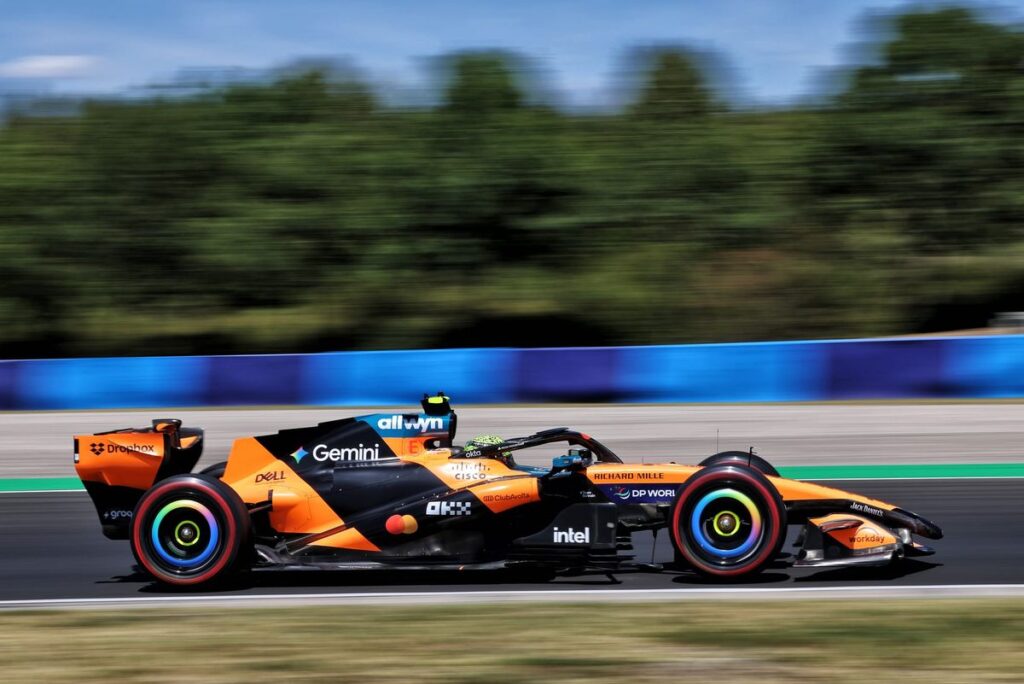

If you watch both Formula 1 and IndyCar, you already know the cars look similar on the surface. Open wheels, wings front and rear, a single seat. But underneath, these two series are built on completely different ideas about what motorsport should be. The 2026 season makes that contrast sharper and more interesting than it has been in years.
The Core Philosophy: Constructor vs Spec
This is the single biggest difference and everything else flows from it. Formula 1 is a constructors’ championship. Every team designs and builds its own car. Mercedes, Ferrari, McLaren, Red Bull, Audi — they all develop bespoke chassis, aerodynamics, and suspension systems within the technical regulations. The car itself is the competition. Engineering innovation is central to winning.
IndyCar takes the opposite approach. It is a spec series. Every team races the same Dallara IR-18 chassis. Engine supply comes from two manufacturers, Honda and Chevrolet, and the core mechanical package is identical across the entire grid. This levels the playing field by design. The competition lives in setup, strategy, pit execution, and the driver’s ability to extract performance from hardware that everyone shares.
Neither approach is inherently better. They answer different questions. F1 asks: which team can build the fastest car and then drive it well? IndyCar asks: given the same car, who can set it up smarter and drive it harder?
“The beauty of IndyCar is all of the settings — roll centre, geometry, dampers, springs. You can really make a car to your liking. Whereas in F1, it’s dominated by aerodynamics. If the base of the car doesn’t suit you, you have to drive around it.”Romain Grosjean — Former F1 and IndyCar driver
That quote from Grosjean captures something that spec sheets alone cannot. In IndyCar, the car can be shaped around the driver’s style. In F1, the driver adapts to whatever the engineers have built. This distinction has consequences for everything from how teams spend money to which drivers succeed.
2026 Technical Specifications Compared
Before going deeper, here is a side-by-side look at the core numbers. Some of these are strikingly similar. Others reveal the fundamental engineering gap between the two series.
| Specification | IndyCar 2026 | Formula 1 2026 |
|---|---|---|
| Chassis & Dimensions | ||
| Chassis | Dallara IR-18 (spec, all teams) | Bespoke per team |
| Weight (excl. fuel) | ~771 kg / 1,700 lbs (road course) | 768 kg min (incl. driver) |
| Length | ~5,260 mm | ~5,100–5,500 mm |
| Width | ~1,920–1,940 mm | 1,900 mm max |
| Wheelbase | ~2,980–3,090 mm | 3,400 mm max |
| Cockpit Protection | Aeroscreen (ballistic screen) | Halo (titanium frame) |
| Power Unit | ||
| Engine | 2.2L twin-turbo V6 | 1.6L single-turbo V6 |
| Engine Suppliers | Honda, Chevrolet | Mercedes, Ferrari, Honda, Red Bull Ford, Audi |
| RPM Limit | 12,000 rpm | ~15,000 rpm |
| Hybrid System | Supercapacitor ERS (~60 hp extra) | MGU-K battery (350 kW / ~475 hp) |
| Total Output | ~700–800+ hp (with Push to Pass) | ~1,000+ hp combined |
| Power Split | ~90% ICE / ~10% electric | ~50% ICE / ~50% electric |
| Fuel | Ethanol-based (E85) | 100% sustainable synthetic fuel |
| Tires & Transmission | ||
| Tire Supplier | Firestone Firehawk | Pirelli P Zero |
| Rim Size | 15-inch | 18-inch |
| Gears | 6 forward + 1 reverse | 8 forward + 1 reverse |
| Fuel Tank | ~70 liters | ~110 liters |
| Refueling in Race | Yes (gravity-fed) | No (banned since 2010) |
| Racing Format | ||
| Track Types | Road courses, street circuits, ovals, superspeedways | Purpose-built circuits, street circuits |
| Grid Size | 25–33 cars (varies) | 22 cars (11 teams) |
| Race Starts | Rolling starts | Standing starts |
| Caution Periods | Full course cautions with pace car | Safety car or Virtual Safety Car |
The weight numbers jump out immediately. These cars weigh almost the same, but what that weight consists of is completely different. The F1 car carries a complex battery system, active aerodynamic actuators, and bespoke carbon fibre components designed by hundreds of engineers. The IndyCar’s weight is more straightforward: a robust steel and carbon chassis built for durability across ovals, street circuits, and everything in between.
Power Units: 50/50 Hybrid vs Push to Pass
Both series now use hybrid power units. But the way they use that hybrid energy could not be more different, and this is a gap that most comparisons skip over.
Formula 1: Constant Harvest, Constant Deploy
The 2026 F1 power unit is the most radical change the sport has made in years. The MGU-H, which recovered energy from exhaust heat, has been removed. In its place, the MGU-K has been massively upgraded from 120 kW to 350 kW, roughly tripling the electrical contribution. The result is a near 50/50 split between combustion and electric power, with a combined output exceeding 1,000 horsepower.
What this means for the driver is that energy management is no longer a background task. It is the race. Every lap involves decisions about when to harvest energy under braking, when to deploy it on acceleration, and how to balance that against tire wear, fuel load, and the active aerodynamic settings. The car’s performance changes constantly depending on the state of charge in the battery. A driver with a full battery at the right moment has a fundamentally different car than the same driver two corners later with a depleted one.
IndyCar: Push to Pass as a Tactical Weapon
IndyCar’s hybrid system works on a completely different philosophy. The supercapacitor-based ERS captures energy during braking and stores it for on-demand deployment. The driver activates it through Push to Pass, a button that delivers approximately 60 extra horsepower for a limited number of seconds per race. Each driver gets a fixed allocation of Push to Pass time, typically around 150–200 seconds depending on the event.
This turns hybrid energy into a strategic resource rather than a continuous management task. Do you use your Push to Pass allocation early to build a gap? Save it for the final stint? Burn it all during a restart battle? The decisions are clear and high stakes, but they are fundamentally different from F1’s constant energy juggling.
F1’s system creates performance variation within every single lap. IndyCar’s system creates strategic variation across the entire race. Both produce interesting competition, but they reward different skills. F1 rewards precision and software optimization. IndyCar rewards tactical instinct and racecraft.
Aerodynamics: Shape-Shifting vs Setup Commitment
The aerodynamic philosophies of these two series have diverged further in 2026 than at any point in their histories.
Formula 1 has introduced active aerodynamics for the first time. The front and rear wings can change shape during the lap, transitioning between high-downforce configurations for corners and low-drag configurations for straights. This replaces the old DRS system entirely. The car is literally shape-shifting as it moves around the circuit, with the active aero working in concert with the energy deployment system to manage the balance between speed, grip, and battery state.
IndyCar uses a fundamentally static approach with swappable aero kits. Teams choose between a high-downforce package for road and street courses and a low-drag superspeedway kit for tracks like Indianapolis. Once the car is on track, the aero configuration is fixed. There is no mid-lap adjustment, no button to press, no shape change. The driver commits to a setup before the race and lives with it for the duration.
This difference has a huge practical impact. An F1 driver’s car is never in the same aerodynamic state twice in a lap. The wings are constantly adjusting, the energy system is constantly rebalancing. An IndyCar driver’s car is mechanically consistent from start to finish, which puts more emphasis on driving feel, car control, and the ability to manage a fixed setup across changing tire and fuel conditions.
It also affects overtaking differently. In F1, a trailing car can activate an overtake mode that combines active aero with extra electrical deployment, creating a combined speed boost that is powerful but complex to manage. In IndyCar, a trailing car relies on the aerodynamic draft on ovals, or on superior exit speed and Push to Pass on road courses. The overtaking tools are simpler, but the racing they produce is often closer because every car has the same base aerodynamic package.
Speed: Who Is Actually Faster?
This is the question everyone asks first, and the honest answer is: it depends entirely on the type of speed you are measuring.
The Circuit of the Americas in Austin, Texas is one of the few tracks where both series have competed, making it the clearest apples-to-apples comparison available. The performance gap there has historically been around 11–14 seconds per lap in F1’s favour, driven almost entirely by cornering speed. IndyCar’s straightline speed is competitive or better, but F1’s downforce advantage through the fast sweeping corners of Sector 1 creates a time gap that compounds across an entire lap.
On an oval like Indianapolis, the comparison flips. IndyCar’s low-drag superspeedway configuration pushes top speeds well beyond anything an F1 car could achieve, and the close-quarters pack racing at those speeds is something F1 simply does not attempt.
What Each Car Demands From the Driver
Both cars are brutally difficult to drive, but they are difficult in different ways. Understanding this is key to understanding why driver crossovers between the series are so challenging.
An F1 driver in 2026 manages more systems simultaneously than at any point in the sport’s history. Active aero modes, energy harvesting and deployment, tire management across compounds, brake bias adjustments, differential settings, and constant communication with the pit wall about strategy. The steering wheel alone has more than 20 buttons and rotary dials. The car’s performance envelope changes lap to lap and corner to corner depending on the battery state, tire degradation, and fuel load. The skill is in optimizing a car that is never in the same condition twice.
An IndyCar driver’s challenge is more physical and more instinctive. The cars produce less downforce, which means they are harder to control at the limit. The lack of power steering in IndyCar makes the car physically demanding over long stints, especially on ovals where drivers sustain high g-forces for hours. The spec chassis means small setup differences between teams become amplified by the driver’s ability to feel and exploit them. And then there is the sheer variety: an IndyCar driver has to master high-speed ovals, tight street circuits, and flowing road courses all within the same season. No F1 driver faces that range.
The Oval Factor
Oval racing is the single biggest differentiator in what IndyCar asks of its drivers. Running at 230+ mph with concrete walls inches from the right rear tire, in a pack of 30+ cars, with no runoff and limited aerodynamic grip, requires a specific combination of bravery, spatial awareness, and trust in the car that road racing does not replicate. Every IndyCar driver who has crossed over from F1 has said the same thing: nothing in Formula 1 prepares you for the ovals.
Safety: Halo vs Aeroscreen
Both series have introduced cockpit protection systems in recent years, but they took different approaches based on the specific hazards each series faces.
Formula 1 uses the Halo, a titanium structure that curves over the cockpit. It was introduced in 2018 and has been credited with saving multiple lives, including incidents involving Romain Grosjean and Zhou Guanyu. The Halo is structurally immense — it can withstand the weight of a London double-decker bus. Its design prioritises protecting the driver from large debris and cars that become airborne.
IndyCar uses the Aeroscreen, developed in partnership with Red Bull Advanced Technologies. It combines a titanium framework similar to the Halo with a laminated polycarbonate ballistic screen that wraps around the cockpit opening. The screen component is critical because IndyCar faces a specific hazard that F1 largely does not: small, high-velocity debris. On ovals, a piece of carbon fibre or a small component from another car can become a projectile at closing speeds well above 200 mph. The Aeroscreen is designed to deflect those objects while maintaining driver visibility.
The choice reflects the different risks each series manages. F1’s circuits have large gravel traps and paved runoff areas. IndyCar’s ovals have walls. F1’s debris risks tend to be larger objects at lower relative speeds. IndyCar’s debris risks tend to be smaller objects at much higher relative speeds. Each system is purpose-built for the hazards it needs to address.
The Money: $145M vs $15M
The financial gap between these series is enormous, and it shapes everything from team structure to how talent is distributed across the grid.
Formula 1 operates under a budget cap of approximately $145 million per team per season. That figure excludes driver salaries, the salaries of the top three highest-paid personnel, marketing costs, and power unit development. The actual total spend for a top F1 team, including those exclusions, is estimated to be well north of $300 million annually. The budget cap was introduced in 2021 to slow the spending arms race, but even the capped figure is staggering compared to other motorsport categories.
A competitive IndyCar team operates on roughly $10–15 million per car per season. Some smaller teams run on even less. The spec chassis eliminates the need for aerodynamic R&D, wind tunnel time, and the hundreds of composite specialists that F1 teams employ. Engine leases from Honda or Chevrolet are a significant line item, but they are standardised costs rather than bespoke development budgets.
This gap has direct consequences for the quality of racing. F1’s financial structure means that engineering advantages compound over time. A team that finds an aero concept that works will spend tens of millions refining it, creating performance gaps that can persist for months. IndyCar’s spec model compresses the field, which is why you routinely see 20+ cars within a second of pole position at road course events. The competition is closer because the financial barriers to competitiveness are dramatically lower.
Driver Crossovers: Herta, Grosjean, and Why the Jump Is Hard
The history of drivers moving between F1 and IndyCar is filled with both remarkable success stories and cautionary tales. Understanding why is one of the most interesting parts of this comparison.
The successes are legendary. Emerson Fittipaldi won two F1 World Championships and then moved to IndyCar, where he won two Indianapolis 500s and a CART title. Nigel Mansell won the F1 title in 1992 and immediately won the CART championship in 1993 in his debut season. Jacques Villeneuve won the Indy 500 in 1995, moved to F1, and won the World Championship in 1997. Juan Pablo Montoya won the CART title, moved to F1 and won seven Grands Prix, then returned to IndyCar and won the Indy 500 twice more. These are drivers who mastered both worlds.
But the failures are just as instructive. Many capable F1 drivers have struggled in IndyCar because the spec chassis removes the engineering advantage they relied on, and the ovals demand a skillset that circuit racing does not develop. The adjustment is not just about speed. It is about racecraft in traffic, pit stop timing under caution, and the mental challenge of sustained high-speed oval competition.
The Colton Herta Story: Happening Right Now
The most significant crossover attempt in 2026 is happening in the other direction. Colton Herta, a nine-time IndyCar race winner and the 2024 IndyCar championship runner-up, has left IndyCar entirely to pursue a Formula 1 seat. He is now the official test driver for the Cadillac Formula 1 Team, the American outfit making its debut on the F1 grid this season with Sergio Pérez and Valtteri Bottas as race drivers.
Herta’s path is unconventional. He is simultaneously racing in Formula 2 with Hitech to build the superlicence points he needs for a full F1 race seat, while serving as Cadillac’s development driver. The team has confirmed he will drive in four FP1 sessions during the 2026 season, starting at the Barcelona-Catalunya Grand Prix in June. This is a working audition for a future F1 race seat, and it is the most direct IndyCar-to-F1 pipeline we have seen in the modern era.
Herta’s story highlights a structural barrier that the spec table does not capture. The FIA superlicence system, which requires drivers to accumulate points through specific feeder series, has historically made it difficult for IndyCar drivers to qualify for F1 despite competing at an objectively elite level. The fact that a driver who finished second in the IndyCar championship needs to go back and race in F2 tells you something about how the two series exist in separate competitive ecosystems, even when the driver talent pool overlaps.
The Convergence: Where Both Series Are Heading
Here is something that almost nobody writing about this topic mentions: these two series are slowly moving toward each other.
Formula 1 is standardising more than ever. The budget cap limits spending. Spec components are increasing. The gearbox internals are more controlled. The 2026 regulations deliberately reduced car size and weight while constraining aerodynamic freedom. The direction of travel is toward closer competition and less engineering divergence between teams. F1 is not becoming a spec series, but it is borrowing ideas from the spec model.
IndyCar, meanwhile, is preparing a major step forward. A brand new car is coming in 2028, replacing the Dallara IR-18 chassis that has been in use since 2012. The new car will be 85–100 pounds lighter, powered by a new 2.4-litre V6 twin-turbo engine with continued hybrid technology, and built with a new Dallara chassis designed for better close racing. It will be safer, faster, and more modern. IndyCar is not becoming a constructor championship, but it is pushing its spec model toward greater performance and relevance.
The philosophical gap between these series remains wide. F1 will always be a technology arms race at its core, and IndyCar will always prioritise driver skill and competitive parity. But the gap is narrower than it was a decade ago, and the movement is in the same direction: lighter cars, hybrid power, sustainable fuels, closer racing. Both series have looked at what works on the other side and quietly incorporated elements of it.
For fans who only follow one series, the other is worth your time. For fans who follow both, 2026 is one of the most interesting seasons in years to see how two different answers to the same fundamental question — what should open-wheel racing be? — play out in practice.