 3
3 Red Bull Racing
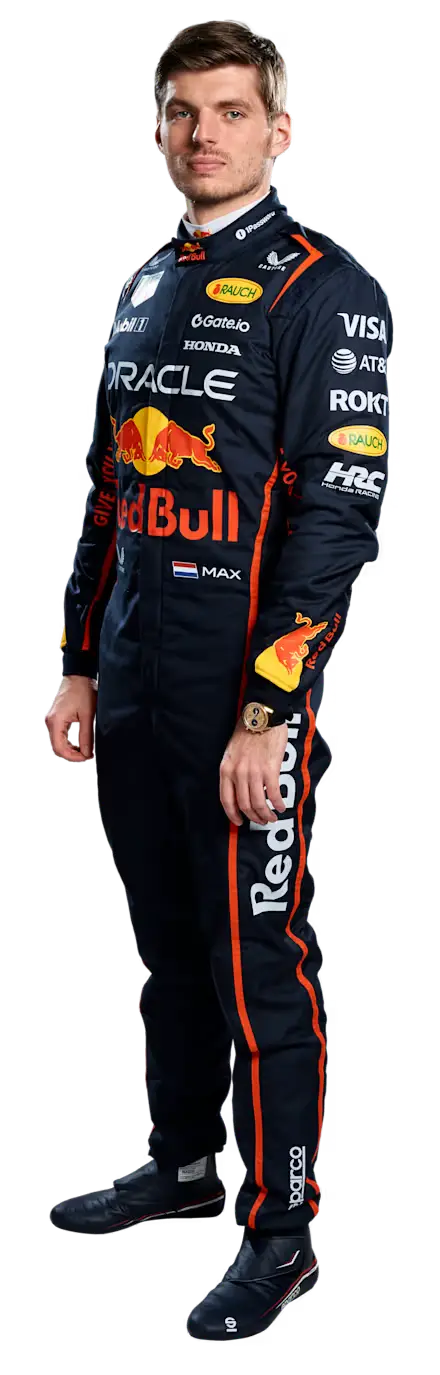
Born 30 September 1997 in Hasselt, Belgium. Son of a Dutch former F1 driver and a Belgian former karting champion. Four consecutive world titles, 2021-2024. 71 wins. Runner-up in 2025 by two points. Now racing with a new number in a new regulations era, still the benchmark everyone measures themselves against.
| Full name | Max Emilian Verstappen |
| Date of birth | 30 September 1997 |
| Birthplace | Hasselt, Belgium |
| Nationality | Dutch / Belgian (dual citizenship) |
| Racing licence | Dutch |
| Current team | Red Bull Racing |
| Car number | #3 (changed from #33 / #1 for 2026) |
| Father | Jos Verstappen, former F1 driver |
| Mother | Sophie Kumpen, former kart racer |
| Partner | Kelly Piquet |
| Daughter | Lily (born May 2025) |
Max Emilian Verstappen was born in Hasselt, Belgium on 30 September 1997 and raised in Maaseik, a town in Belgian Limburg close to the Dutch border. He holds dual Dutch and Belgian citizenship. He has always raced under the Dutch flag, partly because he lived with his father after his parents' separation and partly because, as he has said himself, he simply feels more Dutch.
His family's connection to motorsport runs on both sides. His father Jos Verstappen was a professional Formula One driver who raced in 107 Grands Prix between 1994 and 2003, including as Michael Schumacher's teammate at Benetton in his debut season. His mother, Sophie Kumpen, was a Belgian kart racer who won the prestigious Andrea Margutti Trophy in 1995 and was described by Christian Horner, who raced against her in 1989, as "top 10 in the world." Her career was cut short after her marriage to Jos. The couple were also close personal friends with Michael and Corinna Schumacher throughout their marriage.
His parents separated in 2008. Max went to live with his father. His sister Victoria remained with their mother.
Max was four years old when he first saw a younger friend karting and decided he wanted to do the same. Jos resisted. The pleas persisted. Tears helped. Eventually, with Sophie on Max's side, Jos relented. The first session was at Genk, on the rental circuit.
Jos remembers it: "After a few laps, he did the whole track flat out. And because of the vibration the carburettor was falling off all the time. We did it for one day, and then immediately bought him a bigger kart."
That was how it started. By seven, Max was competing in national championships.
The years between that first session at Genk and Max's arrival in Formula One were shaped by a method that Jos applied with unusual rigour. While Max was at school, Jos prepared his son's chassis and engines by hand in his workshop. They knew which engine to use on which track, which carburettors ran richer in which conditions. Jos trained Max to set up the carburettors himself, as a matter of feel rather than instruction. They tested two or three times a week. They drove over 100,000 kilometres a year together in a van, crossing the Netherlands, Belgium, and beyond, attending races and tests across Europe.
Max left mainstream school for private tutoring to accommodate this schedule. He admitted to leaving class early to attend races. The arrangement was extreme by any standard. But it produced a driver who arrived in single-seaters knowing not just how to drive, but how to read and adjust a car.
He speaks three languages: Dutch, English, and German. He learned German karting alongside networks in Germany, connections shaped partly by his father's relationship with the Schumacher world.
In 2013, Verstappen was fifteen years old and competing in the senior karting categories. That year, he won three CIK-FIA championships in a single season: the KF European Championship, the KZ European Championship, and the KZ World Championship. No driver had done this before. The only comparable achievement in the history of the sport was his own father winning two European Championships in the same year in 1989, a feat that had also stood unmatched until Max surpassed it.
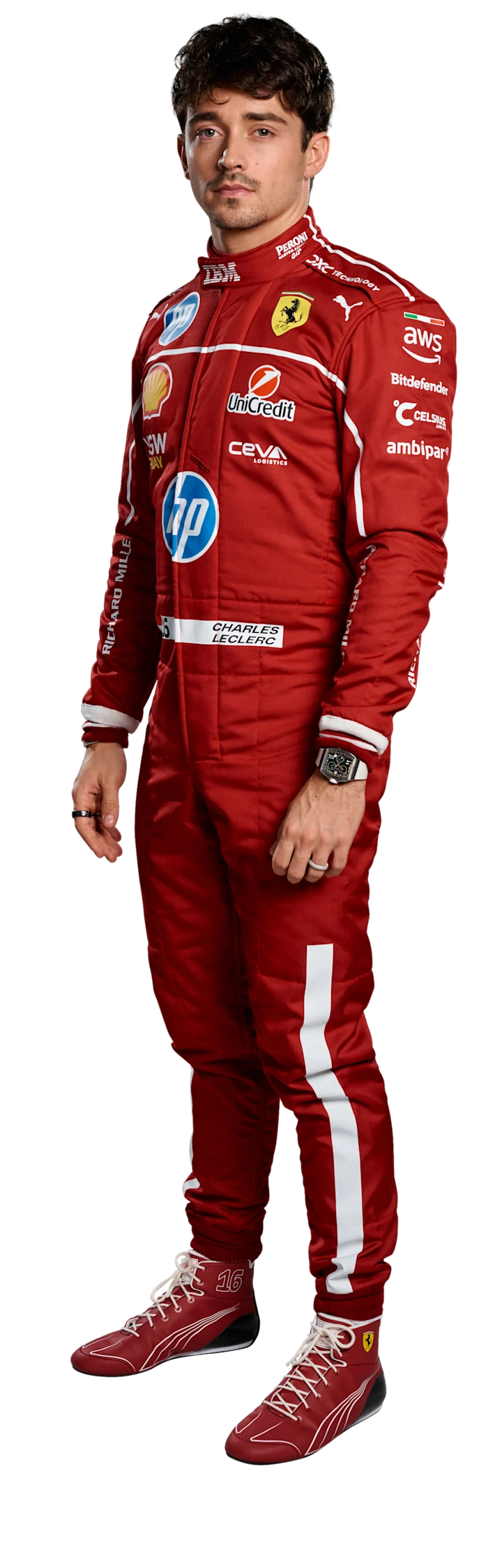
The KZ World Championship was held at Varennes-sur-Allier. The driver he beat for the title was Charles Leclerc.
At sixteen, Verstappen moved directly from karting to FIA European Formula 3 with Van Amersfoort Racing, skipping the intermediate steps most drivers took. He won 10 races in his first single-seater season and finished third in the championship. He also won the prestigious Masters of F3 at Zandvoort.
Red Bull signed him to their junior programme that year. Toro Rosso signed him for 2015 before that season had even ended.
Max Verstappen made his Formula One debut at the 2015 Australian Grand Prix, aged 17 years and 166 days. He was the youngest driver in the history of the sport to start a World Championship race.
His arrival directly prompted the FIA to tighten its super licence regulations. Drivers who followed after him, including Kimi Antonelli a decade later, were required to meet more stringent eligibility criteria specifically because of how young Verstappen had been.
He finished his debut season twelfth in the championship. His best result was fourth place at the Hungarian Grand Prix. He was in Toro Rosso machinery against drivers in significantly better cars and outperformed it consistently enough that his promotion to the senior team was discussed before the season was over.
Red Bull promoted Verstappen to replace Daniil Kvyat after four rounds of the 2016 season. His first race for the senior team was the Spanish Grand Prix. Both Mercedes cars retired on the opening lap. Verstappen led in the closing stages and held off Ferrari's Sebastian Vettel to win. He was 18 years and 228 days old: the youngest driver in history to win a Formula One Grand Prix.
The result that defined his potential came later that year in Brazil. In wet conditions at Interlagos, starting from outside the top ten, he drove a sustained charge through the field, overtaking multiple cars in a style that mixed commitment with precision in a way that observers had not seen from a driver so young. He reached the podium. The drive is still cited as one of the finest wet-weather performances of the modern era.
Verstappen accumulated wins and podiums through the years before a title-competitive car arrived. He won three times in 2019 (Austria, Germany, Brazil), secured his first career pole position in Hungary, and finished third in the championship. In 2020, against the dominant Mercedes, he won twice and finished third again.
The pattern of these years was consistent: a driver extracting maximum from machinery that was not the fastest, producing individual drives of high quality, and waiting. Red Bull and Honda were converging on the performance level that would make a title fight possible.
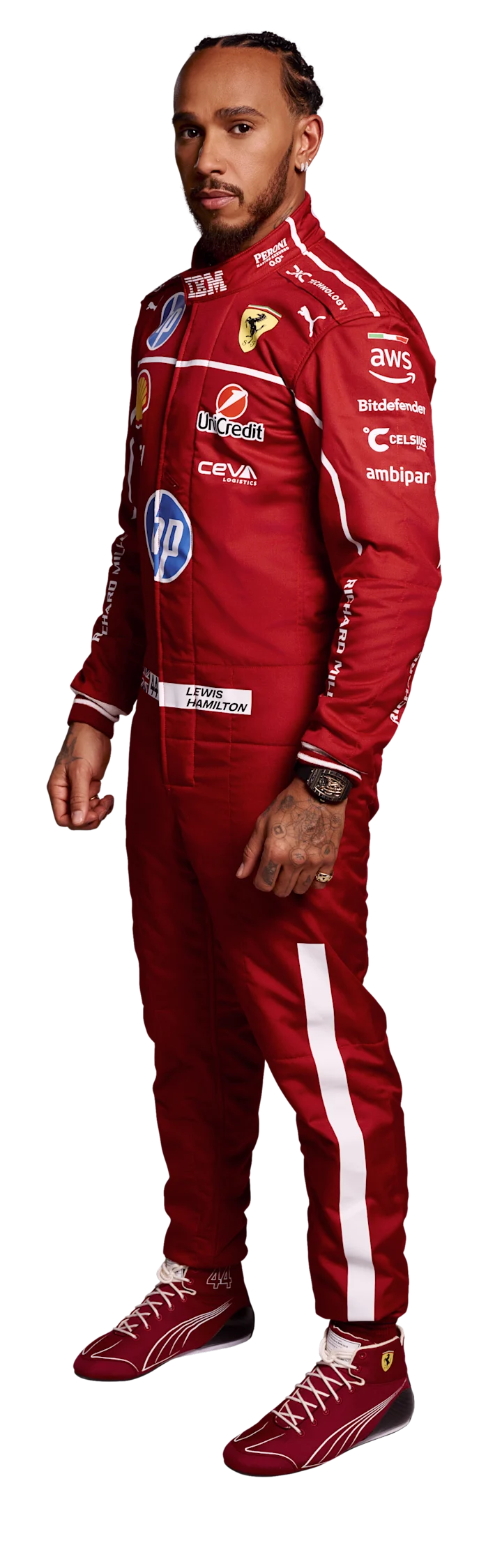
The 2021 season was a year-long duel with Lewis Hamilton that went to the final lap of the final race. Verstappen and Hamilton entered the Abu Dhabi Grand Prix level on 369.5 points each. The driver who finished higher would be champion.
Hamilton led the race for most of its distance and appeared to be managing the championship to its conclusion. On lap 53, with five laps remaining, Nicholas Latifi crashed and a safety car was deployed. Verstappen pitted for fresh soft tyres. Hamilton, unable to gain enough time advantage to emerge ahead if he also pitted, stayed out on worn hard tyres.
What happened in the final laps became the most contested regulatory decision in Formula One's modern era. Race director Michael Masi initially signalled that lapped cars would not be permitted to overtake the safety car. He then reversed this decision on the penultimate lap, but permitted only the five lapped cars that were running between Hamilton and Verstappen to pass, not the lapped cars further back in the pack. This cleared a direct path between the two title contenders with one lap remaining. The safety car was called in without completing the additional lap required by Article 48.12 of the sporting regulations.
Verstappen started the final lap directly behind Hamilton, on new soft tyres. He overtook Hamilton into Turn 5. He held the position. He won the race and the championship.
Mercedes protested on two grounds. Both protests were dismissed by the stewards that night. The FIA later published a full report confirming that Masi had acted in contravention of the regulations, that "human error" had led to only some rather than all lapped cars being permitted to pass, and that Masi had acted in "good faith." The FIA subsequently automated the process for identifying lapped cars to prevent recurrence. The result was upheld. Verstappen was and remains the 2021 World Champion.
He became the first Dutch driver to win the Formula One World Championship.
Verstappen entered the 2022 season with a new car, new regulations, and an 80-point championship deficit after early reliability failures. He won 15 of the 22 races in the second half of the year, overturning a deficit no driver had reversed in championship history. His final points total of 454 was the highest recorded under the current points format at that time.
The 2023 season was the most dominant single campaign in the sport's history to that point. Verstappen won 19 of 22 races. He won 10 consecutive Grands Prix from the Belgian Grand Prix onward, breaking Sebastian Vettel's 2013 record of nine consecutive wins. Red Bull also set a team record of 15 consecutive victories. He clinched the championship in Qatar with four races to spare.
The 2024 season tested the argument about Verstappen more directly than any of the previous three. Red Bull's car was third on pace for much of the year. McLaren was faster. Ferrari was faster. Verstappen won nine races. He was involved in a publicly feud with George Russell following a qualifying incident at the Qatar Grand Prix that led to both drivers receiving grid penalties. He won the São Paulo Grand Prix in wet conditions in a drive that earned widespread praise as among the finest of his career.
He secured the championship at the Las Vegas Grand Prix with two races remaining. He became the first driver in 41 years to win the championship while driving for the team that finished third in the Constructors' Championship, a feat last achieved by Nelson Piquet in 1983.
The 2025 season may, as ESPN argued after the final race, have done more for Verstappen's reputation than any of his four championship years.
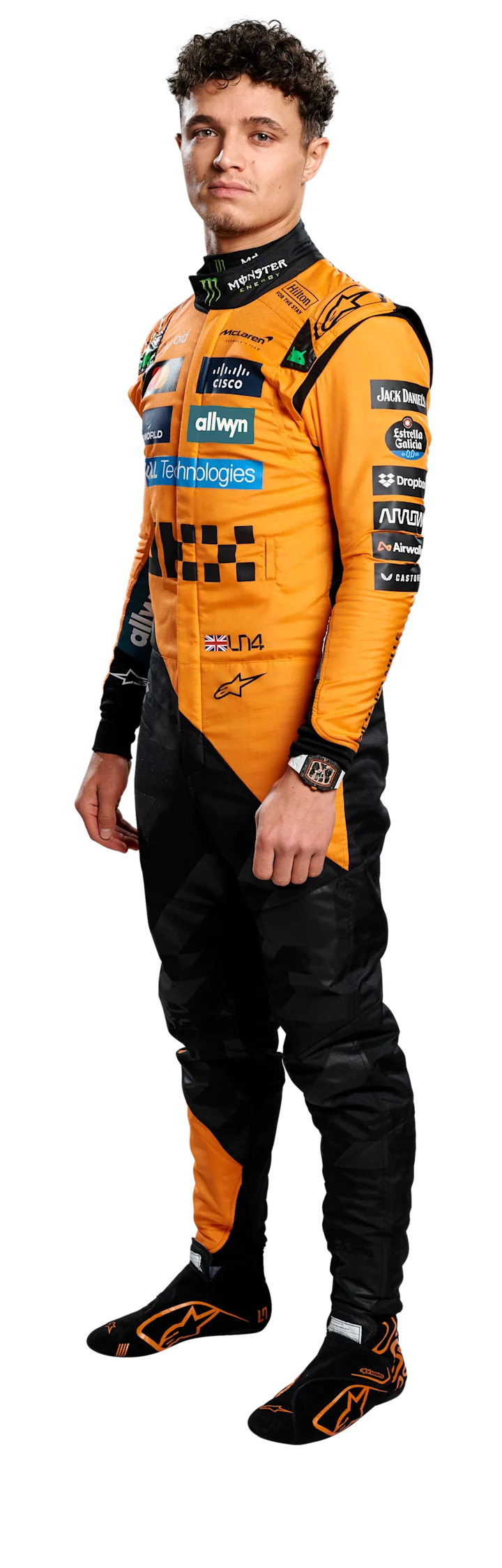
Red Bull remained the third-fastest team. McLaren's Norris and Piastri led the championship for almost the entire first half of the season. Piastri led the standings for fifteen consecutive rounds. Verstappen won the most races in the field, eight, for the fifth consecutive year. He set the fastest qualifying lap in Formula One history at Monza during the Italian Grand Prix weekend, averaging 264.682 km/h. His qualifying lap at the Japanese Grand Prix was described by BBC Sport as one that "many F1 observers regarded as one of the greatest ever."
From Monza onward, he was in a different class from the rest of the field. He reduced a 104-point deficit to Norris down to 12 points entering the final race. He won the Abu Dhabi Grand Prix from pole position. Norris finished third. The final margin was two points: 423 to 421. The closest finish to a title fight since 2008.
There was one exception to an otherwise near flawless season. At the Spanish Grand Prix, Verstappen drove deliberately into George Russell. He later received a penalty. It was the only significant misconduct in 24 races, but it was a lapse in judgement that sat apart from the quality of everything around it.
McLaren CEO Zak Brown described Verstappen during the 2025 campaign as a "horror movie character" a phrase that captured both the fear his competitors had of him and the almost involuntary respect even his rivals' bosses extended to his presence on the grid.
For the first time since early in his career, Verstappen enters a season in which the technical regulations have been fundamentally reset. The 2026 rules represent the most significant change in Formula One car design in over a decade. New aerodynamics, new chassis regulations, and a new power unit era — Red Bull is building its own engine in partnership with Ford for the first time.
Verstappen has acknowledged publicly that the new regulations are "not really enjoyable" to adapt to and that the word for 2026 is "management." He has also said Red Bull will still get his absolute best.
He has switched his car number to #3 for the first time, taking the number Daniel Ricciardo carried during their time as Red Bull teammates.
Verstappen is described by engineers and analysts as a driver with an unusually precise physical feel for what a car is doing in real time. Peter Windsor, a former Formula One journalist and technical observer, described his ability to change direction "quicker than anybody else" through high-speed sequences. The explanation, Windsor argued, is Verstappen's instinctive creation of a momentary flat area between changes of direction — a fraction of a second of stable balance that allows him to extract maximum grip before the next input.
This is traceable directly to the karting years, when Jos trained Max not only to drive but to set up and read the mechanical state of his own kart. The driver who says "I'm not just pushing the car, I'm the primary sensor my engineers rely on" (in Hadjar's words about himself, though equally applicable here) reflects a methodology that Verstappen absorbed early and has never departed from.
Helmut Marko has said Verstappen is the fastest driver Red Bull has ever had. Jenson Button called him the fastest driver in F1. James Elson of Motor Sport wrote after 2024 that Verstappen is "not only the fastest, capable of creating one-lap magic, he knows how to produce all it takes to win in the race too."
Verstappen obtained his road driving licence on his 18th birthday, 30 September 2015. The following day, he moved to Monaco, where he has lived ever since. He owns a Dassault Falcon 8X private jet and a yacht named Unleash the Lion.
He has been in a relationship with Kelly Piquet, daughter of three-time world champion Nelson Piquet, since 2020. Their daughter Lily was born in May 2025.
He is a supporter of FC Barcelona and PSV Eindhoven. He is actively involved in sim racing through Team Redline and competes in iRacing events. In 2022 he founded Verstappen.com Racing, a team that supports his father Jos in rallying and Thierry Vermeulen in GT competition. The team took the Gold Cup at the 2025 24 Hours of Spa.
| Year | Team | Wins | Poles | Podiums | Points | Position |
|---|---|---|---|---|---|---|
| 2015 | Toro Rosso | 0 | 0 | 0 | 49 | 12th |
| 2016 | TR / Red Bull | 1 | 0 | 7 | 204 | 5th |
| 2017 | Red Bull | 2 | 0 | 8 | 168 | 6th |
| 2018 | Red Bull | 2 | 0 | 11 | 249 | 4th |
| 2019 | Red Bull | 3 | 1 | 9 | 278 | 3rd |
| 2020 | Red Bull | 2 | 1 | 11 | 214 | 3rd |
| 2021 | Red Bull | 10 | 10 | 18 | 395.5 | 1st |
| 2022 | Red Bull | 15 | 14 | 17 | 454 | 1st |
| 2023 | Red Bull | 19 | 12 | 21 | 575 | 1st |
| 2024 | Red Bull | 9 | 12 | 14 | 437 | 1st |
| 2025 | Red Bull | 8 | — | 15 | 421 | 2nd |
| 2026 | Red Bull | — | — | — | — | In progress |
Career totals (end 2025): 71 wins · 48 pole positions · 127 podiums · 4 World Championships
Last updated March 2026