
Aston Martin’s highly anticipated partnership with Honda has quickly spiraled into one of the most troubling starts to a Formula 1 season in recent memory. Just two races into 2026, the team has yet to see either car finish a grand prix, and the looming Japanese Grand Prix at Suzuka threatens to deepen the embarrassment on Honda’s home soil.
The scale of the problem is not just poor performance, it’s fundamental reliability. Both drivers, Fernando Alonso and Lance Stroll, have already suffered race ending issues tied to the Honda power unit. The most alarming culprit is severe vibration originating from the engine, which has cascaded into multiple failures, particularly affecting the battery system.
Despite these setbacks, Aston Martin insists there has been progress. Compared to pre season testing and the opening race in Australia, the team has at least managed to complete more laps in China, including finishing a sprint race distance. However, this improvement comes with a major caveat: it has been achieved not through solving the root problem, but by mitigating it.
One of the key temporary fixes has been running the engine at lower revolutions. While this reduces vibrations, it significantly compromises performance. In simple terms, Aston Martin is choosing between finishing slowly or not finishing at all.
The physical toll on drivers has also raised concerns. Alonso was forced to retire in China after experiencing intense discomfort caused by vibrations transferring through the chassis. He reported losing feeling in his hands and feet, an alarming situation that highlights the severity of the issue.
At the heart of the crisis is a single unresolved question: can Honda fix the vibration problem quickly enough? Engineers believe that solving this core issue could unlock multiple improvements at once, restoring both reliability and performance. But time is the biggest enemy.
The gap between races offers some hope. Unlike the short turnaround between Australia and China, there is now a slightly longer window for Honda to analyze data, run simulations, and test solutions. Still, even within the team, there is uncertainty about how quickly a proper fix can be implemented..
For now, Aston Martin’s leadership remains cautiously optimistic, emphasizing the intensity of the ongoing development effort. But optimism alone won’t be enough.
Heading into Suzuka, expectations are low and pressure is high.
Crawford to replace Alonso at Aston Martin?
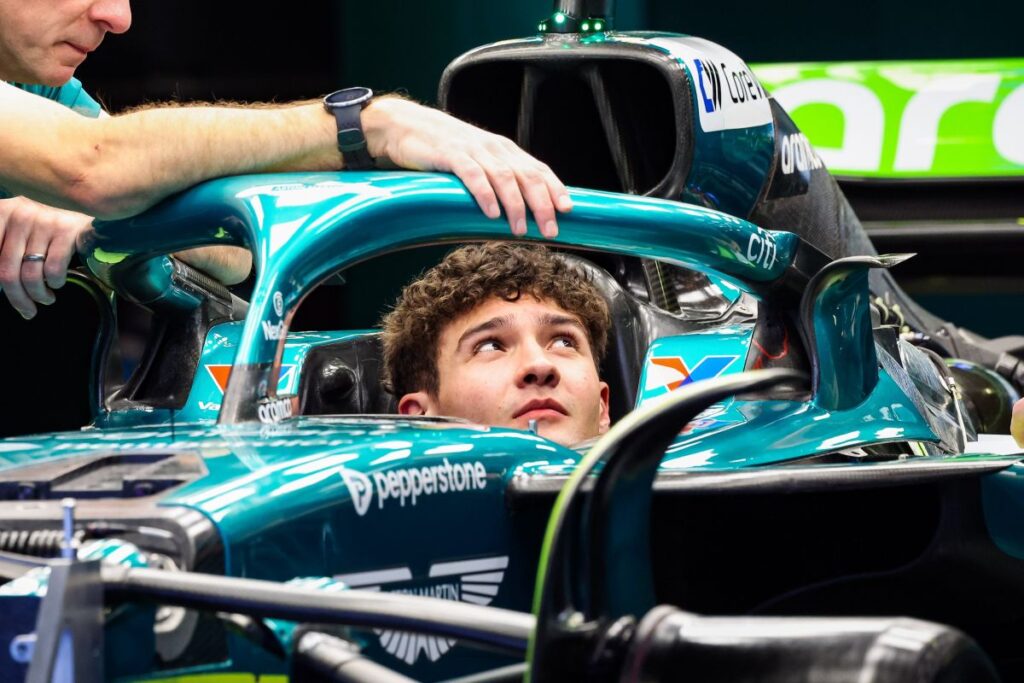
Amid the growing uncertainty, Aston Martin has already started making subtle adjustments to how it approaches race weekends, decisions that hint at both long term planning and immediate concerns. One of the most notable moves comes ahead of the Japanese Grand Prix, where reserve driver Jak Crawford will step into Fernando Alonso’s car for the first practice session at Suzuka.
The decision is officially tied to Formula 1’s requirement for teams to run rookie drivers during practice sessions. However, the timing is significant. With the team battling severe reliability issues and struggling to gather consistent data, giving Crawford track time serves a dual purpose. Not only does it fulfill regulatory obligations, but it also allows Aston Martin to collect additional feedback on a deeply problematic car without putting further strain on Alonso.