
Ten seconds too early: how the FIA’s Overtake blunder knocked Lindblad out of Singapore Sprint Qualifying
The FIA admits a Race Control error affected “certain cars” in SQ1 but hasn’t said which. We rebuilt every lap from the FIA’s own timing sheets. The driver eliminated by 0.088s never got the boost, while the two who beat him had it for their whole final run.
Arvid Lindblad finished his last SQ1 lap at 20:51:58 local time. Ten seconds later, Race Control switched on the Overtake mode it had forgotten to restore after the red flag.
Franco Colapinto and Esteban Ocon were halfway round their own final laps when it came on. Both ended up just ahead of Lindblad, Colapinto by 0.088s. The Racing Bulls rookie was eliminated in 17th.
What went wrong
For about six minutes of SQ1, nobody had Overtake mode. When it came back, it lasted 27 seconds, around the chequered flag. Normally Overtake is enabled before each session starts; for SQ2, Race Control switched it on at 21:05, six minutes before the green light.
| Local time | What happened |
|---|---|
| 20:35 | Red flag. Sergio Pérez hits the wall and drops debris trying to get back to the pits. |
| 20:46 | SQ1 restarts. Overtake mode is not re-enabled. |
| 20:52:08 | Race Control switches Overtake mode on. |
| ~20:52:13 | Lance Stroll is the first car to take the chequered flag. |
| ~20:52:36 | Overtake mode switched off, 27–28 seconds after it came on. |
| 20:55 | SQ2 delayed by a separate timing fault; some lap times had not registered. |
In its statement, published on Instagram, the FIA blamed “human error” in Race Control. It said the fault was unrelated to the timing problem and acknowledged it affected certain cars, depending on when they ran and where they were on the lap. It said SQ2 and SQ3 were unaffected. FOM’s timing system logged the activation as 28 seconds; the FIA’s statement says 27.
Who had it and who didn’t
Around the SQ1 cut line, the drivers who had Overtake mode on their decisive lap made it through. The driver who didn’t was the one knocked out.
The FIA’s Sprint Qualifying lap-times sheet gives each driver’s lap times and the clock time of their first lap. Adding up the laps gives when every later lap started and finished. As a check, the rebuilt times put Oscar Piastri and Valtteri Bottas at Turn 5 at 20:34:06 and 20:34:11, the exact times the stewards gave for their double-yellow lap deletions (Doc 30).
The table shows the bottom half of SQ1 and how much of the 28-second window fell inside each driver’s best lap.
| SQ1 pos | Driver | Team | Best SQ1 lap | Lap finished | Overtake on that lap |
|---|---|---|---|---|---|
| 11 | Gabriel Bortoleto | Audi | 1:34.690 | 20:53:35 | 28 s |
| 12 | Liam Lawson | Racing Bulls | 1:34.855 | 20:52:17 | 9 s |
| 13 | Oliver Bearman | Haas | 1:34.950 | 20:51:49 | none |
| 14 | Fernando Alonso | Aston Martin | 1:34.960 | 20:52:07 | none (missed by 1 s) |
| 15 | Esteban Ocon | Haas | 1:35.004 | 20:53:04 | 28 s |
| 16 | Franco Colapinto | Alpine | 1:35.048 | 20:52:42 | 28 s |
| 17 | Arvid Lindblad | Racing Bulls | 1:35.136 | 20:51:58 | none (missed by 10 s) |
| 18 | Lance Stroll | Aston Martin | 1:35.662 | 20:52:13 | 6 s, at the very end |
| 19 | Alexander Albon | Williams | 1:36.130 | 20:52:27 | 19 s |
| 20 | Sergio Pérez | Cadillac | 1:36.760 | 20:53:16 | 28 s |
| 21 | Valtteri Bottas | Cadillac | 1:36.868 | 20:49:30 | none |
| 22 | Carlos Sainz | Williams | 1:37.376 | 20:52:40 | 28 s |
Ocon and Colapinto each had one flying lap after the restart, and both laps covered the whole window. Lindblad’s one flying lap ended ten seconds before it opened. He missed SQ2 by 0.088s to Colapinto and 0.132s to Ocon.
Lance Stroll‘s case is different but bears on Aston Martin‘s reported protest threat. He got the boost only for the last six seconds before the line, too late to help. Teammate Fernando Alonso missed it by one second, but his 1:34.960 was enough to go through in 14th.
Higher up, Verstappen, Leclerc and Russell set the three fastest SQ1 times with the boost available. Hamilton (4th) and Norris (7th) set theirs without it. None of the five was near the cut.
Caveat: this shows when Overtake was available, not how much time it was worth. The gain depends on where on the lap each car was and how its team deployed the energy. The FIA has published neither.
Why 28 seconds matter
Under the 2026 power unit rules, Overtake mode lets the electric motor deliver extra energy beyond the normal deployment limits. Motorsport Week puts it at an extra 0.5 MJ.
How much time that bought depends on which part of the lap each car was on during the window, which is why the FIA’s statement stresses timing and track position. For Lindblad, that question doesn’t arise: his lap was already over.
The drivers were also missing it for the whole restarted session before 20:52:08. Motorsport Week reported that several cars complained of a lack of power during that period.
Classification unchanged, no stewards’ document
The FIA’s admission came as a social media statement, not a stewards’ decision. The official decision list for Singapore runs to 33 documents by Friday night, and none deals with the Overtake error.
The final Sprint Qualifying classification (Doc 32) matches the provisional one, so Lindblad starts the Sprint 17th.
The same evening the stewards did rule on Sprint Qualifying three times:
- Verstappen (Doc 29): found to have overtaken Hamilton under a single yellow, but not penalised. The stewards called it an unfortunate consequence of the closing speed.
- Slow laps (Doc 31): eight drivers exceeded the 1:52.0 slow-lap limit. No further action, because they were making way for faster cars.
- Deleted laps (Doc 30): Piastri and Bottas each lost a lap for passing through a double-yellow sector.
Motorsport.com reported that Aston Martin is considering a protest. On these numbers, Racing Bulls has the clearer grievance.
Reaction so far
The FIA’s Instagram statement drew more than 580 comments and almost 400 reposts within an hour. Many fans called the season a farce and questioned the competition’s integrity.
The teams themselves have said little in public:
- Racing Bulls posted Sprint hype but nothing about Lindblad’s elimination.
- Haas quoted a driver saying SQ1 was “really challenging” with the yellow and red flags.
- Williams posted Albon saying it was not the qualifying they wanted. Fans in the comments claimed, without confirmation, that Sainz lacked power.
It is the latest in a run of control-system problems this season:
- British GP: Race Control showed a “Safety Car in this lap” message although the race would finish behind the Safety Car.
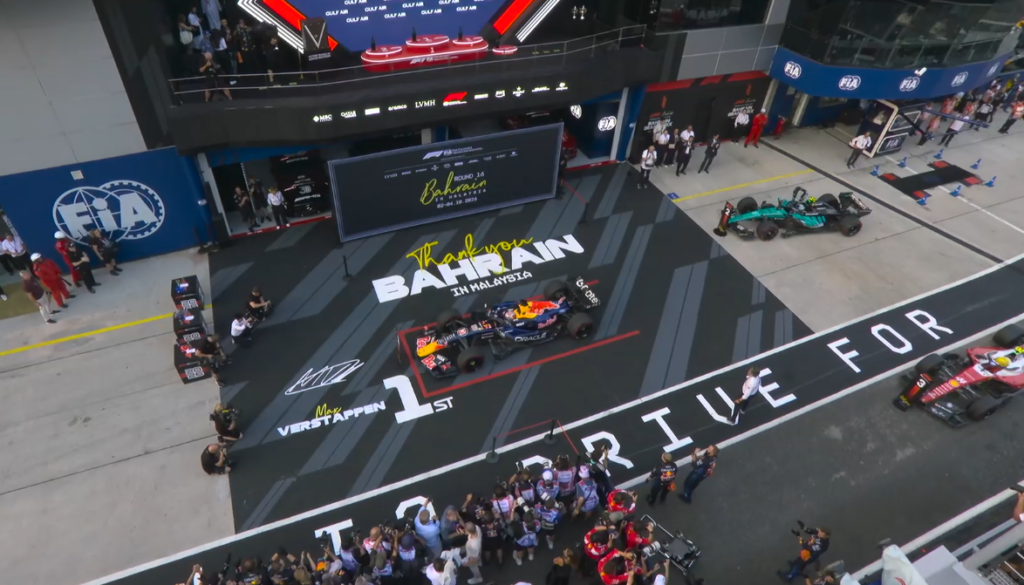
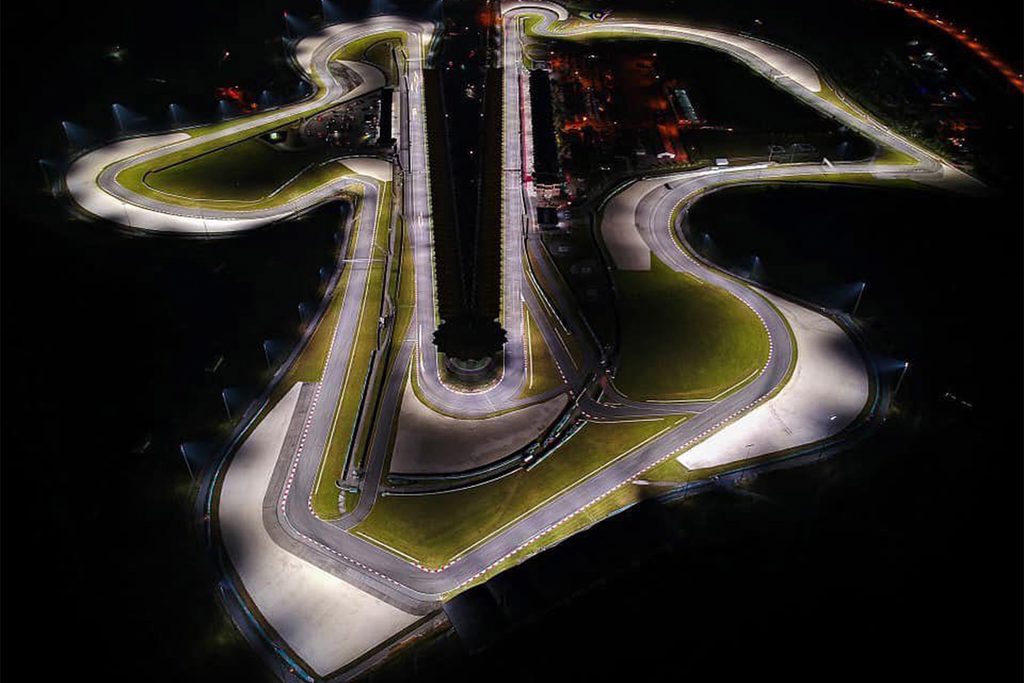
- Bahrain GP (held at Sepang): a software failure cut power to several cars on the formation laps and forced the start to be suspended (our race report explains why the cars stopped).
GPblog has listed both.
What the FIA still has to answer
Lindblad starts Saturday’s Sprint, the last of 2026, from 17th. That is the slot the timing sheets suggest the error may have cost him.
The FIA’s statement leaves three questions open:
- Which cars did it consider affected, and by how much?
- Why did a stewards’ decision not deal with it, when a single yellow and breaches of the slow-lap limit did?
- What check failed when Overtake was not restored at the 20:46 restart, given that Race Control enabled it before SQ2?
Until it answers, the timing sheets are the only evidence, and they show that the one driver knocked out at the cut line never had the boost.
Sources
- FIA Singapore GP decision documents: Doc 29 (Verstappen yellow flag), Doc 30 (double-yellow lap deletions), Doc 31 (SC2–SC1 times), Doc 32 (final classification), Doc 3 (Power Unit Information)
- FIA timing: Sprint Qualifying lap times, Race Control messages
- FIA statement on Instagram: @fia.official
- Motorsport Week, GPblog, PlanetF1, Motorsport.com
Method: lap end times were rebuilt by adding each driver’s lap times to the clock time of their first lap on the FIA lap-times sheet. The rebuild matches the stewards’ timestamps for the Piastri and Bottas deletions to the second.