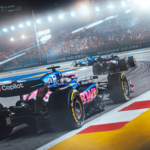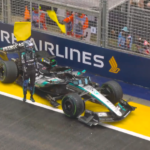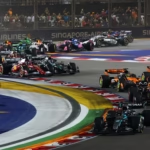

There is a factory in Enstone, Oxfordshire, that has been producing Formula One cars under six different names for forty-four years. The people who work there have occasionally won world championships. More often they have been told they are on the verge of winning one, managed a creditable midfield result instead, and then found the season ending with a management restructure and a new set of ambitions for the following year.
In 2026, the factory that has been called Toleman, Benetton, Renault, Lotus, Renault again, and Alpine enters the new technical era as a Mercedes customer team, having ended the 48-year association between the Renault engine and the cars built at Enstone. It is the most significant structural change to the team since Renault bought it in 2000. It comes at the end of a 2025 season in which Alpine finished last in the constructors' championship. It comes alongside the return of Flavio Briatore, the man who won five world championships at this address under two different names, then received a lifetime ban from Formula One for race-fixing, then had the ban overturned, and then returned to the team that once fired him.
If this sounds like a team that has been through a lot: it has. The question of whether 2026 represents the beginning of something new, or simply the latest chapter in a story that keeps cycling between promise and disappointment, is the one that Enstone's engineers are trying to answer.
| Full name | BWT Alpine F1 Team |
| Racing licence | French |
| Headquarters | Enstone, Oxfordshire, England |
| Executive Adviser / de facto team principal | Flavio Briatore |
| Team principal | Steve Nielsen |
| Drivers (2026) | Pierre Gasly (#10), Franco Colapinto (#43) |
| Power unit | Mercedes-AMG F1 M17 E Performance |
| First race (current entity) | 1981 San Marino Grand Prix (as Toleman) |
| First race (as Alpine) | 2021 Bahrain Grand Prix |
| Race wins (full lineage) | 35 (Renault works: 15; Benetton: 27) |
| Best constructors' result | 1st (Benetton 1995; Renault 2005, 2006) |
Before there was Benetton or Lotus or Alpine, there was Renault and before there was a Renault F1 team in the sense that most people understand, there was an engine that everyone in the paddock laughed at.
In 1977, the regulations governing Formula One engines contained a clause that nobody had exploited: alongside the 3.0-litre naturally aspirated engines used by every competitive team, the rules permitted a 1.5-litre turbocharged alternative. The loophole existed on paper. Renault, the French state-owned manufacturer, decided to exploit it.
The car that arrived at the 1977 British Grand Prix, Renault's first Formula One entry, was driven by Jean-Pierre Jabouille, a Frenchman who was also a qualified engineer and had helped design what he was driving. The Renault RS01 was powered by a 1.5-litre V6 turbocharged engine, the first such unit ever raced in Formula One. The paddock's reaction was not kind. The engine blew up with such frequency, emitting theatrical clouds of steam and smoke, that rival engineers and journalists christened it the "Yellow Teapot." Ken Tyrrell, one of the sport's most established team owners, was reportedly unable to look at the car without laughing.
Renault did not find this amusing. They also did not stop. Over two and a half seasons of development, failure, more development, and incrementally improving results, the turbo became competitive. By 1979, the RS10 lighter, with twin turbochargers that addressed the crippling throttle lag of the original, was fast enough to challenge for victory.
The moment of vindication came on 1 July 1979 at the French Grand Prix in Dijon. Jabouille, on pole position, won the race, the first ever victory for a turbocharged engine in Formula One, on French soil, using a French car, French tyres, and French fuel. It was the first time a fully French entry had won a Grand Prix. Behind him, Jabouille's teammate René Arnoux and Ferrari's Gilles Villeneuve produced what many still regard as the greatest wheel-to-wheel duel in the sport's history: five laps of interlocked combat at speeds that should have ended in catastrophe, wheels touching multiple times, neither driver yielding. Villeneuve finished second; Arnoux third. The race's winner was overshadowed by the battle for second. As Arnoux later said of the crowd still stopping him in Paris decades later to recreate the footage on their phones: "I know it very well."
The turbo revolution Renault had triggered forced every serious competitor to follow. By 1983, naturally aspirated engines were effectively obsolete in Formula One. Power outputs climbed from around 500 bhp to over 700 bhp in race trim and beyond 1,000 bhp in qualifying specification. The grid had been transformed by what the paddock had called a joke.
Renault continued racing as a constructor through the early 1980s, with Alain Prost joining the team in 1981 and establishing himself as one of the sport's fastest qualifiers. He came agonisingly close to the 1983 world championship, losing to Nelson Piquet on the final day of the season at the South African Grand Prix, before being abruptly dismissed by Renault management, who blamed his public criticism of the team's development strategy. Prost went to McLaren and won four world championships. Renault withdrew from Formula One as a constructor after 1985, having won 15 races but no drivers' or constructors' titles.
The contribution they left behind was more significant than any trophy: the turbo engine had changed Formula One permanently.
While Renault was pioneering its turbo project in the late 1970s, a different enterprise was being assembled in Witney, Oxfordshire, by a businessman named Ted Toleman and his managing director Alex Hawkridge. Their team, Toleman Motorsport, had built its reputation in Formula Two, winning the 1980 European Formula Two championship with Derek Warwick, before making the decision to step up to Formula One.
Toleman entered Formula One at the 1981 San Marino Grand Prix, their cars powered by turbocharged Hart engines and designed by a young engineer named Rory Byrne, a name that would eventually become synonymous with world championships, though at this point the Toleman TG181 was overweight and under-powered, failing to qualify at most circuits in their first season.
Pat Symonds joined the team in 1981, having been promised a salary increase that doubled his current earnings. The combination of Byrne's design instinct and Symonds's engineering precision formed a technical axis that would, under other names and for other owners, eventually produce four world championships.
Toleman's progress was gradual. Warwick scored the team's first points at the 1983 Dutch Grand Prix, and by the end of that season they were a genuine if modest presence in the field. What transformed their visibility, however, was a decision made before the 1984 season.
Derek Warwick left for Renault. Toleman, needing a replacement, signed the reigning British Formula Three champion: a 23-year-old Brazilian named Ayrton Senna, who had already tested for Williams, Brabham, and McLaren and found those teams unwilling to accommodate his preference for an immediate race seat rather than a junior development role.
The team's managing director later explained the logic: they could not afford an established name, and an average driver would not show the car to its potential. They needed someone talented enough to extract everything from a midfield machine, willing to work in circumstances that more prominent teams could not offer. Senna was willing.
His debut at the 1984 Brazilian Grand Prix lasted eight laps before a turbo failure. His third race produced his first point. His fifth race, at Monaco, is the one that most people remember.
The 1984 Monaco Grand Prix ran in torrential rain. At the start, Senna was thirteenth. Before the first lap was complete, he was ninth. By lap ten he was seventh. He was through the field in conditions that revealed what he could do in a way that no dry race on equal machinery could have. McLaren's Niki Lauda fell to him. Then Alain Prost. Then the race leader.
On lap 31, with Senna closing on Prost at a rate that made passing within two laps almost certain, the race director Jacky Ickx suspended the race under red flag conditions. Prost was declared the winner. Senna, whose lead over Prost at the moment of the red flag had shrunk to under ten seconds from nearly thirty-five when he began his charge, was classified second. The result stood.
The race was discussed for decades. Renault Ickx admitted years later that pressure from the FIA president Jean-Marie Balestre, who had not wished to see the championship leader defeated, influenced the timing of the red flag. Whether or not that is true, what everyone in the paddock could see was that a 23-year-old in a Toleman had been on the verge of passing the year's dominant car in the conditions most likely to distinguish genuine talent. The paddock had found its next great driver.
Senna also finished on the podium at Brands Hatch and Estoril before the season ended. During the Portuguese Grand Prix, he was already wearing Lotus colours for 1985, Toleman had found out he had signed with a rival team and suspended him for one race in Italy, with Stefan Johansson substituting. It was a relationship ending in acrimony, as most of Senna's team relationships eventually did, but it had served its purpose for both sides.
The 1985 season was the beginning of the end for Toleman as an independent entity. Michelin's withdrawal from Formula One left them without a tyre supplier, the company having alienated Pirelli the previous year during their mid-season switch. Benetton, the Italian clothing brand, arrived first as a sponsor and then as an owner, acquiring the team assets before the 1986 season began.
Ted Toleman's name left Formula One. The factory, the staff, and the technical nucleus that Byrne and Symonds had built remained. They would use them to far greater effect under new management.
Flavio Briatore arrived at Benetton Formula in 1990, appointed by the Benetton family to manage their Formula One operation. His background was not in motorsport: he had worked as a restaurant manager and insurance salesman in Italy before spending years developing Benetton's retail operations in the United States, building a considerable personal fortune from franchise agreements. He had previously avoided a fraud conviction in Italy by relocating to the Virgin Islands. Formula One, as he later acknowledged, was not something he had previously cared about.
Luciano Benetton disagreed with this assessment of his new manager's unsuitability and pressed him to take the role regardless. Within one year, Briatore had done something that transformed the team's trajectory: he had signed Michael Schumacher.
Schumacher had made his Formula One debut at the 1991 Belgian Grand Prix for Jordan, qualifying seventh and retiring with a clutch failure on the opening lap. The performance had been so extraordinary, he had never driven the circuit before, yet outqualified his more experienced teammate by four positions, that Briatore and Benetton moved rapidly to extract him from Jordan. The legal dispute over his contract cost money and generated ill-feeling between Jordan and the Benetton organisation that persisted for years. Schumacher arrived at Benetton before the next race in Italy and never looked back.
Schumacher won his first race in 1992 at the Belgian Grand Prix. He won again in 1993. In 1994, driving the Benetton B194 with Byrne still the car's designer and Symonds his chief engineer, he won the world championship, though the season was also the most contested in the sport's history.
The 1994 season was dominated by tragedy and accusation. Ayrton Senna joined Williams, regarded as the superior car, and died at the 1994 San Marino Grand Prix at Imola, the race that permanently changed Formula One's approach to safety. Schumacher won six of the first seven races before a two-race ban for ignoring a black flag in Britain. A subsequent investigation found illegal launch control software embedded in the Benetton B194's systems; the FIA determined there was no evidence it had been used, but the cloud of suspicion did not fully clear.
The championship reached its resolution at the final race in Adelaide. Schumacher held a one-point lead over Damon Hill's Williams. On lap 35, with Hill positioned to take the lead and likely the title, Schumacher's car hit a barrier at a corner exit. Hill moved to pass; Schumacher turned into him. Both cars were eliminated. Schumacher was champion by that single point. Whether the contact was accidental, a misjudgement in a compromised car, or deliberate, remains one of Formula One's most debated moments. The FIA did not penalise Schumacher.
In 1995, with Renault engines and Schumacher at his peak, Benetton were more clearly the fastest car. Schumacher won the championship comfortably, and Benetton took their only constructors' title. The combination of Byrne's chassis, Symonds's engineering, and Briatore's management had produced two consecutive world champions and one constructors' title in two years.
Then Schumacher, Byrne, and Ross Brawn, Briatore had hired Brawn in 1992 to lead the technical operation,all departed for Ferrari. Briatore was removed by Benetton management at the end of 1997. The team he left was a shadow of what it had been: Jean Alesi and Gerhard Berger had replaced Schumacher without replicating his results, and Benetton spent the final years of the 1990s as a midfield team rather than a championship contender.
The decade closed with Benetton racing Renault-derived engines branded as "Playlife" the Benetton family's sportswear subsidiary a dignified-sounding arrangement that served primarily to obscure that the engine was an ageing unit no longer receiving the works development that had made it competitive.
Renault had been watching the Benetton operation with increasing interest. In 2000, they purchased the team outright. By 2002, the Benetton name was gone and the cars appeared as Renault F1 Team entries, with Renault engines and Renault colours. Briatore returned as managing director. Symonds, who had never left, remained as chief engineer.
The early years of the Renault works return were competitive without being dominant. Fernando Alonso, a 21-year-old Spaniard from Oviedo who had spent 2001 as Renault's test driver and 2002 with Minardi, was signed by Briatore for 2003. In Hungary that year he became the youngest race winner in Formula One history at that point, winning at age 22. He finished sixth in the championship, fourth in 2004, and then won it in 2005 and 2006.
The 2005 Renault R25 was one of the most consistent cars of the decade: fast, reliable, and aerodynamically sophisticated. Alonso won seven races and denied Michael Schumacher, by then at Ferrari in the middle of his third consecutive title run, the championship he had won five times in the previous five years. It was the closest the sport had come to an Alonso-versus-Schumacher title fight; Alonso prevailed by 21 points.
The 2006 season was tighter and more dramatic. Alonso in the Renault R26 and Schumacher in the Ferrari produced one of the more intensely contested championships in modern Formula One history, going to the final race before Schumacher's engine failed and Alonso retained the title. Fernando Alonso was 25 years old, a two-time world champion, and the most sought-after driver on the grid.
He left for McLaren. Renault won no more titles.
Alonso returned to Renault for 2008 after a turbulent single season at McLaren alongside Lewis Hamilton. The car was no longer competitive at the front. Briatore, under pressure to produce results that were keeping sponsors and Renault's board satisfied, was in a difficult position by mid-season.
At the 2008 Singapore Grand Prix, the first Formula One race held at night, the Marina Bay circuit illuminated for global television, Alonso qualified fifteenth. Under normal race conditions, a win was essentially impossible from that position. What happened on lap fifteen of the race made it possible.
Nelson Piquet Jr., Alonso's teammate, deliberately drove his car into the barrier at turn seventeen at a point that had been identified in advance as the optimal location to trigger a safety car deployment. Alonso had already made an early pit stop; the safety car allowed him to cycle to the front of the field as other cars were forced to pit or found their lead negated by the bunching of the field. He won the race from fifteen on the grid.
Piquet Jr. said nothing publicly for nearly a year. Having been dropped by Renault following the 2009 Hungarian Grand Prix, he and his father sent a 1,400-word statement to the FIA in July 2009, alleging that Briatore and chief engineer Pat Symonds had instructed the crash. The story became public when the Brazilian broadcaster Rede Globo obtained the document.
The FIA investigation that followed was conclusive. Renault did not contest the charges. On 16 September 2009, the team announced that both Briatore and Symonds had left. The FIA issued Renault a two-year suspended ban and imposed an indefinite ban on Briatore from any FIA-sanctioned event. Symonds received a five-year suspension. Both bans were subsequently challenged in French courts and overturned, Briatore and Symonds each received nominal financial compensation, but the reputational damage was complete.
Alonso was not charged; the FIA accepted that the evidence did not establish his knowledge of the conspiracy before the race. Whether one believes that conclusion is a matter that each observer has resolved according to their own assessment of probability.
With Briatore and Symonds gone, the Renault organisation at Enstone entered a prolonged period of instability. The works team competed through 2010 before Renault sold a large stake to the Luxembourg investment fund Genii Capital. The Lotus name was then applied to the team from 2012, after a dispute with the Lotus Cars road car brand that produced a period where two different F1 teams operated under Lotus-associated identities simultaneously.
Under the Lotus name and with Kimi Räikkönen returning to Formula One after his rally programme, the team was briefly competitive. Räikkönen won the 2012 Abu Dhabi Grand Prix and opened the 2013 season with victory in Australia. But financial difficulties, Genii Capital had less resource than the team needed, meant development slowed and the competitive window closed.
By 2015, Renault decided it needed to return. They repurchased the team before the end of that year, reapplied the Renault name and yellow-and-black colours from 2016, and embarked on what they described as a multi-year reconstruction project.
The return produced competitive racing but not championships. Nico Hülkenberg was a consistent points scorer; Carlos Sainz arrived on loan from Red Bull in 2017 and impressed enough to prompt Renault to make the arrangement permanent in 2018. Daniel Ricciardo left Red Bull to join Renault in 2019, a move that generated considerable excitement and considerably mixed results, the car was not the step forward that either Renault or Ricciardo had hoped.
Three podiums came in the shortened 2020 season: two for Ricciardo, one for new teammate Esteban Ocon. The best constructors' result of the second Renault era was fifth in 2020, achieved as the season concluded and the team was already preparing to rebrand again.
For 2021, the works Renault F1 entry became the Alpine F1 Team, named after Renault's sports car subsidiary, a French brand with motorsport heritage that gave the rebranded team a more distinctive identity than simply carrying the parent company's name for the third time.
Fernando Alonso returned to Formula One after two years away, having spent 2019 and 2020 competing in endurance racing and the Indianapolis 500, to race for Alpine alongside Ocon. It was the third time Alonso had driven for the Enstone organisation: he had raced for them as Renault from 2003 to 2006 and again in 2008. The tagline attached to his return "El Plan," the plan implied he had identified Alpine as the vehicle for one final championship run.
The 2021 season produced the moment that stands as Alpine's greatest achievement under their current name. At the Hungarian Grand Prix, in a race disrupted by first-lap contact that triggered a red flag and left the grid reorganised in ways that favoured unexpected combinations, Esteban Ocon found himself at the front and held on. Alonso, his teammate, drove the race of his life in defence behind the Frenchman: holding off Lewis Hamilton's charging Mercedes for the final laps of the race in a display of tactical driving and sheer refusal to yield that the paddock discussed for weeks.
Ocon crossed the line for his first Formula One victory. Alonso took third, the same position he had finished in at the Qatar Grand Prix later that season. It was the Enstone organisation's first win since Räikkönen's Abu Dhabi 2012 under the Lotus name. The first for an Alpine-branded car. A rare moment of uncomplicated satisfaction in a team history that had produced rather more drama than joy.
The 2022 season brought fourth in the constructors' championship, the team's best result as Alpine, with Alonso and Ocon both scoring consistently. Then Alonso announced he was leaving for Aston Martin. And Alpine's reserve driver, Oscar Piastri, who had won the Formula 2 championship in 2021 on the strength of Alpine's junior programme, announced that despite what Alpine believed was a signed contract for a 2023 race seat, he had actually signed with McLaren.
The Piastri affair was resolved by the FIA contract recognition board in McLaren's favour. Piastri went to McLaren, where he won races and eventually contributed to a constructors' championship. Alpine were left with a vacancy, a public embarrassment, and the knowledge that the two most exciting talents associated with their junior programme had departed without ever racing for them at their peak.
Pierre Gasly arrived from AlphaTauri in 2023, partnering Ocon. The team finished sixth in 2023 and sixth again in 2024, the latter including a surprise double podium at the São Paulo Grand Prix where the combination of timing, weather, and team strategy produced third for Gasly and fourth for Ocon in conditions that favoured cars that had given up on the dry race. The year overall, however, was not a satisfying one: the Renault engine was measurably losing power relative to competitors at power-sensitive circuits, and the decision had already been made to end the relationship.
In September 2024, Renault announced it would not build an engine for the 2026 regulations. The development investment required, Renault had been consistently behind Mercedes, Ferrari, and Honda in power output through the hybrid era, was not justified by the return. Alpine would become a customer team of Mercedes from 2026 onward.
Ocon left after 2024, joining Haas. His departure was not acrimonious but it was swift; the team was already looking to reset the driver lineup alongside the technical reset. Jack Doohan, son of motorcycle racing legend Mick Doohan and a graduate of the Alpine junior programme, was given the second seat for 2025 alongside Gasly.
The 2025 season was, by any measure, the worst in the team's recent history. The car sacrificed development time deliberately, the team had decided to concentrate resources on the 2026 Alpine rather than optimising a car that would be obsolete in twelve months, but the extent of the performance deficit was still shocking. Gasly scored points once before the summer break. Doohan was replaced after six races by Franco Colapinto, the Argentine who had made an impression at Williams during nine substitute races in 2024.
Colapinto scored no points from the moment he joined. Gasly scored all 22 of Alpine's season points, the last coming at the São Paulo Grand Prix. The team finished last in the constructors' championship, 48 points behind Kick Sauber in ninth. It was the worst constructors' result in the history of the Enstone organisation under any name.
Flavio Briatore had returned as executive adviser in mid-2024, his lifetime FIA ban having been overturned, and Alpine having apparently concluded that the man who won five world championships at their address was more useful than problematic. By mid-2025 he was, in substance, running the team, with team principal Oli Oakes departing and Steve Nielsen taking the operational role under Briatore's direction.
The A526 that arrived at the 2026 pre-season tests was reported to have reached Formula One's new minimum weight limit straight away, a detail that Briatore himself described as a meaningful early technical success after the difficulties of the previous two seasons. The Mercedes power unit provides a significant upgrade from the Renault engine that had been losing ground in the power charts since 2014; at circuits with long straights in 2025, data suggested the Renault unit was losing six-tenths of a second against the field's fastest power units in high-speed sections alone.
The driver lineup of Gasly and Colapinto continues. Gasly, at 29, is one of the more experienced midfield drivers on the current grid, a race winner for AlphaTauri at Monza in 2020, holder of a multi-year contract with Alpine through 2028, and by the evidence of 2025 the driver capable of extracting results from machinery that the raw numbers do not warrant. Colapinto, 22, is faster over one lap than his 2025 results suggested; his future at the team beyond 2026 depends on what he produces.
The honest assessment of Alpine's position in 2026 is: significantly better than 2025, destination unknown. Mercedes customer power removes the single largest competitive handicap. The team sacrificed 2025 to give 2026 development more resource. The factory at Enstone is established and capable.
What is less certain is whether the organisational stability required to convert those ingredients into sustained competitiveness exists. The team has had six team principals or de facto leaders in the last three years. The driver lineup changed twice mid-season in 2025. The transition from Renault to Mercedes engines required renegotiating the technical direction of the entire car. Briatore's return adds experience and authority; it also reintroduces a figure whose previous tenure ended in a race-fixing scandal and a regulatory ban.
| Identity | Years | Best result |
|---|---|---|
| Toleman | 1981-1985 | 7th constructors (1984) |
| Benetton Formula | 1986-2001 | 1st constructors (1995) |
| Renault F1 Team | 2002-2010 | 1st constructors (2005, 2006) |
| Lotus Renault GP / Lotus F1 | 2011-2015 | 4th constructors (2012) |
| Renault Sport F1 | 2016-2020 | 5th constructors (2020) |
| Alpine F1 | 2021- | 4th constructors (2022) |
World championships across full lineage: 5 drivers' titles (Schumacher 1994 and 1995, Alonso 2005 and 2006, all as Benetton or Renault); 4 constructors' titles (Benetton 1995, Renault 2005 and 2006, three titles in total as constructors).
Race wins across full lineage: The total depends on how wins are attributed across identities, but Benetton won 27 races, Renault works won 35 in total across both eras, and the combined lineage represents one of the most successful technical histories in the sport. The most recent win under any incarnation of the current team was Ocon's 2021 Hungarian Grand Prix.
What runs through forty-four years of this organisation is not a name, an owner, or a driver. It is a place and the people who have worked there. Rory Byrne designed the car that gave Senna his debut and the cars that gave Schumacher his first two championships before moving to Ferrari. Pat Symonds joined Toleman in 1981 and won four world championships with the same organisation before the Crashgate scandal removed him; he returned to Formula One eventually, served as the sport's chief technical officer, and shaped the 2022 and 2026 regulations before joining Cadillac. Alan Permane served as sporting director at Enstone from 1988 until 2023, thirty-five years.
That continuity of technical knowledge is the most valuable thing the organisation has carried across its various reinventions. The names above the door have changed with the politics of manufacturer investment and the financial pressures of Formula One economics. The engineers who know how to build a championship-winning car have been there, with interruptions, for the majority of the sport's modern era.
The question for 2026, as it has been in various forms for most of the years since Alonso's second championship in 2006, is whether the right combination of resources, leadership, and timing can reproduce what happened in 2005 and 2006: a team that was not the richest or the most prominent producing the best car in a given regulatory cycle.
Renault's turbo, laughed at as a yellow teapot in 1977, had forced the entire grid to rethink the future by 1983. The Enstone organisation's history suggests it has done improbable things before. Whether it can do another one depends on how much the Mercedes engine upgrade, the 2026 regulation reset, and the structural changes of the last two years have altered the competitive order.