Williams

9
Position
0
Points
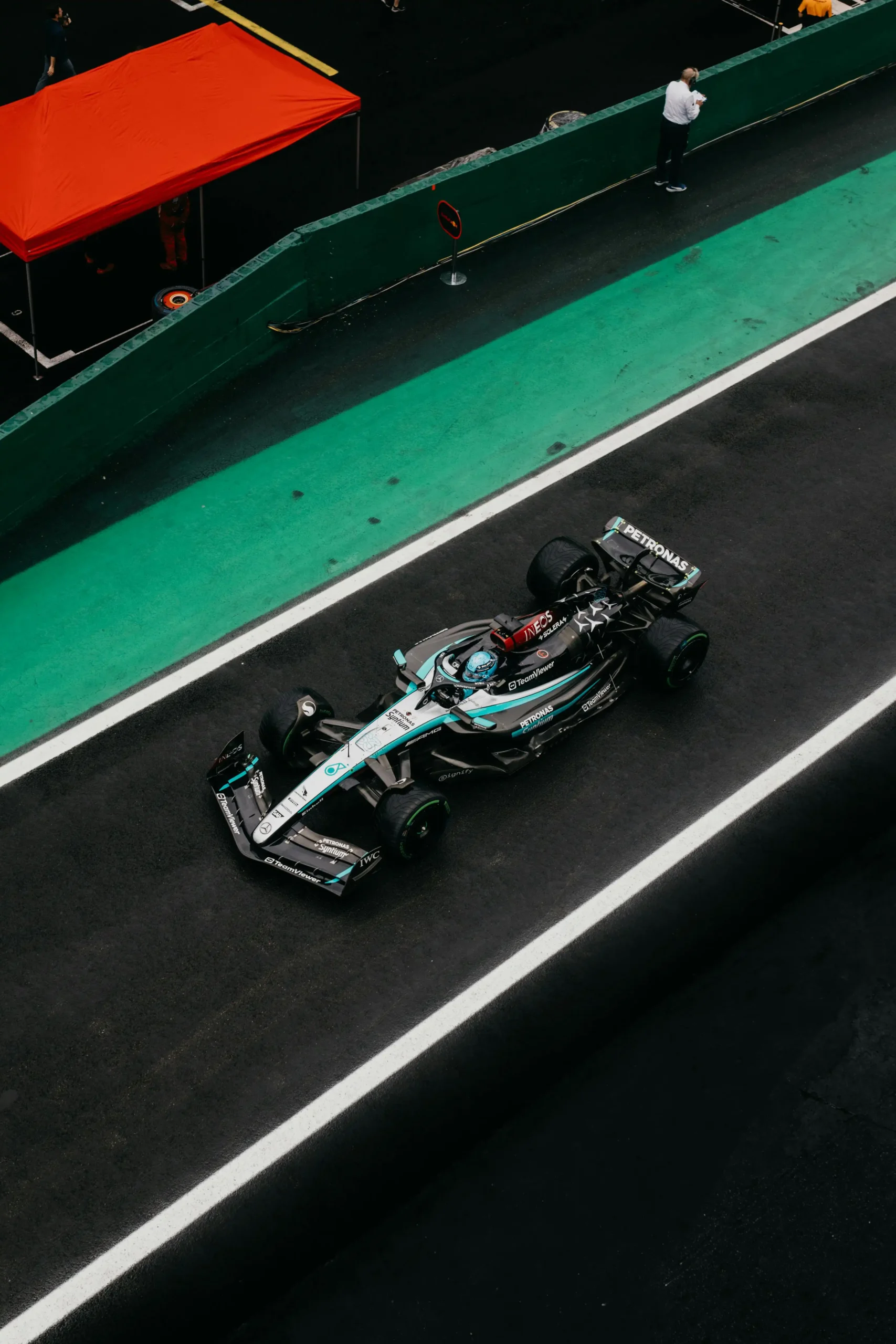
Williams Car
2026

Season

Overview
9 Position
0 Points
Grand Prix
0 Races
0 Wins
0 Podiums
0 Poles
0 Points
0 Top 10s
0 Fastest Laps
0 DNFs
Sprint
0 Races
0 Wins
0 Podiums
0 Poles
0 Points
0 Top 10s
All

Team Summary

9 Championships
128 Pole Positions
245 Podiums
851 GP Entered
3768 Total Points
Records
Highest Race Finish 1 (x114)
Highest Grid Position 1 (x128)

Team Profile

Full Team Name
Williams Racing
Base
Grove, United Kingdom
Team Chief
James Vowles
Technical Chief
Pat Fry
Chassis
FW47
Power Unit
Mercedes
First Team Entry
1977

Biography

There is a version of this story that starts with a grocery salesman who used to run around playgrounds pretending to be a racing car. There is another version that starts in a carpet factory in Didcot, where two men with no money and no car decided they would build a Formula One team from nothing. Both versions are true, and together they produce the same outcome: nine constructors' championships, seven drivers' titles, 114 race victories, and a legacy so embedded in the architecture of the sport that Williams cars carry the letters FW on every chassis they build, for Frank Williams, as though the founder himself is bolted into the floor.

The third version of the story, the one that matters most in 2026, starts in Grove, Oxfordshire, where a team that had been financially exhausted and operationally hollowed out for nearly two decades is in the middle of the most methodical and credible rebuild in contemporary Formula One. Fifth in the 2025 constructors' championship. More points that season than in the previous seven combined. Carlos Sainz on the podium in Baku and Qatar. Alex Albon carrying the team through a difficult first half with the kind of consistency that earned him a reputation as one of the grid's most underrated drivers. A team principal, James Vowles, who has spent three years rebuilding the culture, the infrastructure, and the institutional ambition from the root system upward.

The three versions share a word: resilience. It is the defining characteristic of every chapter Williams has written.


Team Profile at a Glance

Full nameAtlassian Williams F1 Team
Racing licenceBritish
HeadquartersGrove, Oxfordshire, England
Team principalJames Vowles
Drivers (2026)Alex Albon (#23), Carlos Sainz (#55)
Power unitMercedes-AMG F1 M17 E Performance
First race1977 Spanish Grand Prix
First win1979 British Grand Prix (Regazzoni)
Constructors' championships9 (1980, 1981, 1986, 1987, 1992, 1993, 1994, 1996, 1997)
Drivers' championships7 (Jones, Rosberg, Piquet, Mansell, Prost, Hill, Villeneuve)
Race wins114
OwnerDorilton Capital

Frank Williams-Three Lives, One Team

Francis Owen Garbett Williams was born on 16 April 1942 in South Shields, County Durham, the son of an RAF officer and a schoolteacher. His parents' marriage broke down early. He was raised in part by an aunt and uncle in Jarrow, then sent to St Joseph's College, a private boarding school in Dumfries, Scotland, where by his own account he would run around the grounds pretending to be a racing car. In the late 1950s, a friend took him for a ride in a Jaguar XK150. That was the end of everything else.

After leaving school, Williams worked as a travelling salesman for Campbell's Soup at £10 a week, driving a van around the country. He spent the money he saved from grocery sales on racing cars, not to drive competitively, but to buy and sell, to enter, to be in the ecosystem of a sport he loved with the intensity of someone who had found the one thing that made sense. He attempted a racing career himself but acknowledged he "was always going off the road," so redirected his energy toward ownership. In 1966 he formed Frank Williams Racing Cars, the organisation that would compete in Formula Two and then Formula One with borrowed money, sponsor promises, and sheer persistence.

The First Life-Frank Williams Racing Cars

Frank Williams Racing Cars entered Formula One in 1969, running a Brabham BT26A with Piers Courage driving. The first race was the 1969 Spanish Grand Prix. Courage finished second in Monaco and second again at Watkins Glen, scoring the pair of results that put the Williams name on the sport's radar for the first time. The following season, Williams moved to a De Tomaso chassis, a decision that ended in devastation. At the 1970 Dutch Grand Prix at Zandvoort, Piers Courage's De Tomaso caught fire after an accident and he was killed. He was 28. The grief and financial damage set Williams back several years. Later in his career, Frank Williams spoke of becoming emotionally distant from his drivers after Courage's death, not as a failure of feeling but as a learned form of protection.

The years that followed were a struggle for survival. Williams ran cars for various drivers, took on sponsorship where he could find it, and slowly accumulated the debts and setbacks that any underfunded independent team accumulates. In 1975, a second-place finish for Jacques Laffite at the German Grand Prix at the Nürburgring provided a moment of relevance. In 1976, an Austrian-Canadian oil millionaire named Walter Wolf acquired sixty percent of Frank Williams Racing Cars, renamed the operation Wolf-Williams Racing, and then removed Frank Williams from his own management team. Wolf restructured. Frank left.

He was 34, with no team, no car, and the ruins of a decade's work behind him. He could have stopped. He didn't stop.

The Second Life-Williams Grand Prix Engineering

In 1977, Frank Williams and Patrick Head founded Williams Grand Prix Engineering at a workshop in an old carpet factory in Didcot, Oxfordshire. Head had been recommended to Williams by others in the paddock as a clever and hard-working engineer. The partnership that formed was, in Williams's own description, "significant." Head brought engineering rigour and the willingness to design from first principles. Williams brought commercial tenacity, the ability to attract sponsors through sheer personal charm and relentlessness, and an emotional commitment to racing that nothing had diluted.

The first season, 1977, produced no points. The team ran a customer March chassis for driver Patrick Nève in eleven races; the best finish was seventh at the Italian Grand Prix. The following year, Head designed the first Williams car, the FW06, and the team entered as a constructor at the 1978 Argentine Grand Prix. The car was competitive enough to qualify for every race and reach the podium at the US Grand Prix, with Australian driver Alan Jones. It was the beginning of something that neither man had fully dared to imagine when they started in a carpeted workshop two years before.


The First Golden Era-1979 to 1987

Clay Regazzoni and the First Win

The 1979 car, the FW07, was Head's ground-effect masterpiece, a design that used the principle of generating aerodynamic downforce beneath the floor of the car that had been pioneered by Colin Chapman at Lotus, refined to a level that made Williams suddenly competitive with the best teams in the paddock. Veteran Swiss driver Clay Regazzoni was paired with Alan Jones. At the 1979 British Grand Prix at Silverstone, Regazzoni won Williams's first Formula One race, with Jones retiring while leading. It was Williams's 23rd race as a constructor.

Jones went on to win four more races that season. The team's trajectory had become unmistakable.

In 1980, Alan Jones won the World Drivers' Championship. Williams won the constructors' title by 54 points. It had taken them three years from a carpet factory to a Formula One championship. Jones was Australian, blunt, fast, and devoted to the team; he described Frank Williams years later with something close to reverence. The following year, Carlos Reutemann led the championship heading into the final race in Las Vegas, only to finish eighth while Jones recovered from his retirement decision to win. Williams won the constructors' title again. In 1982, Keke Rosberg, the flying Finn with a cigarette in one hand and a seatbelt in the other, won the drivers' championship on points from five different winners across a chaotic season, the team's third title.

The Honda Era-Piquet, Mansell, and One Memorable Tyre Blowout

Williams switched from Ford Cosworth to Honda turbo engines for 1983. The early years of the partnership were difficult; the turbo engines were powerful but unreliable. By 1986, the combination had matured into something formidable. Nigel Mansell and Nelson Piquet were the drivers. The constructors' championship went to Williams. The drivers' title did not. Mansell suffered a catastrophic tyre failure at 300 kilometres per hour on the straight at Adelaide in the final race, eliminating him from title contention and handing the championship to Alain Prost in a McLaren. It remains one of Formula One's most discussed what-ifs.

In 1987, Williams won both titles, Piquet taking the drivers' crown, the team retaining the constructors'. Then Honda withdrew their engine supply and gave it to McLaren, where Ayrton Senna would use it to win three championships in four years. Williams entered a period of relative competitiveness but was no longer the dominant force. Mansell won six races in 1987, but the Honda engine made the difference, and when it moved to Woking, the landscape shifted.


The Second Golden Era 1992 to 1997 the FW14B and its Descendants

The sequence of events between 1991 and 1997 represents the most technically dominant period in Williams's history and perhaps the most technologically sophisticated in Formula One's. The catalyst was two things arriving at the same time: a Renault V10 engine that was reliably 80 to 100 horsepower ahead of the field, and an aerodynamicist named Adrian Newey.

Newey had joined Williams in 1990 from Leyton House Racing, bringing an intuitive understanding of aerodynamics that translated directly into downforce figures that other designers could not match. His partnership with Patrick Head, Head controlling mechanical and structural engineering, Newey controlling aerodynamics produced a sequence of cars that were not merely faster than their competitors but faster in a different dimension.

The FW14B-A Car That Changed the Rules They Made

The 1992 Williams FW14B featured active suspension, traction control, semi-automatic transmission, and anti-lock brakes. The active suspension, an electronic system that could maintain the car's pitch and roll attitude regardless of whether it was cornering, braking, or accelerating, was the product of development work Williams had been conducting since 1985, when the original concept was passed to them by brake supplier AP Racing. In Newey's hands, the aerodynamic package was designed with the active suspension in mind: because the car would remain flat under all conditions, the aerodynamic surfaces could be optimised for a single attitude rather than compromised across a range of pitch angles.

The result was a car that was two seconds per lap faster than its nearest competitor in the opening races of 1992. Mansell's pole position lap at the British Grand Prix was 1.919 seconds faster than his teammate Riccardo Patrese in second place, the largest qualifying margin in terms of percentage of lap time in Formula One championship history. The FW15, which had been designed as the 1992 car, was never raced because the FW14B was so reliably fast that there was no need to introduce it. Mansell won nine of sixteen races, a record at the time,  and clinched the championship in Hungary in round eleven, with five races remaining.

The FIA banned active suspension, traction control, and anti-lock brakes for 1994. Williams won the constructors' title with the FW15C in 1993,  ten wins to match the FW14B, and Alain Prost, who had replaced the outgoing Mansell, claimed the drivers' crown in relative comfort. Then came the year that changed everything.

Senna and the Shadow of Imola

Ayrton Senna signed for Williams for 1994. He was the three-time world champion, widely regarded as the greatest driver of his generation, and he was coming from McLaren at a time when the new naturally aspirated regulations had stripped away Honda's power advantage. He was expected to dominate. Instead, the FW16 was difficult to drive. Senna told the team he had a "very negative feeling" about the car; he was unhappy with the cockpit ergonomics, the behaviour at the limit.

At his request, the steering column was modified to lower the wheel position by 2mm. When this modification snagged an FIA template requirement for cockpit clearance, the solution chosen was to reduce the diameter of the column tube in the affected section from 22mm to 18mm. Adrian Newey, who directed the modification, later wrote in his autobiography: "There is no escaping the fact that it was a bad piece of design that should never have been allowed to get on the car."

At the 1994 San Marino Grand Prix, on lap seven, Senna's FW16 left the road at the Tamburello corner at 190 miles per hour and struck an unprotected concrete wall. The right front wheel entered the cockpit and struck his helmet. He died that afternoon. He was 34.

Italian prosecutors charged Frank Williams, Patrick Head, and Adrian Newey with manslaughter, alleging that the steering column modification had failed under load and caused the car to go straight. The trial ran for more than a decade, original acquittals in 1997, an Italian Supreme Court referral back to appeal, further proceedings, before the statute of limitations ended any possibility of conviction in the mid-2000s. The team was never found guilty. The full cause of the crash was never conclusively established. Williams carried a Senna 'S' on every car's livery for the next 28 years. At the same race meeting, Roland Ratzenberger of Simtek had been killed in qualifying. Formula One changed its approach to safety more comprehensively in the following years than in any previous period, circuit designs, cockpit protection, medical protocols, tyre barriers. The cost of that change was acknowledged but its mechanism was not simple.

Hill, Prost, Villeneuve and the Last Championship

Damon Hill, Williams driver in 1993 as Prost's teammate, took over as lead driver after Senna's death. He won six races in 1994 and took the championship fight to the final race in Adelaide, where he and Michael Schumacher's Benetton collided on lap 35. Hill retired. Schumacher, with a damaged car that would likely have forced retirement, was declared champion. A year later, the combination of Hill and the FW17 was not dominant enough. In 1996, with Renault still supplying the best engine in the field and Newey still drawing the fastest car, Hill won the championship with Williams. He was the son of double world champion Graham Hill he only father-and-son pair of Formula One world champions in the sport's history.

Frank Williams's decision not to renew Hill's contract after his championship season drew significant criticism, widely interpreted as the team valuing contract leverage over loyalty. Jacques Villeneuve, who had won the Indianapolis 500 the previous year, replaced him and won the 1997 championship in the final race at Jerez, a race in which Schumacher attempted to force Villeneuve into a barrier at a corner and was subsequently disqualified from the season's results. Villeneuve came away with the title and, as it transpired, the last drivers' championship Williams would win.

Williams did win the constructors' title in both 1996 and 1997. But after 1997, Renault left Formula One. Without the engine advantage that had underpinned the entire sequence from 1991, the team entered a different era.


The Long Decline-1998 to 2020

BMW and the Near Miss

Williams partnered with BMW from 2000. The combination produced race wins and two second-place constructors' finishes in 2002 and 2003, both years when Juan Pablo Montoya and Ralf Schumacher gave the team genuine championship aspirations. In 2003, Montoya reached the final race of the season with a mathematical chance of the title. A hydraulic failure at Suzuka while he was leading destroyed that prospect. BMW's motorsport director Mario Theissen, concluding that Williams could not produce the title-winning package he needed, elected to acquire Sauber and build his own team rather than continue the partnership. The BMW-Sauber project won one race in four years. The Williams-BMW partnership had won ten.

The split cost Williams more than it cost BMW. After BMW left at the end of 2005, the team worked through a sequence of engine arrangements Cosworth, Toyota, then back to Cosworth, none of which placed them at the front of the competitive order. Patrick Head's gradual withdrawal from day-to-day technical leadership, and the promotion to senior roles of engineers whose strengths were operational rather than innovative, contributed to a technical stagnation that became apparent in the results.

Claire Williams and the Financial Crisis

Frank Williams stepped back from the board in 2012 and was replaced in his operational role by his daughter Claire, who had joined the team in the 1990s and risen through commercial and communications roles to become deputy team principal. Her tenure began with genuine momentum a recovery year in 2012 gave way to fourth place in the 2014 constructors' championship, the team's best result since 2003, aided by a good Mercedes hybrid power unit supply and a competitive FW36 driven by Valtteri Bottas and Felipe Massa.

But the resources were insufficient to sustain what a competitive finish required. The top teams were spending between £310 million and £410 million per season. Williams's budget was approximately £120 million. Claire Williams later described the experience: "The top end of the grid was spending half a billion versus our budget of 120, and that's just not a level playing field." As other teams caught up aerodynamically and the regulatory changes of 2017 reset the technical order, Williams slid. Fifth in 2017. Seventh in 2018. Last in 2019, their worst ever season, finishing without a point.
The final sequence happened quickly. Title sponsor ROKiT withdrew without paying, leaving a hole of £30 million in the 2020 budget. COVID stopped racing entirely until July. Williams did not go racing until July. When you do not go racing, you do not receive prize money. Claire Williams: "We just ran out of money, not to put too fine a point on it." In August 2020, Dorilton Capital, an American private investment firm, acquired the team for approximately $200 million. Frank and Claire Williams left their roles. The 43-year era of family control ended at the 2020 Italian Grand Prix.

Frank Williams died on 28 November 2021, at the age of 79. He had been tetraplegic since 8 March 1986, when he lost control of a rented Ford Sierra on a road near Paul Ricard while driving to Nice airport to catch a flight to London for a half marathon. He was in a hurry. He had mixed up French and English time. The car left the road at a slight kink and dropped 2.4 metres into a field. Peter Windsor, the passenger, escaped with minor injuries. Williams suffered a spinal fracture between the fourth and fifth vertebrae. Doctors at a Marseille hospital asked his wife Virginia for permission to turn off his life support. She refused. "Frank wants to live," she said. Six weeks later, he appeared in his wheelchair in the pit lane at Brands Hatch. The paddock gave him a standing ovation.

He ran the team for 34 more years after the accident. He oversaw nine constructors' championships, seven drivers' titles, and 114 race victories from a wheelchair, dictating by intercom, travelling by private aircraft because commercial aviation was impossible, attending every race on a schedule that would have exhausted a healthy man. His daughter later said he never spoke publicly about what the accident had taken from him, that there was "only pain in his eyes" when he thought about it. His response to the pain was to build things: cars, teams, championships, an institution that outlasted his own control of it.


The Dorilton Era-James Vowles and the Rebuild

James Vowles and a Different Kind of Strategy

James Vowles was appointed Williams team principal in February 2023, leaving the role of Chief Strategist at Mercedes where he had been central to the team's run of eight consecutive constructors' championships. He arrived to an organisation that had finished last in the constructors' championship in two of the previous four seasons and had scored a combined 23 points in 2021 and 2022.

His diagnosis of what needed to change was architectural rather than incremental. The team's technical infrastructure was outdated. Simulator correlation with real-world performance was poor. The cultural expectation within the factory, what people believed was achievable, what pace of improvement was normal, had been shaped by years of operating at the back. Vowles rebuilt systematically: technical hires, facility investment, changed processes, a different relationship between trackside operations and factory development. He was explicit about the approach: "The only way you achieve transformation at speed is pushing the boundaries hard and aggressively, finding your limitations, putting them right very quickly."

Results improved more quickly than sceptics expected. In 2023, Williams scored 28 points, more than the two preceding seasons combined. In 2024, a difficult year operationally with costly crashes and an overweight launch car, the team nonetheless laid foundations that produced a different team in 2025.

2025-The Return

Alex Albon had been at Williams since 2022, arriving after Red Bull had dropped him following a difficult 2020 season. At Red Bull, he had never had a car that matched his ability. At Williams, he had no car capable of challenging the front four teams, but he made something with what he had, consistently dragging machinery to results that the car's intrinsic pace did not warrant. Vowles recruited Carlos Sainz for 2025 after Ferrari replaced Sainz with Lewis Hamilton, making him available at a moment when Williams could offer him a credible project and a multi-year commitment.

The FW47 was a significantly better package than its predecessor. Albon delivered three top-five finishes in the first nine races. Sainz, adapting to the car through a slower start than expected, transformed in the second half of the year. In Baku, he qualified on the front row and drove a controlled race to third, Williams's first podium since 2021 and their first true front-row-to-podium conversion in years. In Qatar, he held off Lando Norris and Kimi Antonelli in faster cars on degrading tyres to take another third, sealing Williams fifth in the constructors' standings, their highest finish since 2017.

The 2025 total of 137 points exceeded the combined tally from the previous seven seasons.


2026-New Regulations, Retained Partnership, Open Question

Williams enters 2026 under the team's new official name, Atlassian Williams F1 Team, following a title partnership with the Australian software company announced in early 2025 and a revised identity that links the historic "Forward W" logo from Frank Williams's era to a modernised visual language. The car is the FW48, continuing the sequence that began with the FW06 in 1978, every Williams chassis numbered in sequence, the FW prefix unchanged through seven world championships and four decades of ownership changes.

Albon and Sainz continue as the driver partnership. Both have spoken clearly about what distinguishes their position from drivers at teams where the next championship is always the current one: they know what they left behind, Red Bull and Ferrari respectively and understand the gap that still exists. Albon has quantified it: the gap from tenth to fifth in the constructors' championship is smaller than the gap from fifth to first. Vowles has not pretended otherwise. The goal is not to win in 2026 but to be closer.

A complication emerged in pre-season: the FW48 was reported to have arrived at the Barcelona shakedown overweight, with development issues delaying the team's early running. Whether the weight issue was resolved before the first race in Melbourne, and what competitive position it translates to in the 2026 regulation reset, is the open question that the 2026 season will answer.

The new Mercedes power unit, the M17 E Performance, built to the 2026 regulations with their near-50/50 hybrid split, is expected to be competitive. Williams has used Mercedes engines since 2014. The relationship has provided reliability and strong power unit performance through a period when the chassis was the limiting factor. As the chassis has improved, the combination has become more consequential.


The Statistics and the Inheritance

Williams is, by constructors' championships, the third most successful team in Formula One history after Ferrari and McLaren. Their nine titles came in four separate competitive cycles, Cosworth in 1980 and 1981, Honda in 1986 and 1987, Renault between 1992 and 1997, always requiring an engine partner at the top of its competitive cycle to unlock what the chassis team was capable of. When the engine moved elsewhere, the titles moved with it.

Patrick Head retired from day-to-day involvement in 2012. Frank Williams died in 2021. Adrian Newey, who produced some of the most significant aerodynamic work in the team's history during the 1990s, left for Red Bull in 1997 and built a second dynasty there. The founders and the talent are gone. What remains is a name, a factory, a set of numbering conventions, and the evidence of what the organisation could be when its resources matched its ambition.

James Vowles's task is to rebuild the resources. The 2025 results suggest the gap has begun to close. Whether it closes far enough, and fast enough, to produce a 115th race win and an eighth drivers' title, is the question Frank Williams would have understood better than almost anyone: not whether it was possible, but whether the people working on it wanted it enough to find out.

"I wouldn't try and do anything different," he said, in an interview close to the end of his life, "except try and avoid the accidents."


Championship History

YearDrivers' ChampionCarConstructors' position
1980Alan JonesFW07B1st
1981— (Reutemann runner-up)FW07C1st
1982Keke RosbergFW084th
1986— (Mansell runner-up)FW111st
1987Nelson PiquetFW11B1st
1992Nigel MansellFW14B1st
1993Alain ProstFW15C1st
1994— (Hill runner-up)FW162nd
1996Damon HillFW181st
1997Jacques VilleneuveFW191st

Total: 9 constructors' championships. 7 drivers' championships. 114 race wins. Last win: Maldonado, Spain 2012.