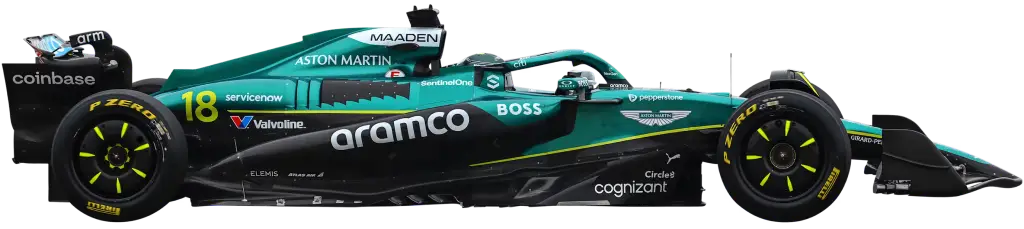
Every team in Formula One has a founding myth. Some are about engineers in garages and borrowed money. Some are about manufacturers chasing trophies for their boardrooms. The Aston Martin story, the real one, stripped of the corporate lineage that runs from Eddie Jordan's 7UP-green cars to a British racing green AMR26, is about something rarer: a man who spent several hundred million dollars over five years assembling the theoretical ingredients for a championship team, only to arrive at the moment he had been building toward and find that the theory had not held.
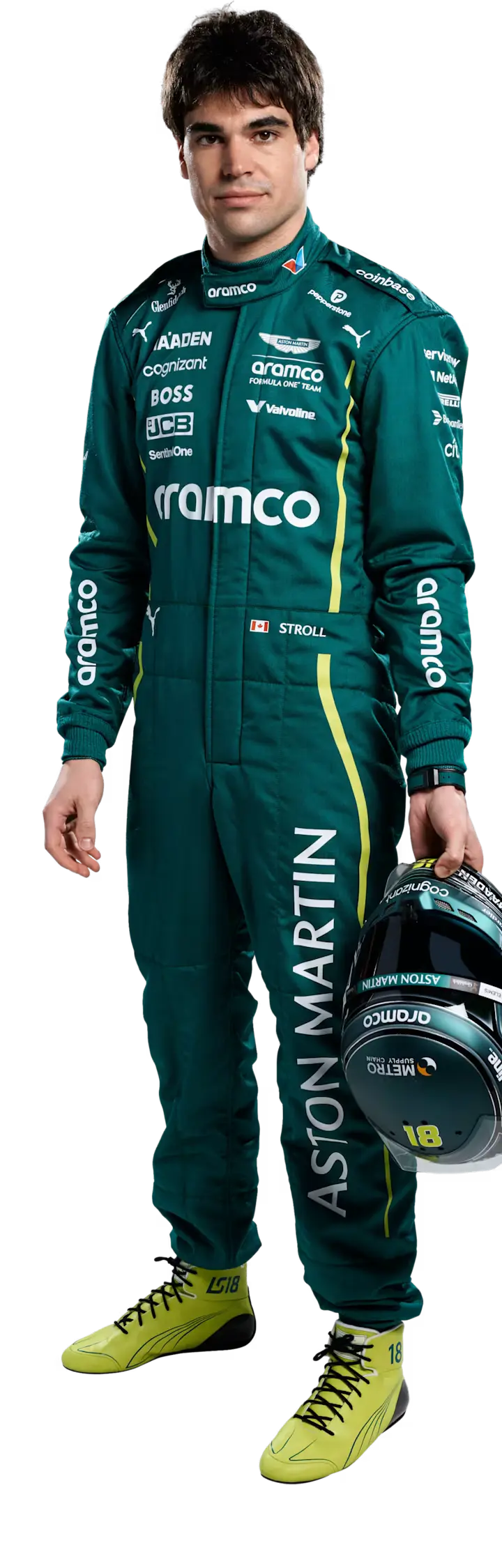
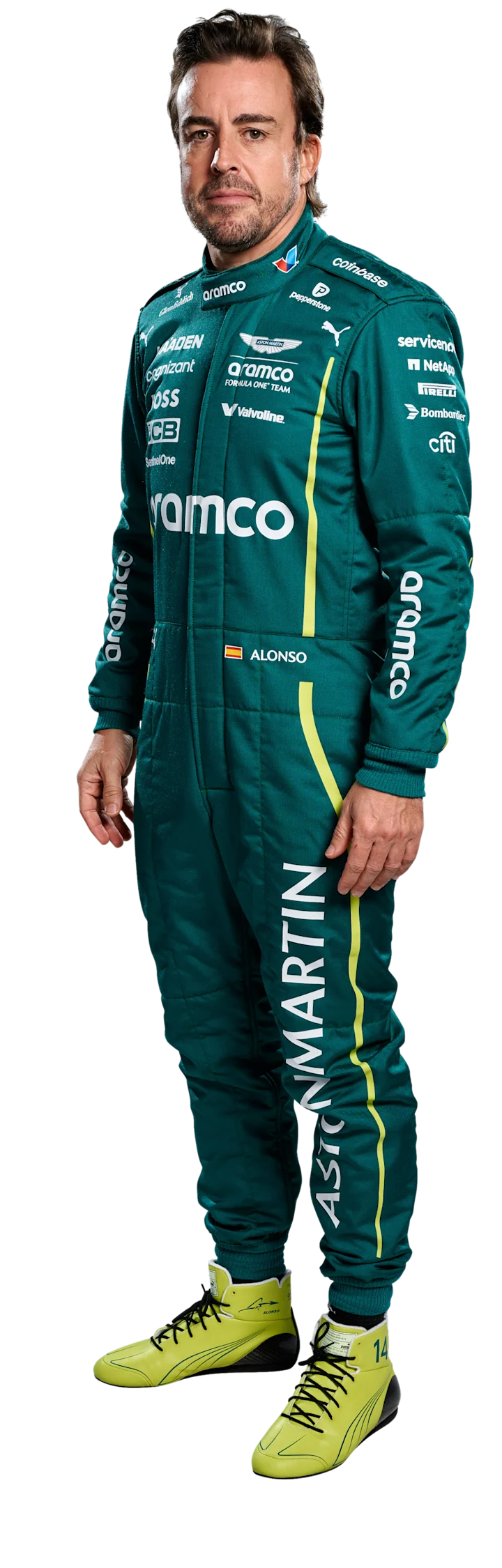
The ingredients remain extraordinary. A state-of-the-art factory built from scratch directly opposite the Silverstone circuit. A Honda works engine partnership. The greatest car designer in Formula One history as both managing technical partner and team principal. A two-time world champion who, at 44, is still capable of extracting performances from machinery that the raw numbers do not warrant. And underlying all of it, Lawrence Stroll, the Canadian billionaire whose financial commitment to this project is genuinely unlike anything outside the factory team programmes at Ferrari and Mercedes, watching his investment produce a car that arrived at the 2026 pre-season tests four seconds off the pace.
How it got here, and whether the ingredients can still be made to work, is the story of 2026 and beyond. But the story of where those ingredients came from stretches back thirty-five years, to a Dublin-born promoter who once ran a Formula Three team and convinced the paddock he could do something bigger.
| Full name | Aston Martin Aramco Formula One Team |
| Racing licence | British |
| Headquarters | Silverstone, Northamptonshire, England |
| Team principal | Adrian Newey (Managing Technical Partner) |
| Chief Strategy Officer | Andy Cowell |
| Executive Chairman | Lawrence Stroll |
| Drivers (2026) | Fernando Alonso (#14), Lance Stroll (#18) |
| Power unit | Honda RBPTH002 (works partnership) |
| First race (current entity) | 1991 United States Grand Prix (as Jordan Grand Prix) |
| First race (as Aston Martin) | 2021 Bahrain Grand Prix |
| Race wins (as Aston Martin) | 0 |
| Race wins (full lineage) | 4 (all as Jordan Grand Prix) |
| Best constructors' result | 3rd -Jordan Grand Prix, 1999 |
Eddie Jordan was born in Dublin in 1948, the son of a post office worker. He raced karts, then single-seaters, and made enough progress in British Formula Three to understand by the late 1970s that he was a better team manager than a racing driver. His team, Eddie Jordan Racing, won the F3000 championship in 1989 with Jean Alesi before Jordan turned his attention to the one category he had always wanted to reach.
He arrived in Formula One in 1991 with almost no history and very little money, an Irish registration, and the conviction that a well-designed car and good drivers could produce results that would confound anyone who doubted him. The car was the Jordan 191, designed by Gary Anderson, powered by Ford. The colours were brilliant green, 7UP, the soft drink company, was the title sponsor. The car was so well proportioned that The Telegraph, decades later, would call it the most beautiful Formula One car ever built.
Jordan had a problem before the season was halfway through. Bertrand Gachot, one of his two drivers, was jailed in August 1991 for spraying CS gas at a London taxi driver who had cut him off in traffic. With the Belgian Grand Prix at Spa approaching, Jordan needed a replacement. His first call was to Stefan Johansson, the experienced Swede. Johansson wanted paying. Jordan had a tight budget. Someone suggested a 22-year-old German named Michael Schumacher, who was testing sportscars for Mercedes and had been impressive in German Formula Three.
A shakedown was arranged at Silverstone's South Circuit. Schumacher completed about 20 laps. Gary Anderson, the technical director, told colleagues: "His fastest lap was as good as we'd ever done at that circuit." At Spa, a circuit Schumacher had never driven before, he qualified seventh, outpacing his experienced teammate de Cesaris and sitting behind only the McLarens, Ferraris, one Williams, and one Benetton. The debut lasted less than a lap; a clutch failure eliminated him at the start. But the performance had been seen by everyone who mattered in the paddock. Before the next race, Flavio Briatore of Benetton had secured Schumacher's services in a legal battle that cost him and Schumacher's management significant money and generated considerable ill-feeling from Jordan, who believed he had a contract.
Schumacher went on to win seven world championships. Jordan finished fifth in the constructors' championship in that debut season a result that, depending on who is counting, remains the most impressive debut campaign by any team in the sport's history.
Jordan Grand Prix's identity was inseparable from the personality of its founder. The team wore yellow from 1993 onward, becoming one of the most recognisable cars on the grid. Cigarette sponsorship from Benson & Hedges ran for almost a decade, occasionally disappearing at circuits with tobacco advertising bans and reappearing as "Buzzin' Hornets" or "Be On Edge" or various other constructions that fooled nobody and delighted everyone.
The team was a talent incubator: Rubens Barrichello drove for Jordan from 1993 and gave the team its first podium in only its 50th race; Eddie Irvine began his career there in 1993; Ralf Schumacher drove from 1997; Heinz-Harald Frentzen spent two years at the team; Takuma Sato made his debut in 2002. The lineage of drivers who entered Formula One through Jordan's garage, then departed for more prominent teams, became a running theme of the team's existence and a persistent frustration for Jordan himself, who understood that launching careers was not the same as winning championships.
The first win came on 30 August 1998, at Spa-Francorchamps, the same circuit where Schumacher had made his debut seven years before. The race was chaotic: torrential rain, a multi-car accident on the first lap, a safety car restart, and a collision between leader Michael Schumacher (now at Ferrari) and David Coulthard's McLaren that eliminated both. Damon Hill, in his first year at Jordan after a career at Williams, found himself leading a race he had barely been a factor in. Ralf Schumacher, his teammate, was second. Jordan 1-2. With a chequered flag over their heads in the Belgian rain, the team reached the pinnacle of what they had been building toward since 1991. Jordan was seen dancing down the pit lane. He later said: "I looked like a complete idiot. The euphoria, the excitement, it just took over."
The following year, 1999, Jordan finished third in the constructors' championship, their highest ever finish, with Frentzen scoring 54 points and finishing third in the drivers' standings. It was, as it transpired, the peak. The years that followed brought financial pressure, increasingly uncompetitive machinery, and the attrition that comes with being a small team without a manufacturer's resources in an era when manufacturers were starting to dominate. Eddie Jordan sold the team to the Midland Group in early 2005 for a reported $60 million.
The final race for Jordan Grand Prix was the 2005 United States Grand Prix. Tiago Monteiro and Narain Karthikeyan gave the team its final points finish at the controversial Indianapolis race, run on a shortened grid after the tyre controversy. The team's 15 years in Formula One had produced four race wins, 100 points finishes, and one world championship contender. It had also produced the most famous debut in the sport's history, an extraordinary debut season, and a founding character so distinctive that the cars are still remembered with genuine affection three decades later.
The Midland Group, led by Russian businessman Alex Shnaider, renamed the team MF1 Racing for 2006 and ran it for a single season without scoring a point. They then sold it mid-season to Dutch car manufacturer Spyker, which renamed it Spyker F1 for 2007 and scored one point in an otherwise unremarkable year. The team scored one point and Markus Winkelhock briefly led the European Grand Prix in wet conditions, the Spyker team's moment of accidental glory.
In 2007, Vijay Mallya, the Indian businessman then running the United Breweries empire and Kingfisher Airlines, and Dutch businessman Michiel Mol acquired Spyker for €88 million. The team was renamed Force India for 2008, the sixth identity the Silverstone infrastructure had carried in 17 years.
Force India's first 29 races produced no points. Mallya's vision, to put India at the pinnacle of motorsport, required both time and better machinery. The breakthrough came at Spa in 2009, the same circuit that had produced Jordan's finest hour eleven years before. Giancarlo Fisichella, in the Force India VJM02, was the fastest car in wet qualifying conditions and started from pole position. He was running second behind Kimi Räikkönen's Ferrari when his race strategy pushed him back; he ultimately finished second. It was Force India's first podium, arriving with the emotional weight of the Jordan legacy somewhere behind it.
From 2014 onward, the combination of Sergio Pérez and Nico Hülkenberg gave Force India a competitive pairing that consistently outperformed what the budget suggested was possible. With Mercedes power units from 2009, the team had access to the best engine in the hybrid era when it arrived in 2014. The customer relationship with Mercedes gave Force India performance per pound that virtually no other team in the paddock was extracting.
In 2016, Force India finished fourth in the constructors' championship. In 2017, they finished fourth again. Both results represented the highest constructors' positions the team had reached since Jordan's third in 1999. The operation Vijay Mallya had built was, by the numbers, punching two or three positions above its financial weight, a testament to the efficiency of the technical team under chief operating officer Otmar Szafnauer and the quality of the driver lineup.
Then Mallya's world collapsed.
Vijay Mallya had been living in London since 2016, having fled India where he faced allegations of fraud, money laundering, and defaults on loans of approximately ₹90 billion. The banks and the courts followed. The effect on Force India was gradual and then sudden: supplier payments were delayed, development slowed, and by July 2018, ahead of the Hungarian Grand Prix, the team was placed into administration by the High Court in London.
Sergio Pérez, unpaid and concerned the team would not complete the season, was among the creditors whose action triggered the administration proceedings. In interviews at the time, he expressed genuine grief about Mallya's situation while acknowledging the team's survival had to come first.
A consortium led by Lawrence Stroll acquired the team's assets for approximately £90 million. The timing, approaching the Belgian Grand Prix, meant they could not acquire the team's championship entry and historical points; those were forfeited. The new entity raced as Racing Point Force India from Belgium onward, then as Racing Point from 2019.
Lawrence Stroll was born in Montreal in 1959 into a family with manufacturing interests, and made his fortune through luxury fashion, he was an early investor in Tommy Hilfiger and Pierre Cardin, building the position of licence holder for those brands in Canada and later across Asia. He accumulated a fortune estimated by Forbes at several billion dollars and developed a taste for luxury assets: watches, wine, homes in Monaco and Aspen, art. And Formula One.
His son Lance had shown genuine ability in junior categories, winning the Italian F4 championship, then the FIA Formula 3 European Championship, then the Toyota Racing Series and in 2016 was signed by Williams for 2017 with Lawrence's backing as a part of the arrangement. Lance Stroll scored a podium on his second appearance, finished third in Azerbaijan, and in 2018 took pole position in Turkey in wet conditions, becoming the first Canadian to start from the front of the grid since Jacques Villeneuve in 1997.
When the Force India opportunity appeared in mid-2018, Lawrence Stroll moved quickly. The consortium he assembled, which included businessmen André Desmarais, John Idol, and Silas Chou, brought Force India out of administration and restarted it as Racing Point. Lance Stroll moved from Williams to the newly reconstituted team.
The 2020 season brought the "pink Mercedes" controversy. Racing Point's RP20 bore such strong visual similarities to the 2019 Mercedes W10 that it was widely described in the paddock as a copy. A formal protest from Renault resulted in Force India being fined €400,000 and losing 15 constructors' points, the team was penalised for using Mercedes's brake duct design, which was not considered a listed part and therefore could not be supplied between teams. Despite the deduction, Racing Point finished fourth in the constructors' championship with 195 points, one of the highest totals in the team's history under any name.
In January 2020, Stroll led a consortium to invest £182 million into Aston Martin Lagonda, the luxury British carmaker, in exchange for a 16.7% stake. He became executive chairman of the car company. The rebrand of the Formula One team as Aston Martin from 2021 followed naturally: it gave the works factory association that Lawrence Stroll had always wanted for his F1 programme, and it gave the Aston Martin road car brand the global marketing platform that Formula One represents.
The first Aston Martin F1 car, the AMR21, was launched in March 2021, 61 years after Aston Martin's original F1 cars had competed in 1959 and 1960 without scoring a point. The 2021 car carried the racing green that had been associated with the British marque since the sport's earliest decades, replacing the pink of Racing Point's BWT sponsorship.
Sebastian Vettel, four-time world champion, joined as the driver alongside Lance Stroll. Vettel had left Ferrari after a difficult final season, and the move to Aston Martin was presented as a new chapter. His time at the team was characterised by individual performances that extracted more from the car than the package justified, a remarkable race in Baku 2021 where he ran in the top three until a pit stop issue, consistent points finishes and by his increasing public advocacy on environmental and political issues that came to define the final phase of his career.
In 2022, Vettel retired from Formula One at the end of the season, citing a desire to spend more time with his family and children. His final race was in Abu Dhabi. He had scored 37 points for Aston Martin across two seasons. He was, in many observers' estimation, doing more with the car than the car deserved.
The arrival of Fernando Alonso for 2023 was the most significant driver acquisition Lawrence Stroll had made since rebranding the team. Alonso had won back-to-back world championships for Renault in 2005 and 2006, and had spent the years since pursuing a third title that never came, at McLaren, Ferrari, Alpine, becoming in the process one of the most technically sophisticated and analytically precise drivers in the paddock. He was 41. He had not won a race since 2013. He described his move to Aston Martin with the phrase "El Plan" the plan implying he had identified the team as the vehicle for one final championship run.
The opening of 2023 suggested he might be right. Alonso finished second in Bahrain on debut. Third in Jeddah. Third in Melbourne. Third in Monaco, a race in which he was the fastest car on a street circuit in changeable conditions, close enough to the lead that victory appeared possible. Six podiums in the first eight races. Fourth in the championship at the midpoint.
Then the team lost its way. Mid-season updates failed to deliver the gains that data predicted. The gap to the front McLaren, Red Bull, Mercedes, widened. Alonso scored no further podiums in the second half of 2023. The team finished fifth in the constructors' championship. The extraordinary early promise had produced one of the most tantalising what-ifs of the season: what if the car had continued to develop at the rate of the first eight races?
The answer, in 2024, was deflating. The AMR24 was not a step forward. Alonso's best result was fifth in Hungary. The team slipped from fifth to fifth, maintaining the position but doing so with fewer points and less competitiveness. In 2025, they fell further: seventh in the constructors' championship, Alonso scoreless through the opening eight rounds before a belated recovery.
While the cars were performing below expectation on-track, Lawrence Stroll was spending at a scale that the results did not reflect.
Construction of a new facility directly opposite the Silverstone circuit began in September 2021. The AMR Technology Campus, a 37,000-square-metre building on a 40-acre site, opened incrementally from 2023. It is one of the most significant purpose-built Formula One facilities in the paddock, three interconnected buildings housing design, manufacturing, marketing, and technical operations. A new wind tunnel, constructed as part of the project, was not fully operational until April 2025 a delay that Adrian Newey later identified as one of the primary reasons the 2026 car programme started from behind.
The investment in physical infrastructure was matched by recruitment. By 2023 and 2024, Aston Martin had become one of the most active teams in the paddock in hiring senior technical personnel from competitors. The ambition was clear and stated: to build a team that would challenge for the world championship when the 2026 technical regulations reset the competitive order.
In 2023, Aston Martin announced they would end their customer Mercedes engine relationship, in place since Force India's switch to Mercedes power in 2009 and take on a works partnership with Honda from 2026. Honda had previously powered Red Bull Racing and Toro Rosso through a works arrangement that culminated in Max Verstappen's first world championship in 2021 before Honda's original planned withdrawal. They had subsequently continued involvement through HRC (Honda Racing Corporation) before announcing a new works programme for 2026.
For Aston Martin, the logic was compelling: a customer team can reach a ceiling, and to compete consistently at the front of Formula One requires a manufacturer partner with full commitment. The Honda deal provided that. The 2026 regulations, with their near-50/50 hybrid power split and 100% sustainable fuel requirement, represented a clean-slate opportunity for Honda to build an engine competitive with Mercedes and Ferrari from the ground up.
For Honda, Aston Martin offered a team owner with the financial resources to sustain a long-term programme and the stated ambition to win, a cultural match for Honda's return to serious works competition.
The most dramatic recruitment came in September 2024, when Aston Martin announced that Adrian Newey, the most successful car designer in Formula One history, with 12 constructors' championships and 14 drivers' titles to his name, had signed to join the team as Managing Technical Partner with a shareholding stake. He started work on 1 March 2025.
Newey had left Red Bull after two decades following internal tensions following the controversy around Red Bull team principal Christian Horner in early 2024. His departure was confirmed as Red Bull and its leadership faced scrutiny; several senior engineers departed in the same period. Every front-running team was reported to have approached him. Aston Martin, with its cheque book and its 2026 aspiration, was the team that secured his commitment.
In November 2025, Newey was appointed team principal as well, replacing Andy Cowell who moved to a new role as Chief Strategy Officer focused on the Honda power unit integration. The combination of his design expertise, now directly responsible for trackside operations, gave Aston Martin's 2026 car both the most celebrated technical mind in the sport and the institutional authority to implement its decisions without the management layers that had sometimes complicated his time at other teams.
Newey acknowledged the compressed timeline honestly: he did not have a 2026 car model in the wind tunnel until mid-April 2025, approximately four months after most rivals. The new wind tunnel was not fully calibrated until the same month he arrived. In his own words: "We've started from behind, in truth. It's been a very compressed timescale and an extremely busy ten months."
The AMR26, Newey's first Aston Martin design, ran for the first time at the Barcelona shakedown in late January 2026. Newey stood in the pit lane alongside Lawrence Stroll as Lance Stroll drove it out of the garage for the first time. Newey later described the moment: "Lawrence and I, we were both quite close to having a tear in our eye. It's been a long, emotional journey."
Pre-season testing was not kind. The car completed just over 2,100 kilometres across eight days of running, more than 1,800 kilometres behind the next-slowest team. The Honda power unit was reportedly unable to run at full deployment without risking reliability issues; the battery management system presented challenges that could not be resolved in the winter. By the final day of testing in Bahrain, Fernando Alonso's lap time was 4.6 seconds from the fastest time set by Ferrari. Lance Stroll said to the media: "I don't know, right now we look like we're four seconds off the top team."
The questions that arrived with the Australian Grand Prix were stark. Honda, for all the promises of the works partnership, was delivering less than the customer Mercedes unit it replaced. The chassis, however well-conceived by Newey, had been developed on a compressed timeline with a wind tunnel that was still being optimised. The team that was supposed to be a challenger was discussing whether it could outpace Cadillac.
The analytical case for patience remains credible. Honda's transformation from the disastrous McLaren partnership of 2015 to 2017, years of humiliation and Alonso's memorably blunt radio transmissions about the engine's lack of power, to the championship-winning Red Bull partnership of 2019 to 2023 took approximately four years. The 2026 regulations are complex, with ground-effect aerodynamics rebuilt around different principles and the power unit split fundamentally changed; early development trajectories are not reliable guides to mid-season or long-term competitiveness. Newey's history is a history of cars that improve faster than rivals initially assume possible.
The case for pessimism is also credible. Aston Martin has now had multiple leadership restructures in three years. The team principal position has been held by Otmar Szafnauer (departed to Alpine in 2023), Mike Krack (moved to chief trackside officer), Andy Cowell (moved to chief strategy officer after fourteen months), and now Newey, who has never held the role before and by his own admission has no appetite for the political and organisational aspects that the position traditionally requires. Whether an organisation can absorb that level of change at the top while simultaneously building a championship-capable car is the question that Lawrence Stroll, having spent more on the infrastructure than most independent teams spend in a decade, now needs answered.
The name Aston Martin first appeared in Formula One in 1959 and 1960, when the British manufacturer entered its DBR4 open-wheel racer at six Grands Prix. The car had been designed as early as 1957, but Aston Martin prioritised the DBR1 sports car programme, which rewarded the decision by winning the 1959 24 Hours of Le Mans. The F1 project was always secondary. The DBR4 failed to score a point under the championship system then in use and the programme was withdrawn after 1960. It remains the original connection between the Aston Martin name and the top tier of motorsport: six races, zero points, and a Le Mans victory that history remembers rather more warmly.
Between 2016 and 2020, Aston Martin served as a sponsor and then title sponsor of Red Bull Racing, adding its name to the side of championship-winning cars without building or operating its own team. The commercial association served both parties: Red Bull received sponsorship revenue, Aston Martin received association with championship competition. Lawrence Stroll's 2020 investment into the car company, and the subsequent rebrand of the F1 team, represented something different, a true works commitment, with the reputational implications of the racing green.
| Identity | Years | Best constructors' result |
|---|---|---|
| Jordan Grand Prix | 1991-2005 | 3rd (1999) |
| Midland / MF1 Racing | 2006 | 11th |
| Spyker F1 | 2007 | 10th |
| Force India | 2008-2018 | 4th (2016, 2017) |
| Racing Point | 2018-2020 | 4th (2020) |
| Aston Martin | 2021- | 5th (2023, 2024) |
Race wins (full lineage): 4 all as Jordan Grand Prix: 1998 Belgian GP (Hill), 1999 French GP (Frentzen), 1999 Malaysian GP (Irvine, posthumously awarded to Frentzen-correction: 1999 French GP and 2003 Brazilian GP were Frentzen's and Fisichella's). The four Jordan wins were: 1998 Belgium (Hill), 1999 France (Frentzen), 1999 Malaysia (Frentzen), 2003 Brazil (Fisichella).
Lawrence Stroll's project has been, since its inception, a bet on the principle that sufficient investment and the right people can build a championship team without a road car manufacturer's resources behind it. The factory exists. The wind tunnel exists. The technical staff have been assembled. Honda is the works partner. Newey is the designer and team principal. Alonso is the driver.
What exists on paper is formidable. What arrived at the 2026 Australian Grand Prix is a car that is seconds off the pace with a power unit struggling to complete a race distance without reliability concerns. The gap between the investment and the performance is the widest it has been since Stroll began spending.
The optimistic version of the next two or three years looks like this: Honda finds its power, Newey's design philosophy produces a car that develops faster than the competition expects, and the team that Alonso called "the team of the future" in 2023 belatedly becomes that. The pessimistic version looks like this: another round of restructuring, Alonso departs at the end of 2026 without his third title, and the story of Aston Martin becomes a cautionary note about the limits of financial ambition in a sport where execution matters more than resources.
The answer will be written in the results that follow the car's first races. Newey has been in this situation before-behind, starting from a compressed development cycle, with rivals who have had longer to prepare. At Williams in the early 1990s, at Red Bull in the early 2010s, the pattern was recovery rather than decline.
Whether 2026 is the beginning of that recovery, or whether the Honda reliability issue represents a deeper structural problem than one winter can address, is the only question that matters at Silverstone in 2026. Everything else,the factory, the team principal, the investment figures, is prologue.