The four rings have not appeared on a Grand Prix car since 1939. When they return to the Formula One grid in 2026, they carry nearly nine decades of absence, a pre-war motorsport legacy built on Ferdinand Porsche's mid-engine design and Bernd Rosemeyer's supernatural speed in fog, and the body of work of a small Swiss team that spent five decades building the platform Audi now inhabits. The organisation at Hinwil was never owned by Audi. It was founded by a man who sold his family's traffic light business to build racing cars in a basement. It brought Mercedes back to motorsport. It gave Kimi Räikkönen his first Formula One chance over the FIA president's explicit objection. It produced the only race win in the team's thirty-two years of Formula One history at the 2008 Canadian Grand Prix, by a driver who had survived a 75G impact at the same circuit one year before. That team no longer exists. What it became does.
| Full name | Audi Revolut F1 Team |
| Racing licence | German |
| Headquarters | Hinwil, Zurich, Switzerland |
| Power unit facility | Neuburg an der Donau, Bavaria, Germany |
| Technology centre | Bicester Motion, Oxfordshire, England |
| Head of F1 Project | Mattia Binotto |
| Team principal | Jonathan Wheatley |
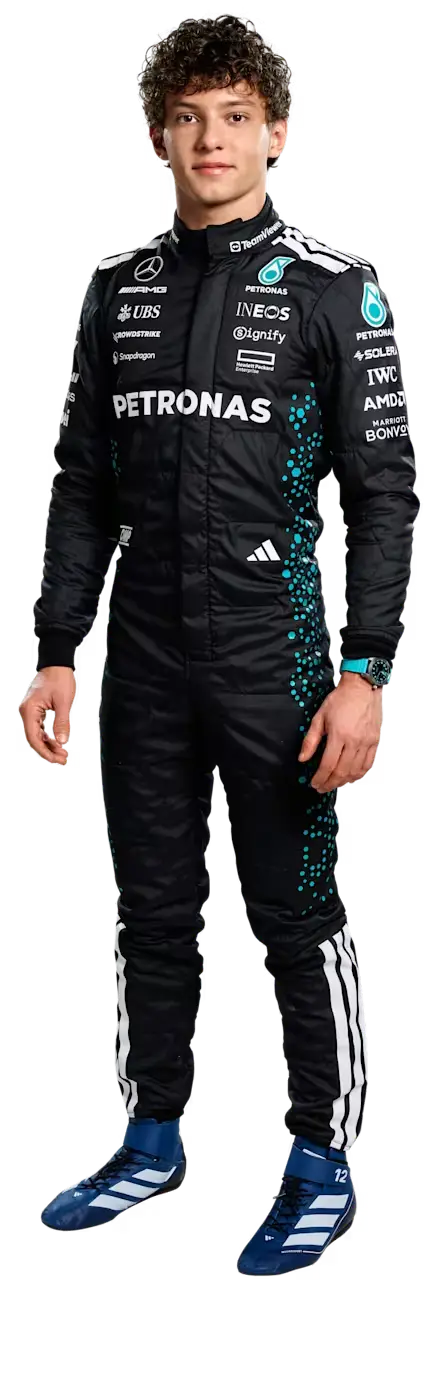
| Drivers (2026) | Nico Hülkenberg, Gabriel Bortoleto |
| Power unit | AFR 26 Hybrid (Audi Formula Racing GmbH) |
| F1 debut | 2026 Australian Grand Prix |
| As Sauber: F1 debut | 1993 South African Grand Prix |
| As Sauber: Race wins | 1 (Kubica, Canada 2008) |
| Target | Championship contention by 2030 |
The modern Audi company carries the four-ringed logo of Auto Union, the amalgamation of four German automobile manufacturers Audi, Horch, DKW, and Wanderer, formed in 1932. Between 1934 and 1939, Auto Union's racing department ran Grand Prix machinery that won 25 races across five seasons, competing against Mercedes-Benz as the two great German teams of the pre-war era. Both wore unpainted, gleaming aluminium bodywork, earning the shared name the Silver Arrows.
The Auto Union cars were designed by Ferdinand Porsche. Their most distinctive technical feature was radical for the time and prescient for all time that followed: the engine sat behind the driver, between the driver and the rear axle. This mid-engined configuration, which Auto Union adopted in 1934, would not become standard in Formula One until the late 1950s. The cars were violent to drive, the engine's position behind the driver created a tail-heavy balance that produced extreme oversteer, and wheelspin could be induced at speeds above 160 kilometres per hour. Their supercharged V16 engine grew from 295 horsepower in 1934 to 520 horsepower by 1936, in a car that weighed 750 kilograms.
The driver who mastered them most completely was Bernd Rosemeyer, a former motorcycle racer from Lingen who had switched to four wheels in 1935. Rosemeyer won the European Championship in 1936 and became, alongside Tazio Nuvolari and Rudolf Caracciola, one of the defining racing drivers of his era. He was said to drive as fast in fog as in clear conditions, earning the nickname Nebelmeister, Master of the Mist, after a wet Nürburgring victory. He was killed on 28 January 1938 on the Frankfurt-Darmstadt autobahn, attempting a land speed record in a streamlined Auto Union. A crosswind sent his car off the road at over 430 kilometres per hour. He was 28 years old.
The war ended Auto Union's racing programme in 1939. The company was destroyed, relocated, and rebuilt in Ingolstadt, Bavaria, evolving into the Audi AG that exists today. The four-ringed logo representing the four original constituent marques was retained. When Audi returns to Grand Prix racing in 2026, it is the first time those four rings have appeared on a car at the front of a grid since Nuvolari's final victory in Belgrade, on 3 September 1939, the day the war began.
Peter Sauber was born on 13 October 1943 in Zurich. He trained as an electrician and became a car salesman, selling British Leyland and Subaru models in Hinwil. In 1967, at 23, he discovered motor racing by chance at a local hillclimb event. He began competing in a modified Volkswagen Beetle. He was direct about his relationship with the sport from the start: in later interviews, he admitted that he was never truly an autosport enthusiast, and "strangely enough, I'm still not today."
What he was, was an engineer and a businessman with a practical mind and no inhibitions about starting from nothing. His father ran the family traffic light business. Rather than take it over, Peter sold it and moved into workshops in Hinwil, just down the road from the factory. In 1970, he built his first car: the Sauber C1, a tubular-framed open two-seater powered by a one-litre Ford Cosworth engine, which he built using the frame of an old Brabham Formula Three chassis he had purchased. The "C" in the name stood for Christiane, his wife. Every car that Sauber, and then the teams that succeeded it, would build carries that initial. Starting with the C1, to the C12 that raced at the 1993 South African Grand Prix, to the C43 of the final Alfa Romeo season, to the C44 of Kick Sauber's last year, 54 years of cars named for one person.
Sauber drove the C1 himself and won the 1970 Swiss Sports Car Championship. He continued building and racing cars through the 1970s, working through various Group C sports car configurations. In 1985, working with team manager Max Welti, he convinced Mercedes-Benz to supply engines for a sports car programme. The Sauber-Mercedes C8 won at the Nürburgring in 1986. By 1988, Mercedes had committed to full factory team status. Sauber recalled later: "With this, I brought back the German manufacturer into international motorsport after an absence of 33 years."
The 1989 World Sportscar Championship was dominated from start to finish. Sauber won all but one race across the season, with Jean-Louis Schlesser winning the drivers' title. The cars carried silver paint for the first time, Mercedes's traditional racing colour, revived after decades of absence. At Le Mans in June 1989, Sauber had entered three C9s and approached the race as preparation for the 1990 assault rather than a genuine championship attack. Peter Sauber later recalled: "We dominated the championship that year, but Le Mans has always had its own agenda. At Mercedes, everyone was well aware of that and no one put any pressure on us to make it first past the post." Car number 63, driven by Jochen Mass, Stanley Dickens, and Manuel Reuter, had qualified eleventh. It won. First and second place at Le Mans for Sauber-Mercedes, in a car the team had not designed to win the race that day. Peter Sauber has called it the greatest result in the team's history: "Even though we won the 2008 Canadian Grand Prix in F1 with Robert Kubica, this victory at Le Mans is still our team's greatest success."
Sauber won the world championship again in 1990. Then the Group C regulations ended and sportscar racing contracted. Sauber and Mercedes began planning a Formula One entry together. Harvey Postlethwaite was hired to design an F1 car. Mercedes funded a new factory in Hinwil. In November 1991, Mercedes's management board decided against direct manufacturer involvement in Formula One. Sauber was left holding an F1 car, a factory, and no engine partner.
Sauber chose to proceed alone. The team entered Formula One at the 1993 South African Grand Prix with drivers Karl Wendlinger and JJ Lehto, powered by engines built by Ilmor but rebadged as Saubers at Mercedes's insistence. Lehto finished fifth on debut, scoring the team's first championship points in its first race. The cars carried "Concept by Mercedes-Benz" livery that year, before becoming fully branded Sauber-Mercedes in 1994, the brief period during which the manufacturer did agree to official involvement. In 1995, Mercedes chose McLaren as their preferred long-term Formula One partner. Sauber was left without a manufacturer alliance for the second time, moving to Ford as works engine supplier for 1995 and 1996, then entering an arrangement with Petronas that saw the team use rebadged older Ferrari engines through the late 1990s.
The team established itself as a consistent mid-field constructor and began developing a reputation for identifying and developing young talent, a reputation that would become one of its defining characteristics.
In September 2000, a talent manager called David Robertson telephoned Peter Sauber and told him he had a young Finnish driver who was extraordinary. Sauber arranged a three-day private test at Mugello. To keep the test secret from potential competitors, the team referred to the driver by a code name internally: "Eskimo." By the end of the second day, Kimi Räikkönen had lapped half a second faster than the team's regular driver. He had competed in 23 car races in his career, a single season of Formula Renault UK, which he had dominated, winning seven of ten events.
Peter Sauber decided to sign him for 2001. FIA president Max Mosley was immediately vocal in his opposition. "I do not believe that they adopted a defensible position in giving an inexperienced driver like Raikkonen a licence," Mosley said. "It is quite wrong, given that we have strict criteria for graduation into F1." Red Bull, the team's title sponsor and majority shareholder, also objected: Helmut Marko lobbied Dietrich Mateschitz hard for Brazilian driver Enrique Bernoldi to take the seat instead. The FIA Commission voted almost unanimously to grant the licence. Mosley cast the single dissenting vote. Peter Sauber gave a personal performance delivery promise to the FIA. Räikkönen began the season on a provisional licence. Red Bull ended their commercial relationship with Sauber at the end of 2001.
Räikkönen finished his debut race, the 2001 Australian Grand Prix, in sixth. He scored nine points across the year, contributing to the team's best-ever constructors' result of fourth. By the end of the season, McLaren had signed him to replace Mika Häkkinen. The driver who had needed the FIA president overruled to be allowed to race went on to win the 2007 World Drivers' Championship with Ferrari. He ended his career as the most experienced driver in Formula One history with 349 starts, all of them made possible by Peter Sauber refusing to back down.
The 2001 experience was a template for how the team operated: spotted Felipe Massa before mainstream interest in 2002, gave him two seasons before Ferrari took him; developed Michael Schumacher in sports cars during the pre-F1 period; brought Charles Leclerc to Formula One in 2018 before Ferrari moved immediately to claim him. Heinz-Harald Frentzen, Nick Heidfeld, Robert Kubica, Sebastian Vettel, the list of drivers who passed through Hinwil and went on to careers elsewhere runs for three decades.
BMW purchased a majority stake in Sauber in June 2005, announced ahead of the United States Grand Prix, and renamed the team BMW Sauber F1 Team for 2006. The cars were newly designated with the letter F (for Formula One) rather than the historic C, a departure that lasted only through the BMW period. The team finished fifth in the constructors' championship in 2006, second in 2007, and third in 2008, the latter two results the best in the organisation's Formula One history.
Robert Kubica had survived an experience at the 2007 Canadian Grand Prix that left few doubts about what he was. Making contact with Jarno Trulli's Toyota on lap 27, his BMW Sauber went airborne, lost three wheels and its nose, and struck a concrete wall at 230 kilometres per hour. The impact registered 75G. Marshals arrived expecting the worst. Kubica climbed out with a sprained ankle and a concussion. He returned to racing the following weekend.
At the 2008 Canadian Grand Prix, twelve months later, at the same Circuit Gilles Villeneuve, Kubica qualified second behind Lewis Hamilton. On lap 20, Hamilton locked up in the pit lane while following Räikkönen out of the pits, failing to notice the red pit exit light, and crashed into the back of Räikkönen's Ferrari, eliminating both. Kubica managed his strategy with two stops to Heidfeld's one, overtook his teammate with 22 laps remaining, and led home the first BMW Sauber one-two in Formula One history. It was the only Formula One victory in the team's 33-year history. After the race, Kubica led the Drivers' Championship. Poland had its first Formula One race winner. Peter Sauber later said it was the greatest Formula One moment the team achieved, though he still ranked it below Le Mans.
BMW announced its withdrawal from Formula One in July 2009, mid-season, citing the global financial crisis and a changed corporate priority set. Former CEO Monisha Kaltenborn later revealed an additional dimension: the team had been close to agreeing to the FIA's proposed cost cap regulations during a period of intense tension between the FIA, the commercial rights holder, and the existing teams. BMW's corporate risk assessment, faced with the possibility of contractual exposure and confrontation with the sport's structure, led to the decision to exit. Kaltenborn described it as "a total shock and even for most of them at BMW."
Peter Sauber negotiated a deal to buy the team back from BMW. A sale to an investment company called Qadbak collapsed at the last moment. On 3 December 2009, the FIA confirmed Sauber's entry for the 2010 season had been granted, and Sauber regained ownership of the team he had founded. He was 66 years old. He had now rescued his team from the collapse of a manufacturer partnership for the second time.
The team returned to customer Ferrari power in 2010 and competed as a genuinely independent constructor for the remainder of the decade. Results were variable. Fourth place in the constructors' championship in 2012, aided by a string of strong points finishes and Kamui Kobayashi's popular pole position at the Japanese Grand Prix, remained the best result of the independent period. A near-miss of an entirely different kind came at the 2012 Malaysian Grand Prix, where Sergio Pérez held Fernando Alonso's Ferrari off for the final laps in a sequence that had the grandstands on their feet, finishing second by less than two seconds. Had one more lap been completed, the first constructor to produce two unrelated future world champions across separate eras, Räikkönen and Kobayashi's replacement, Vettel's teammate Massa, might also have produced the team's second race win.
Peter Sauber handed day-to-day operations to Monisha Kaltenborn in 2012, making her the first woman to serve as a Formula One team principal. He retained overall oversight until selling his controlling stake to Longbow Finance, a Swiss investment company, in 2016. Frédéric Vasseur replaced Kaltenborn during 2017. Peter Sauber departed the team he had founded. He was 73.
In 2018, Sauber signed a title sponsorship agreement with Alfa Romeo, Fiat's historic Italian brand. From 2019, the team raced officially as Alfa Romeo Racing. The naming had commercial logic on both sides: Sauber gained brand recognition and resource; Alfa Romeo gained a Formula One presence without the cost of building a team. Kimi Räikkönen returned to the team that had launched him, signing a two-year deal for 2019 and 2020, accompanied initially by Antonio Giovinazzi. Valtteri Bottas and Zhou Guanyu, Formula One's first Chinese driver, formed the 2022 and 2023 lineup.
The team finished sixth in the 2022 constructors' championship, their best result in a decade. It was the high point of the Alfa Romeo period. By 2023, the arrangement was winding down. Alfa Romeo's title sponsorship ended. The Sauber name returned briefly in rebranded form, the team raced as Stake F1 Team Kick Sauber through 2024 and 2025, its final two seasons before the full Audi transition.
In August 2022, Audi announced its intention to enter Formula One as a power unit manufacturer and constructor from 2026. The timing was specific: the 2026 technical regulations introduced the most fundamental changes to hybrid power units in Formula One's modern era, with electrical power contributing approximately half of the total system output and all cars running on 100 percent sustainable fuel. Audi's stated reasoning aligned this directly with the company's electrification strategy and sustainability commitments. Audi CEO Markus Duesmann said in 2022: "Formula 1 is both a global stage for our brand and a highly challenging development laboratory."
In October 2022, Audi and Sauber confirmed their strategic partnership. In January 2023, Audi acquired a minority stake. On 8 March 2024, Audi confirmed a full takeover of the Sauber Group for approximately $650 million. The Hinwil facilities, the chassis department, the race operations staff, and the institutional knowledge of 32 years of Formula One, all passed to Audi.
The power unit programme, by contrast, is entirely new. Audi Formula Racing GmbH was established at Neuburg an der Donau, Bavaria, the location of Audi's existing motorsport engine facility, which has operated since 2014. By the time of the 2022 announcement, more than 120 engineers were already working there. The facility has since grown to approximately 300 staff and 22 engine test benches. The power unit carries the designation AFR 26 Hybrid.
The path to the debut involved significant leadership change. Andreas Seidl, formerly McLaren team principal, was announced as Sauber CEO in December 2022 and was intended to lead the transformation. He was fired in July 2024, alongside executive Oliver Hofmann. Mattia Binotto, who had led Ferrari as team principal from 2019 until his departure at the end of 2022, was appointed to replace them, arriving on 1 August 2024 as Chief Operating Officer and Chief Technical Officer, then promoted to Head of the Audi F1 Project in May 2025. Jonathan Wheatley, Red Bull Racing's sporting director for 18 years and a central figure in the team's six constructors' championships, was announced as team principal in August 2024. After a period of gardening leave, he joined on 1 April 2025, three days before the Japanese Grand Prix, following Alessandro Alunni Bravi's earlier-than-expected departure to McLaren.
The combination of Binotto and Wheatley is unusual. Binotto spent 35 years at Ferrari, developing the knowledge of how a manufacturer team builds and sustains competitiveness from within. Wheatley spent 20 years at Red Bull, understanding how a team that began with no heritage defeats teams that had it. Neither has built a championship-winning team from a standing start. Binotto has explicitly framed this as the point: "There is a different culture. Jonathan has got his own one as well. I think it's the mix of everything that makes it, I hope so, positive for the future."
In November 2024, the Qatar Investment Authority, the sovereign wealth fund of the State of Qatar, acquired a substantial minority stake in Sauber Holding AG. QIA is already a long-standing investor in the Volkswagen Group, which encompasses Audi. The investment was directed toward accelerating personnel expansion and infrastructure development at Hinwil and Neuburg ahead of the 2026 debut.
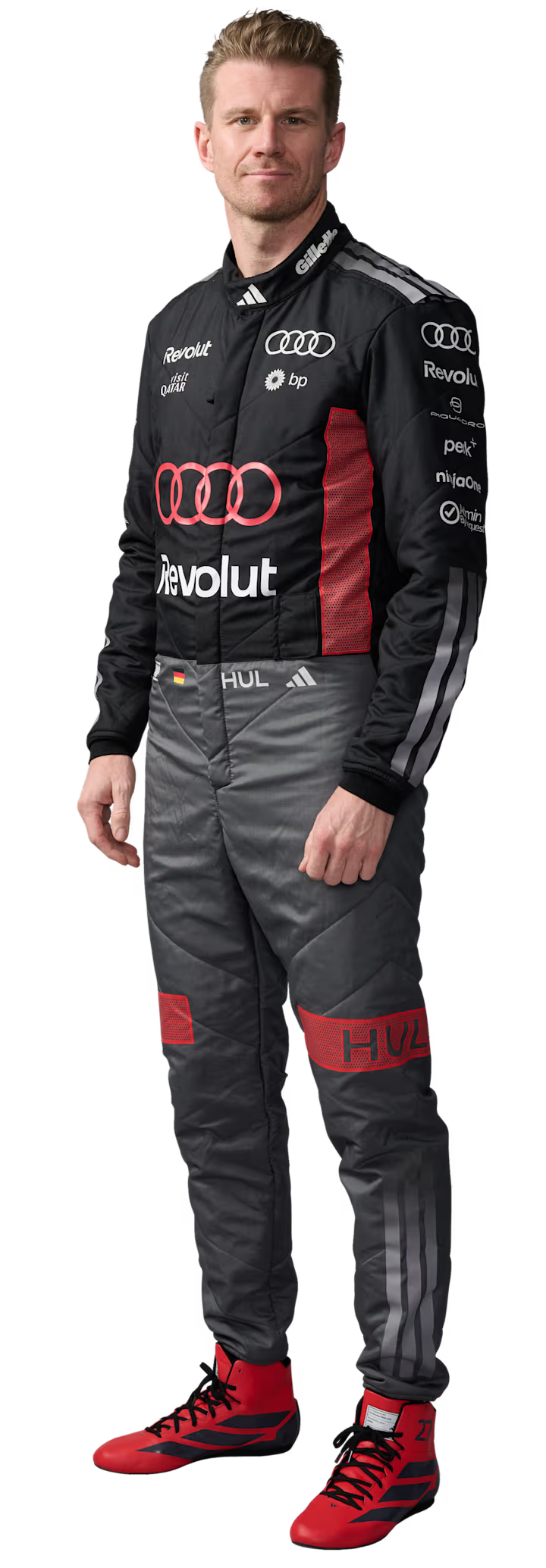
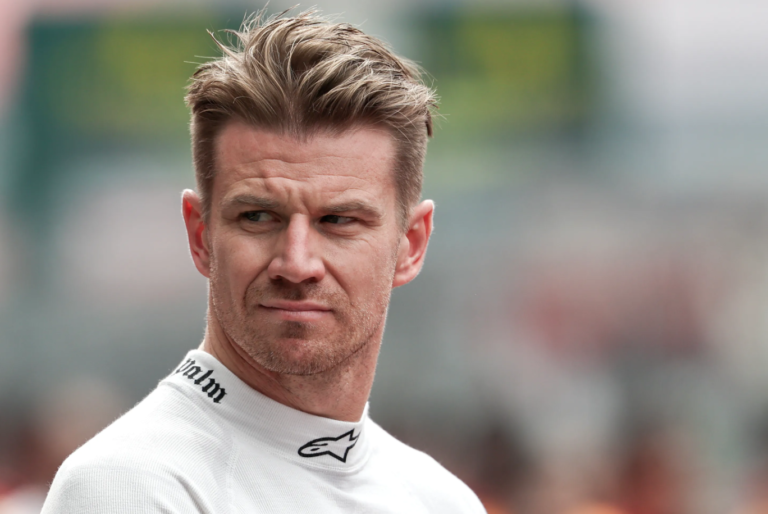
Nico Hülkenberg was announced as Audi's lead driver for 2025 and 2026. The German, born in 1987, holds a record that defines a particular kind of Formula One career: 253 starts without a podium finish until his appearance at the 2025 British Grand Prix at Silverstone, the longest wait for a podium in the sport's history. He has also qualified on pole position once, at the 2012 Brazilian Grand Prix. He returned to a competitive midfield seat with the transitional Kick Sauber team in 2025 and delivered consistent performances through a difficult regulation period. He brings extensive technical feedback experience and a detailed understanding of chassis development from his years across multiple teams.
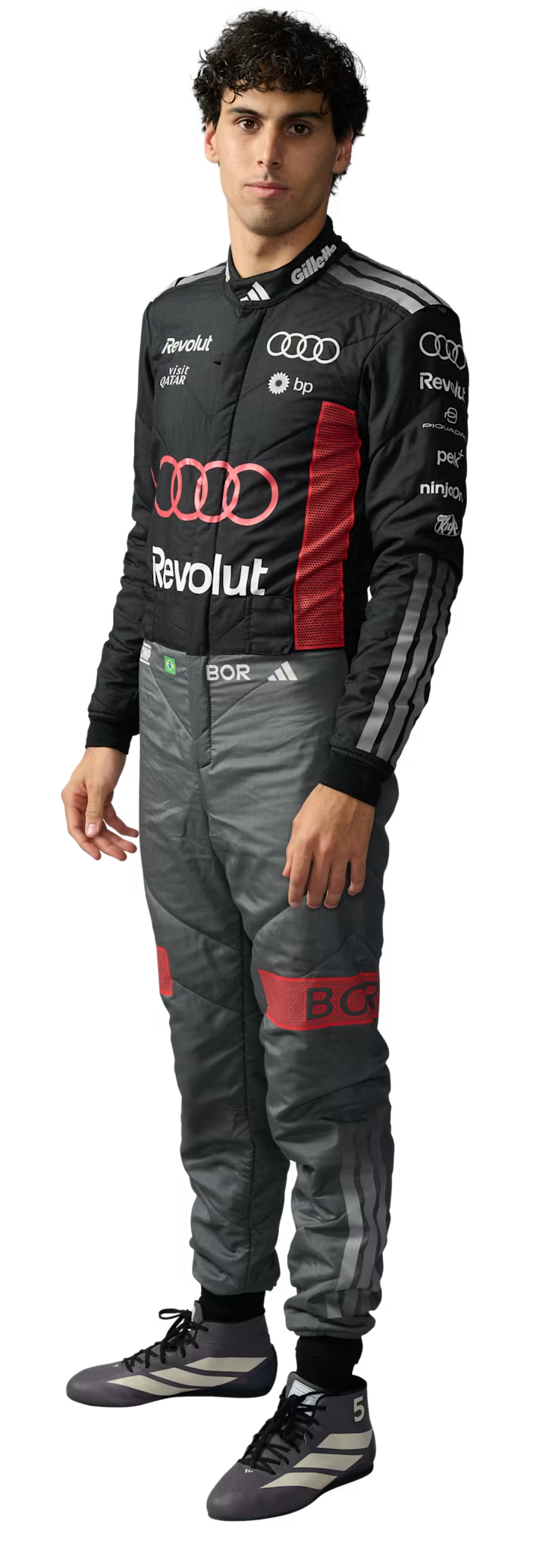
Gabriel Bortoleto is Hülkenberg's complement: a 20-year-old Brazilian who won the 2024 FIA Formula 2 Championship in his debut season, beating the field comprehensively enough to earn a race seat without the usual stepwise apprenticeship. He is a Ferrari Driver Academy graduate who was released by Ferrari to join Audi, an unusual concession that reflects the scale of Audi's financial commitment and the value manufacturers place on placing their drivers across the grid. In 2025, his debut Formula One season, Bortoleto scored his first points with a P8 in Austria. His double-points weekend with Hülkenberg at that race, the team scoring from both cars, was a marker of the trajectory the team was building toward.
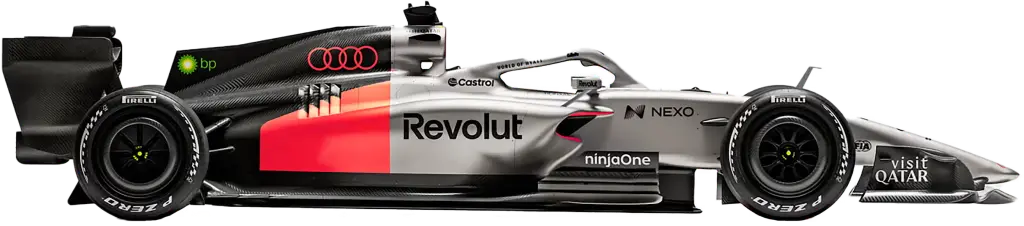
The 2026 car carries the designation R26. The "R" has a long tradition in Audi motorsport model naming, the R8 Le Mans prototype, the R10 TDI, the R18 e-tron, applied now to a Formula One chassis for the first time. The 26 denotes the model year, consistent with Formula One convention. It was fired up for the first time on 19 December 2025 at Hinwil, the first occasion on which an Audi power unit ran inside an Audi chassis.
The launch event was held in Berlin on 20 January 2026, at the Kraftwerk venue in central Berlin. Nearly 400 guests attended the first public appearance of the Audi factory team. The car's livery incorporates Audi's brand colours alongside the visual identity of title sponsor Revolut, the British fintech company that announced a multi-year global title partnership in mid-2025. Adidas serves as official apparel partner.
The Audi project spans three countries and three distinct functions: chassis construction and race operations in Switzerland, power unit development in Germany, and a talent and engineering recruitment base in England. The Sauber Motorsport Technology Centre, opened at Bicester Motion in Oxfordshire in July 2025, places the team at the geographic heart of "Motorsport Valley," the concentration of Formula One supplier and engineering expertise along the M40 and A43 corridor between Oxford and Northampton. The stated aim is access to specialist personnel who will not relocate to Switzerland.
Audi has publicly committed to championship contention by 2030. Binotto has been explicit about the timeline: "From 2030, it should be in a position to compete for world championship titles." The 2026 season is not framed as a competitive debut but as an operational foundation. Wheatley has been equally direct: "We have to be realistic and we're humble about where we're starting from and who we're competing against. Mattia worked for Ferrari for 35 years. I worked for Red Bull for 20 years. These teams have strength and depth in every single area, and it's a monumental task that we're on, but it's achievable."
The comparison most often drawn is Red Bull's trajectory: the team purchased Jaguar Racing in 2005, finished behind Sauber in 2007, and won its first constructors' championship in 2010, five years after acquisition. Audi's timeline to 2030 is four years from debut. Whether the combination of Hinwil's operational infrastructure, Neuburg's power unit programme, and the championship-winning knowledge Binotto and Wheatley carry between them can be assembled into a competitive whole in that time is the central question the next four seasons will answer.
The cars carry four rings. The last time those rings raced at a Grand Prix, Bernd Rosemeyer had been dead for six months, and the war that would end the era had not yet begun. Whatever happens next will be entirely unlike what came before.
The following drivers made their Formula One debuts with the Sauber team or were developed through the organisation before joining it: Kimi Räikkönen (2001, world champion 2007), Felipe Massa (2002, runner-up 2008), Robert Kubica (2006), Sebastian Vettel (2007 race substitute, world champion 2010-2013), Sergio Pérez (2011), Charles Leclerc (2018, race winner from 2019), Zhou Guanyu (2022, first Chinese F1 driver), Gabriel Bortoleto (2025).
| Name | Seasons | Best constructors' result | Notes |
|---|---|---|---|
| Sauber | 1993-2005 | 4th (2001) | Räikkönen debut season |
| BMW Sauber | 2006-2009 | 2nd (2007) | Kubica win, Canada 2008 |
| Sauber (again) | 2010-2018 | 4th (2012) | Independent, Ferrari engines |
| Alfa Romeo Racing / F1 Team | 2019-2023 | 6th (2022) | Räikkönen return |
| Stake F1 Team Kick Sauber | 2024-2025 | 9th (2025) | Transitional; Hülkenberg rostrum |
| Audi Revolut F1 Team | 2026- | TBD | Debut season |
Race wins: 1 (Kubica, Canada 2008). Pole positions: 2 (Kubica, Bahrain 2008; Kobayashi, Japan 2012).
Last updated March 2026