
Enzo Anselmo Ferrari was born in February 1898 in Modena, a city in the Emilia-Romagna region of northern Italy. His father Alfredo owned a small metal fabrication workshop that served the local railway. In 1908, when Enzo was ten, his father took him to see a road race. He later described it as the moment that decided everything. When his father and brother both died in 1916, during the same winter, from influenza and complications following the war, Enzo was left alone in the house in Modena with no immediate plan and a consuming interest in mechanical things and speed.
He drove in races from 1919 and won races in the early 1920s, though he was honest in his later assessments that he was a reasonable driver rather than an exceptional one. In 1920 he joined Alfa Romeo as a racing driver. In 1929 he founded Scuderia Ferrari in Modena, the name meaning "stable," in the equine sense, which is why the team's emblem has always been a horse, not yet to build his own cars, but to prepare and race Alfa Romeo machinery. The prancing horse logo had been given to him by the parents of Francesco Baracca, a First World War flying ace who had painted it on his plane's fuselage; they suggested Enzo adopt it as a symbol of good fortune. He did, and kept it for the rest of his life.
By 1938, Alfa Romeo chose to reabsorb its racing operation and dissolved Scuderia Ferrari. Enzo was appointed to run Alfa Corse, the manufacturer's in-house operation, but was dismissed in 1939 after a dispute. As part of his departure agreement, he was forbidden from racing under his own name for four years. He started an engineering and machine-tool company instead, run from Modena, which built components for the war effort through the early 1940s before being bombed by Allied forces and relocated to Maranello, twelve kilometres south, where it has been ever since.
The first car to bear the Ferrari name appeared in 1947. The first race win came in 1948. The first victory at the Le Mans 24 Hours came in 1949, with Luigi Chinetti and Peter Mitchell-Thomson sharing a Ferrari 166 MM. Enzo Ferrari was 51 years old. He had been building toward this for three decades, through a world war, the death of his entire immediate family, a dismissed employment, and a four-year legal restriction on using his own name. He did not attend Le Mans. He rarely left the Maranello-Modena corridor in his later years, managing his team remotely, dictating correspondence, receiving drivers and engineers in his office, and never flying in an aeroplane.
The Vatican newspaper L'Osservatore Romano, following a sequence of driver deaths in the 1950s and 1960s, described Ferrari as being like the god Saturn, who consumed his own sons. Stirling Moss, who drove against Ferrari cars for much of his career, offered a different characterisation: "I can't think of a single occasion where a Ferrari driver's life was taken because of mechanical failure." Enzo Ferrari said publicly that praise should always be shared equally between car and driver. His accountant, who knew him well, said that privately Ferrari believed the car was always the reason for any success. Both things can be true.
Ferrari entered the inaugural Formula One World Championship in 1950, missing only the first race, the British Grand Prix at Silverstone, because of a disagreement with the organisers over starting money. They have missed no championship race since. The dominant force in 1950 was Alfa Romeo's supercharged Alfetta; Ferrari's 125 F1 was less powerful and heavier, and Alberto Ascari, the team's lead driver, could not match Fangio's Alfa. Enzo Ferrari was dissatisfied with the result of every race he did not win, which at that point was all of them, and pushed development accordingly.
The breakthrough came on 14 July 1951 at Silverstone. Argentine driver José Froilán González, in a Ferrari 375, defeated the Alfas that had dominated since the championship began. It was Ferrari's first Grand Prix victory. Enzo Ferrari reportedly wept, according to contemporaries, he remarked that he had killed his mother Alfa Romeo. It was a characteristic mixture of the dramatic and the genuine.
Alfa Romeo withdrew from the championship after 1951, judging continued competition too expensive. Their departure cleared the path for Ferrari. Alberto Ascari, driving Mauro Forghieri's predecessor designs, the 500 F2 in 1952 and 1953, won the drivers' championship in both seasons, giving Ferrari their first two titles and establishing a template: when the competitive landscape opened up, Ferrari's machinery and organisation were capable of filling the vacuum comprehensively.
The 1950s brought further championships, Juan Manuel Fangio in 1956, Mike Hawthorn in 1958, and also, with accumulating weight, the deaths. Alberto Ascari was killed testing a sports car at Monza in 1955. Eugenio Castellotti, Luigi Musso, and Peter Collins were killed in Ferrari Formula One cars between 1957 and 1958. Alfonso de Portago died in a Ferrari during the 1957 Mille Miglia, along with his co-driver and nine spectators, an accident that ended road racing in Italy and left Enzo Ferrari facing criminal charges that were eventually dismissed. The Vatican's remark about Saturn and his sons appeared in this period. The sport was different then; the deaths were part of the bargain everyone understood. Ferrari's record in keeping machinery reliable was, by the standards of the era, actually strong. None of which diminished the grief, or the consequences for the drivers' families, or the weight that accumulated in the office in Maranello where Enzo Ferrari managed his operation at a deliberate distance from the circuits.
Mauro Forghieri joined Ferrari in 1959, promoted to chief engineer at 26. He remained the primary technical authority on Ferrari's Formula One operation for the next 27 years, overseeing a sequence of cars and two distinct competitive golden eras, that defined the team's identity in the sport's most formative period.
Phil Hill won the 1961 championship in Forghieri's Ferrari 156, the famous "sharknose" car, completing a Ferrari 1-2 in the standings with Wolfgang von Trips, who had been killed in an accident at the Italian Grand Prix two rounds before the season's end, along with 14 spectators, one of Formula One's worst accidents. John Surtees won the 1964 championship, Ferrari's last until 1975. In the intervening decade, British teams, Lotus under Colin Chapman, Brabham, Tyrrell, had begun reshaping the sport's technical direction in ways that Ferrari's more conservative Italian engineering culture struggled to match.
The resurgence came in 1974, when Niki Lauda an Austrian known for his precise technical feedback and methodical approach to car development, qualities that Enzo Ferrari had not always prized in his drivers, joined the team. Lauda's working relationship with Forghieri was immediately productive. Lauda was so precise in his technical descriptions that engineers often implemented his suggestions without additional testing.
Forghieri's 312T, introduced for the 1975 season, was a masterpiece of compact design. The "T" stood for "trasversale" the transverse-mounted gearbox positioned ahead of the rear axle, lowering the car's centre of gravity. The flat-12 engine, lower and wider than a conventional V configuration, compounded the advantage. With the 312T, Lauda won the 1975 championship comfortably, Ferrari's first drivers' title in 11 years.
Then came the Nürburgring in 1976.
Niki Lauda had, in the week before the German Grand Prix, attempted to organise a drivers' boycott of the Nürburgring a 23-kilometre circuit that he and others considered too long, too remote, and too poorly resourced with safety equipment to be manageable in a major incident. The vote went against him by one. On lap two of the race, at a section called Bergwerk, Lauda's 312T2 left the road. The cause was never conclusively established a suspected rear suspension failure. The car hit an earth bank and rebounded into the path of other cars. The fuel tanks ruptured and ignited. Lauda was trapped in the burning wreckage for approximately 50 seconds, freed only when four other drivers, Arturo Merzario, Brett Lunger, Harald Ertl, and Guy Edwards stopped their own race cars and pulled him out.
Lauda inhaled toxic gases and sustained severe burns to his face, head, and lungs. He received last rites. He was expected not to survive. Six weeks later, at the Italian Grand Prix at Monza, he returned to racing in fourth place with wounds still visibly healing beneath his helmet. The crowd at Monza gave him a standing ovation that lasted several minutes. He finished the season one point behind James Hunt's McLaren, losing the title when he withdrew from the final race in Japan in conditions he judged too dangerous to race in a decision entirely consistent with the argument he had made, and lost, before the Nürburgring. The following year, 1977, he won the championship again, then left Ferrari in deliberate protest at what he considered their treatment of him. He had already clinched the title with two races remaining and simply stopped driving for them. He was buried, at his own request, in the Ferrari racing suit he had worn between 1974 and 1977.
Gilles Villeneuve replaced Lauda at Ferrari for 1978. The young Canadian was everything Lauda was not instinctive, spectacular, emotional, willing to push machinery to its absolute limit on the basis of feel and courage rather than calculation. Jody Scheckter joined as lead driver for 1979, and the combination of Scheckter's systematic consistency and Villeneuve's devastating speed in cars that were not always the fastest produced the 1979 drivers' title for Scheckter, with Villeneuve second. It was Ferrari's last championship for 16 years.
The 1980s brought structural difficulties that Forghieri's genius could not fully remedy. Ground-effect aerodynamics, pioneered by Lotus, rewrote the competitive order in ways that required different development processes and different engineering instincts. Gilles Villeneuve was killed in qualifying for the 1982 Belgian Grand Prix after a collision with Jochen Mass's March, in a crash that happened because he was pushing everything he had into a final flying lap to beat a teammate's time. His death removed the one driver who, by almost universal agreement, could do things in a racing car that nobody else in the paddock was attempting. Didier Pironi, Villeneuve's teammate, suffered career-ending leg injuries at Hockenheim that same year. Ferrari won the 1982 constructors' championship despite everything. They won the 1983 constructors' championship. They did not win a drivers' title again until 2000.
By the early 1990s, Ferrari had been without a drivers' championship since 1979 and without sustained competitive relevance for much of the intervening period. Luca di Montezemolo, appointed as Ferrari's CEO in 1991 after a previous stint managing the racing operation in the 1970s, understood that the problem was structural rather than merely technical. He hired Jean Todt, a diminutive Frenchman who had won four World Rally Championship titles with Peugeot and two Le Mans victories, as team principal in 1993. Todt arrived to an organisation described by one insider as "a disorganised bunch of vagrants rather than a well-oiled machine" and began systematically rebuilding it.
The recruiting of Michael Schumacher, who had won back-to-back championships with Benetton in 1994 and 1995, was announced in July 1995. Schumacher brought with him Ross Brawn, the British technical director whose race strategies had been central to the Benetton success, and Rory Byrne, the South African chief designer. The Benetton technical triumvirate transferred wholesale to Maranello. Ferrari had not won a drivers' title in 21 years. They would win five in a row.
The process was not immediate. 1996 saw Schumacher win three races but the Williams-Renault was superior. 1997 saw Schumacher's disqualification from the championship results after he drove into Jacques Villeneuve's car during the final race at Jerez, the two drivers fighting for the title. 1998 and 1999 saw Mika Häkkinen's McLaren-Mercedes defeat Ferrari, though the 1999 constructors' championship went to Maranello after Schumacher broke his leg at Silverstone and Eddie Irvine improbably and heroically led the team's championship challenge for most of the year.
Schumacher's first drivers' title with Ferrari came at the 2000 Japanese Grand Prix at Suzuka, resolved with a strategic masterclass from Ross Brawn that had become the team's signature. After the race, Schumacher's voice broke over the radio: "We did it, we did it. I can't believe it." He had not allowed himself to prepare a celebration.
What followed was unlike anything the sport had produced. Five consecutive drivers' championships. Six consecutive constructors' championships. Between 1999 and 2004, Ferrari won every constructors' title available. The 2002 season, in which Schumacher won 11 of 17 races and the championship with six rounds remaining, remains the most complete single-season domination by a driver in the sport's history. The 2004 season saw Ferrari win 15 of 18 races.
The combination that produced this was precise and intentional. Schumacher's ability to extract performance from machinery that was not fully developed, to maintain tyre condition across long stints in a way that turned strategy into a weapon, and to produce qualifying laps that teammates in identical cars could not match, was unprecedented. Brawn's pit strategy converted that ability into optimal results with a frequency and accuracy that the paddock eventually acknowledged as something beyond ordinary race management. Byrne's chassis designs gave Bridgestone's tyres the mechanical grip distribution that allowed Ferrari to exploit their exclusive tyre supply advantage against Michelin's customers in ways that became controversial enough for the FIA to introduce rule changes specifically aimed at constraining Ferrari's dominance.
Some in the paddock noted, with varying degrees of irony, that the FIA acronym was sometimes said to stand for "Ferrari International Assistance" reflecting the perception that Ferrari's political weight within the sport ensured that regulatory disputes rarely resolved against them. Enzo Ferrari had, before his death in 1988, negotiated a veto right over technical regulations that Ferrari held for decades. The relationship between the team and the governing body was, throughout this period, substantially different from that available to any other competitor.
Enzo Ferrari died on 14 August 1988, aged 90. He had just approved the Ferrari F40, the last car bearing his personal authorisation. His death was not announced until after his private funeral. Three weeks later, at the Italian Grand Prix at Monza, the one race McLaren did not win in 1988, the season McLaren won everything else, Ferrari's cars finished first and second. Enzo Ferrari did not see it. The team he built did not miss a race.
Schumacher retired after 2006, in which Renault's Fernando Alonso won his second championship in the closest points fight of the Schumacher era. Kimi Räikkönen, who had been McLaren's fastest driver for several seasons, joined Ferrari and won the 2007 drivers' championship in one of the most dramatic final races in the sport's history: Räikkönen arrived at the Brazilian Grand Prix 17 points behind championship leader Hamilton, won the race, and took the title by a single point when Hamilton, needing only fifth place to win, dropped to seventh after a gearbox failure. Felipe Massa Brazilian, beloved by Maranello's Italian supporters for his emotional commitment to the red cars, won the 2008 constructors' title for Ferrari by finishing ahead, and then lost the drivers' championship to Lewis Hamilton on the very last corner of the very last lap of the Brazilian Grand Prix when Hamilton's McLaren passed Timo Glock's slowing Toyota to claim the point he needed. Massa crossed the line first; was champion for 34 seconds while Hamilton's position was still being confirmed; then was not. It remains one of the most discussed conclusions to any championship in the sport's history.
After 2008, Ferrari's era of dominance was over. It has not returned since.
From 2009 onward, Ferrari have been Formula One's most prominent bridesmaid, present at the front, occasionally fastest, persistently unable to convert that speed into sustained championship success. The pattern repeated itself with variations. Fernando Alonso joined in 2010 and won 11 races across five seasons, coming closest in 2012 when he arrived at the final race in Brazil as championship leader before Vettel's Red Bull secured the title. Sebastian Vettel joined in 2015, living out what he described as a childhood dream, winning races from 2015 onward but unable to turn a competitive car into a consistent championship challenge. Vettel lost the 2017 and 2018 titles to Lewis Hamilton's Mercedes in ways that involved both mechanical failures and errors of judgement under pressure that gave Hamilton the margins he needed.
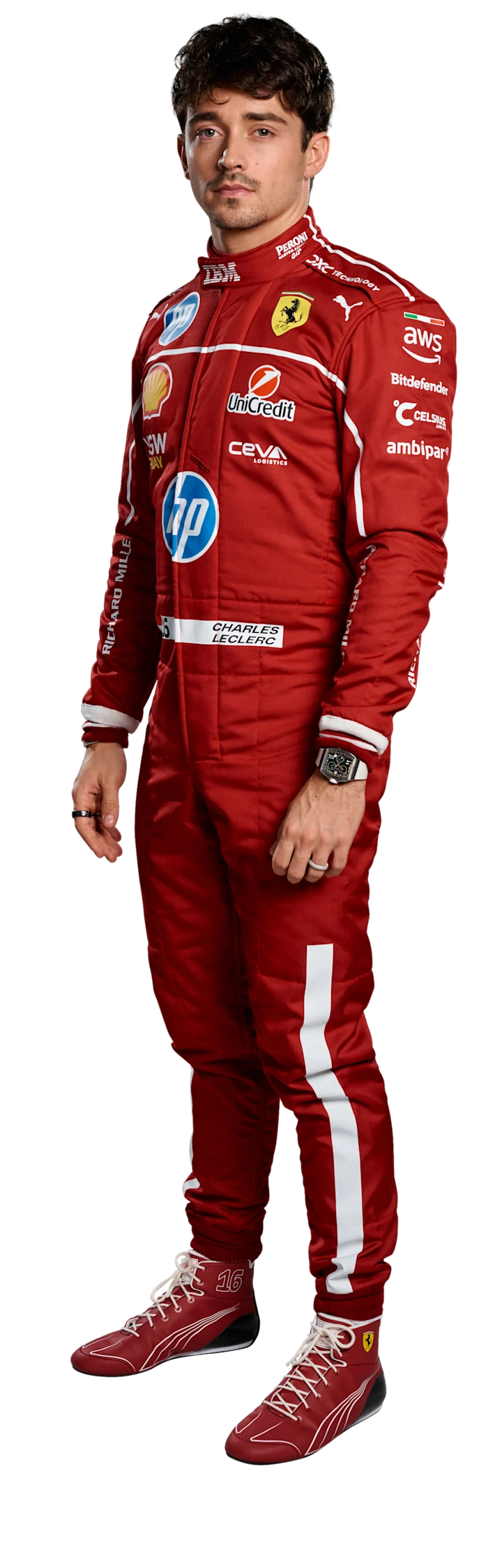
Charles Leclerc arrived in 2019, immediately establishing himself as one of the fastest qualifiers in the sport and winning on only his second race for the team, the Belgian Grand Prix, before winning again at Monza a week later. The 2022 regulations reset appeared initially to deliver the championship challenge Ferrari's supporters had spent 14 years waiting for. The SF-22 won the first two races of the season and Leclerc led the championship. By the halfway point, a combination of unreliable engines, pit strategy decisions that drew widespread criticism, and a Red Bull car that ultimately proved faster over the full season had converted a championship lead into a third-place finish 146 points behind Max Verstappen.
The years between 2008 and 2024 produced five runners-up finishes in the constructors' championship. They produced race victories, pole positions, moments of genuine speed, and a succession of near-miss narratives. They did not produce a championship. The drought reached 16 years.
The 2024 season produced a Ferrari constructors' challenge that went to the penultimate race before McLaren clinched the title. It was the closest Ferrari had come. Leclerc won the Monaco Grand Prix in the principality where he was born, giving the result an emotional charge that even a sport accustomed to staging its theatre on the grandest possible circuits recognised as something different. Carlos Sainz won three Grands Prix for the team, including Singapore, the only non-Red Bull win of 2023 and continued demonstrating the consistency and pace that had made him Leclerc's most competitive teammate in the hybrid era.
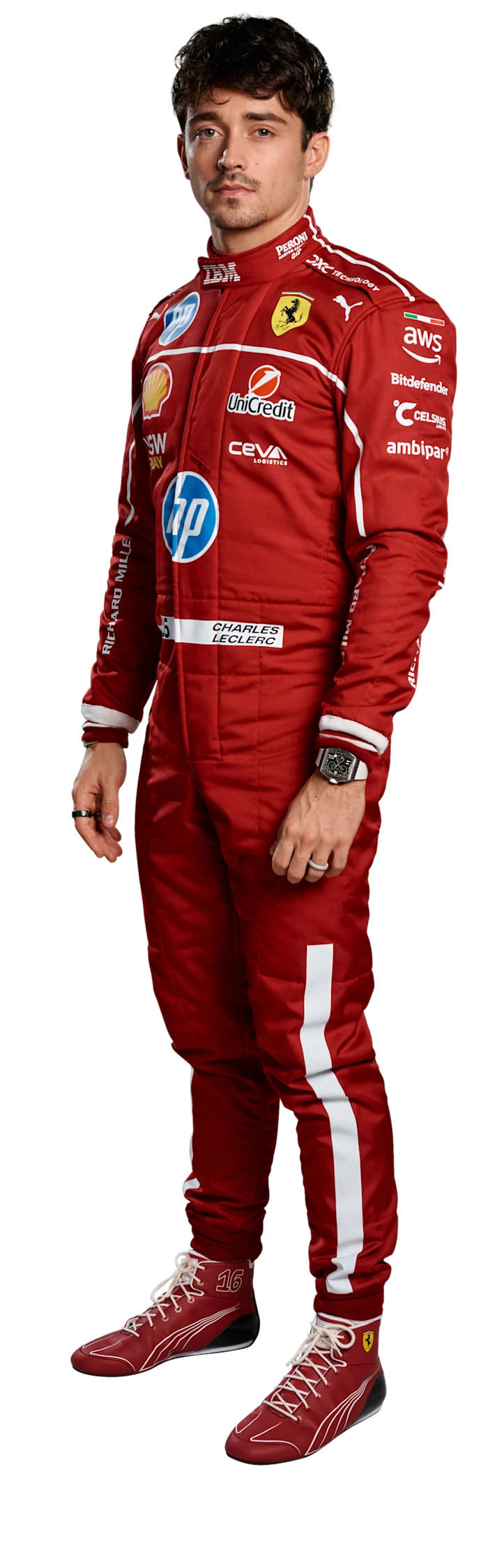
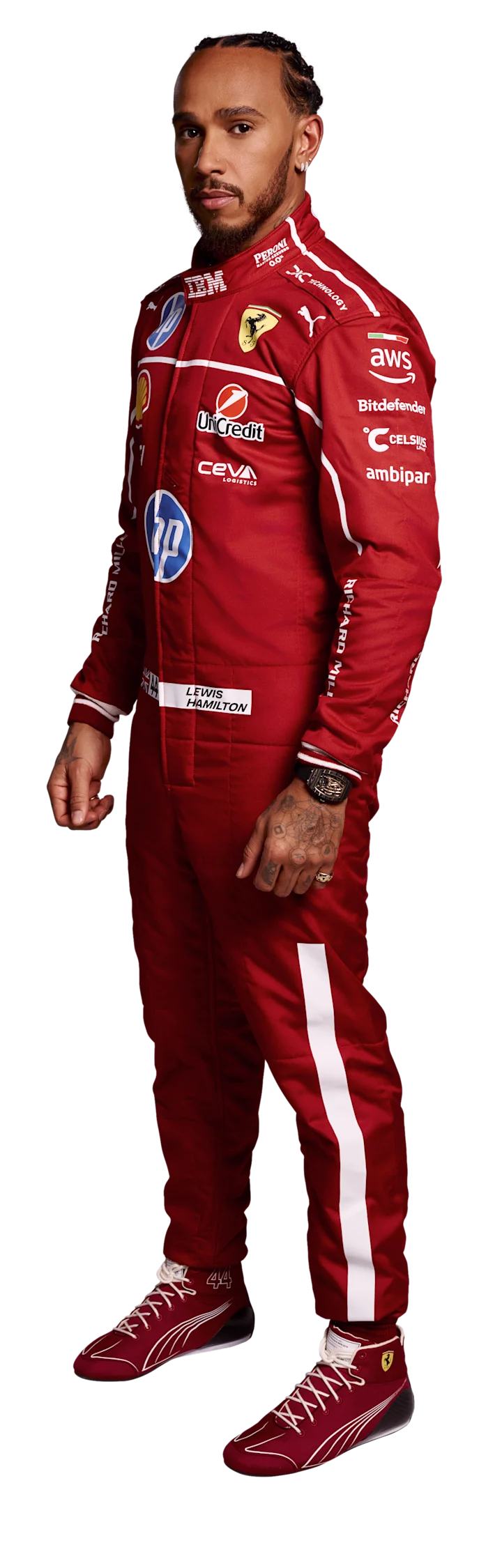
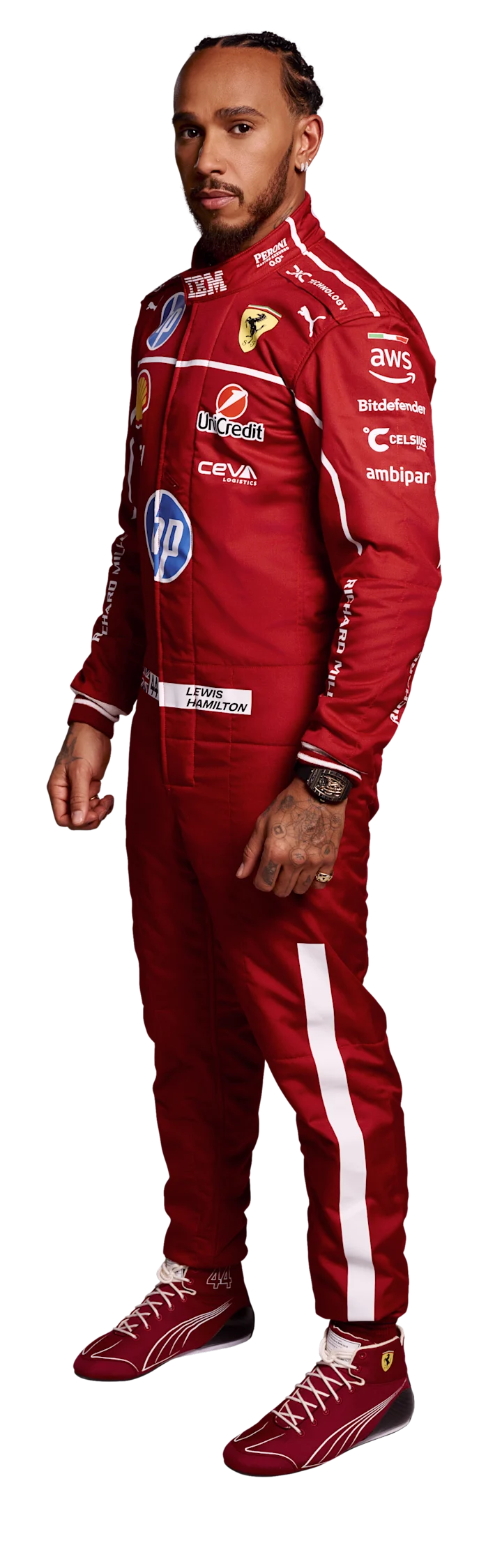
On 1 February 2024, before the season began, Ferrari announced that Lewis Hamilton, seven-time world champion, the sport's most successful driver in terms of race wins and pole positions, would be joining the team for 2025 on a multi-year contract. Sainz, whose seat was taken, drove the remaining 2024 season with the combination of professionalism and pointed performance that had characterised his entire Ferrari tenure. Hamilton's signing generated more coverage than any driver transfer in the sport's recent history. It was the pairing that Enzo Ferrari, had he lived to see it, would have wanted: the greatest driver of his generation, wearing red.
2025 began with expectations that the Hamilton-Leclerc combination, combined with the momentum of Ferrari's near-miss 2024 constructors' campaign, would mount a genuine title challenge. What arrived instead was one of the more difficult seasons in recent Ferrari history.
The SF-25 discovered after only two races that it could not be run at the optimum ride height without incurring illegal levels of plank wear. The fix required development resources and track time that set the team back relative to McLaren's development trajectory, which was by that point moving faster than any other car on the grid. By early April, Ferrari team principal Frédéric Vasseur, a Frenchman who had replaced Mattia Binotto at the end of 2022 and who had previously managed Leclerc at Sauber, made the decision to effectively stop 2025 car development and redirect all engineering resources toward the 2026 SF-26. "McLaren was so dominating in the first four or five events that we realised it would be very difficult for 2025," Vasseur said. "It meant that we decided very early in the season to switch to '26. It was a tough call."
Hamilton finished the season sixth in the championship without a single podium, the first time in his entire Formula One career he had gone a full season without reaching the rostrum. Leclerc was fifth, with seven podiums, demonstrating the differential in adaptation to the car that would characterise the season. Ferrari finished fourth in the constructors' championship, 435 points behind McLaren. The gap had been 14 points 12 months earlier. Ferrari chairman John Elkann publicly criticised the drivers for talking too much about difficulties rather than focusing on driving, comments that generated considerable debate about whether the criticism was fair and whether it was directed at the right people.
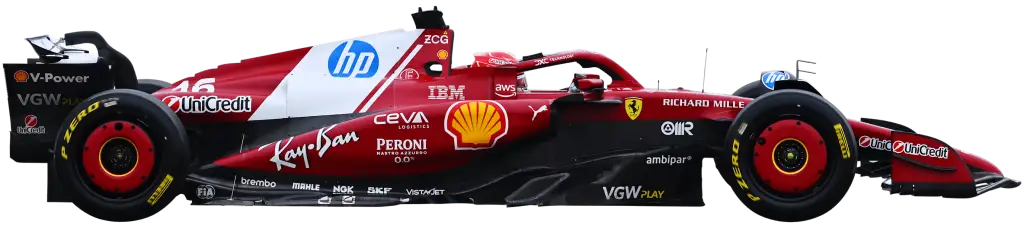
The 2026 SF-26 enters a regulation reset that Ferrari, having spent a full season's worth of development resources on it rather than the 2025 car, arrives at better prepared than most rivals. The car carried the fastest pre-season lap times at the final Bahrain test, with Leclerc setting the benchmark and drawing cautious optimism from a team trained by experience not to celebrate pre-season performance.
The SF-26 features Ferrari's own interpretation of the new active aerodynamics regulations, which permit movable wing elements to reduce drag on straights. Ferrari experimented during testing with what Vasseur, in an interview with French television, called the "Macarena" wing, a rear wing design where the upper flap rotates completely inverted when activated, a more radical interpretation of the regulation's possibilities than any other team had attempted. Whether the concept confers an advantage, and whether Ferrari will race it at the season opener in Melbourne, is one of 2026's opening questions.
Ferrari supplies its power unit to Haas and Cadillac for 2026, continuing a customer engine relationship that has provided the Italian manufacturer with commercial revenue and an extended development feedback loop throughout the hybrid era.
The question that arrives with every Ferrari season "Is this the year?" carries different weight in 2026 than it has for most of the preceding 16. Both Hamilton and Leclerc are at career inflection points. Hamilton is 41, which means any championship Ferrari wins for him would likely be his last realistic opportunity at an eighth title. Leclerc has spent seven seasons at Ferrari demonstrating the speed and commitment the role requires while waiting for the machinery to match his ability. If the SF-26 is what testing suggests, Leclerc in competitive machinery at 28 represents the most formidable version of a driver who has already shown he can qualify ahead of Verstappen.
The obstacle is the same one that has stood between Ferrari and championships for 16 years: converting theoretical pace into operational perfection across a full season. Ferrari's race strategy has been the subject of sustained criticism for most of that period. Their in-season development has lagged McLaren's pace of improvement. Their ability to manage two drivers of comparable ability, particularly drivers whose relative performance within the team creates narrative tension, has periodically cost them points. Vasseur's focus on the 2025-to-2026 development pivot suggests he understands the structural nature of the gaps, and Ferrari chairman Elkann has been explicit that continued underperformance will carry consequences.
What no team in Formula One has that Ferrari has is the weight of the story behind it. Every race Ferrari wins matters in a way that is categorically different from a victory for any other constructor. Every race Ferrari loses is accompanied by 245,000 tifosi at Monza who wear red, carry flags, and remember every championship since 1952. The pressure Ferrari operates under is not merely competitive; it is historical, emotional, and attached to an institution that its supporter base regards as something between a sports team and a national inheritance.
Enzo Ferrari built a team that outlasted him by 38 years and still, in 2026, has not resolved the question of whether any organisation built by one man's obsession can sustain the dominance that obsession first created. He said that the car was the reason for any success. He also said, once, in 1962, in a memoir, that his were "terrible joys." The title of the book was Le mie gioie terribili. It remained the most honest thing he ever wrote about what the enterprise cost him, and what he would have done differently if he could.
Nothing, apparently. He would have done nothing differently.
| Year | Drivers' Champion | Car | Constructors' result |
|---|---|---|---|
| 1952 | Alberto Ascari | 500 F2 | 1st |
| 1953 | Alberto Ascari | 500 F2 | 1st |
| 1956 | Juan Manuel Fangio | D50/Lancia | — |
| 1958 | Mike Hawthorn | 246 F1 | 2nd |
| 1961 | Phil Hill | 156 | 1st |
| 1964 | John Surtees | 158 | 2nd |
| 1975 | Niki Lauda | 312T | 1st |
| 1976 | — (Lauda P2) | 312T2 | 1st |
| 1977 | Niki Lauda | 312T2 | 2nd |
| 1979 | Jody Scheckter | 312T4 | 1st |
| 1982 | — | 126C2 | 1st |
| 1983 | — | 126C3 | 1st |
| 1999 | — | F399 | 1st |
| 2000 | Michael Schumacher | F1-2000 | 1st |
| 2001 | Michael Schumacher | F2001 | 1st |
| 2002 | Michael Schumacher | F2002 | 1st |
| 2003 | Michael Schumacher | F2003-GA | 1st |
| 2004 | Michael Schumacher | F2004 | 1st |
| 2007 | Kimi Räikkönen | F2007 | 2nd |
| 2008 | — (Massa P2) | F2008 | 1st |
Total: 16 constructors' championships. 15 drivers' championships. 243 race wins. Last win: Leclerc, Monaco 2024.