
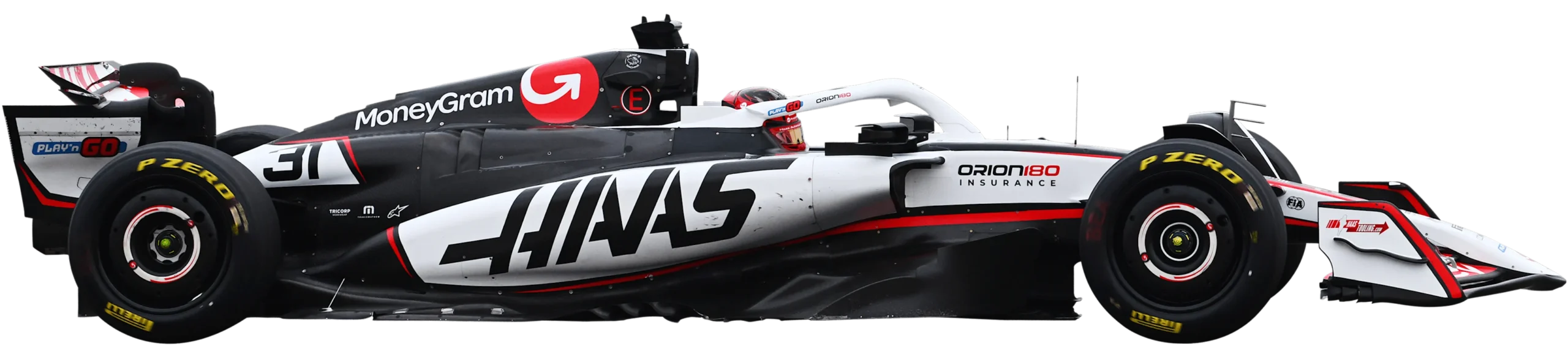
The first American Formula One team of the modern era, and the elder of two American constructors on the 2026 grid. Founded by a machinist who built the largest CNC tool manufacturer in North America, served federal prison time for tax fraud, and then submitted a FIA entry application fewer than five years after his release. Built on a business plan written at a kitchen table during the financial crisis. Its first car was assembled by engineers driving back and forth on a motorway in northern Italy, one of whom was knocked unconscious with exhaustion in the van to the airport before they had turned a wheel. It has never won a race. It has never stood on a podium. It has had its greatest qualifying results taken from it by cross-threaded wheel nuts. One of its drivers stepped from a fireball in Bahrain, and five years later finally received the Formula One farewell that the crash denied him. That is Haas.
| Full name | TGR Haas F1 Team |
| Racing licence | American (one of two American-licensed constructors from 2026, alongside Cadillac) |
| Headquarters | Kannapolis, North Carolina, USA |
| European base | Banbury, England |
| Design office | Maranello, Italy |
| Team principal | Ayao Komatsu |
| Founder | Gene Haas |
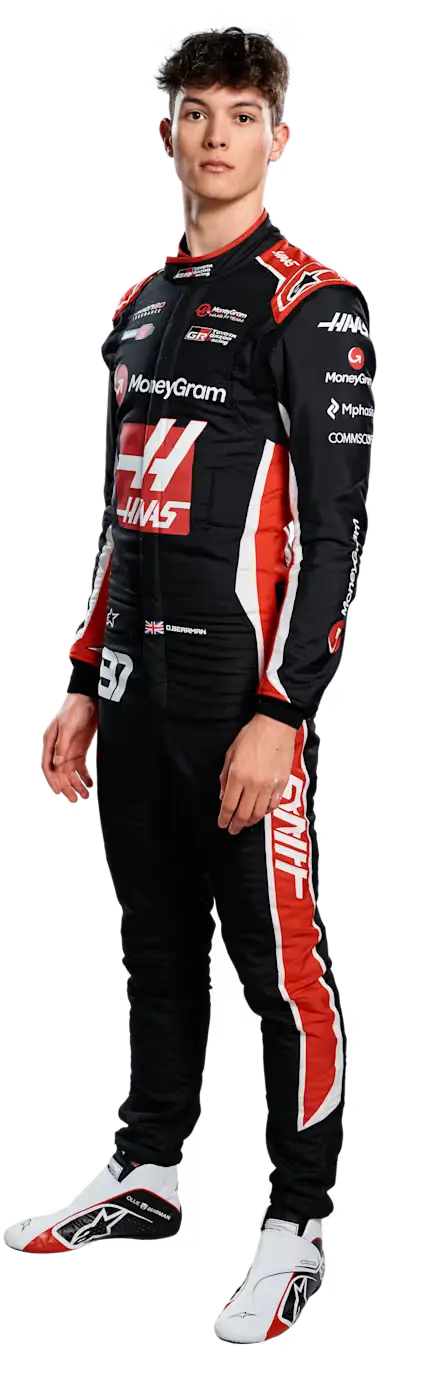
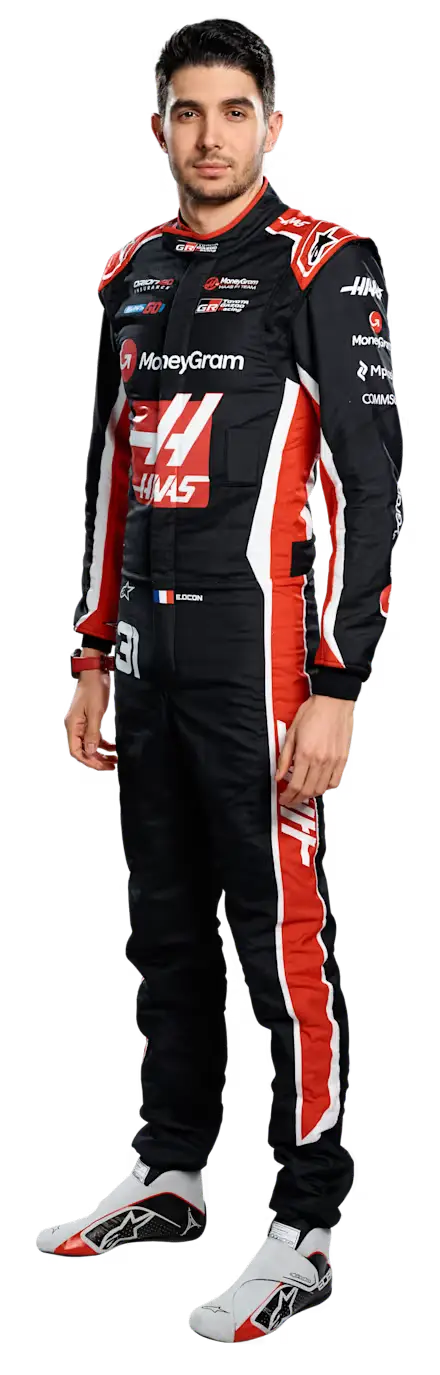
| Drivers (2026) | Esteban Ocon, Oliver Bearman |
| Power unit | Ferrari |
| Technical partner | Toyota Gazoo Racing |
| F1 debut | 2016 Australian Grand Prix |
| Best constructors' finish | 5th (2018) |
| Race wins | 0 |
| Pole positions | 1 (Kevin Magnussen, 2022 Sao Paulo sprint) |
Gene Haas was born on 12 November 1952 in Youngstown, Ohio. His family relocated to Los Angeles when he was a child, where his father designed electrical cabinets for Hughes Aircraft and his mother worked as a schoolteacher. At 14, Haas began sweeping floors at a machine shop and within six months was setting up lathes and milling machines. He worked in machine shops throughout high school and college, graduating from California State University Northridge in 1975 with a degree in accounting and finance, he had originally enrolled in engineering but switched courses after Lockheed nearly went bankrupt, deciding that business knowledge was the more reliable foundation.
In 1978, Haas founded Proturn Engineering, a contract machine shop in Sun Valley, California, with two employees, machining parts for the electronics and aerospace industries. In 1983, he founded Haas Automation, and by the early 2000s it had become the largest CNC machine tool manufacturer in North America. Today Haas Automation has more than 170 factory outlets in over 80 countries and generates approximately one billion dollars in annual revenue. In 2007, Haas built Windshear, described as one of the most advanced automotive wind tunnels in the world, located on the same Kannapolis, North Carolina property that would later house his Formula One operation. Ninety-five percent of all new product design at Haas Automation originates from Gene Haas himself.
The "VF" in every Haas Formula One car name stands for "Very First" a direct tribute to the VF-1, the first vertical machining center that Haas Automation produced. Every car that has carried the team's colours in Formula One carries, in its name, a reference to the lathe that started the company.
In 2000, Haas lost a patent infringement lawsuit brought by Hurco Manufacturing, ultimately paying nearly $9 million to settle a case he had fought and lost on appeal. He was furious. According to court documents, his tax fraud scheme began the following month. Working with his general manager and a network of shell companies, Haas orchestrated a plan to create fake invoices for nonexistent industrial equipment, claiming more than $50 million in fraudulent business deductions across 2000 and 2001 and avoiding an estimated $34 million in taxes.
Federal investigators became aware of the scheme when a former Haas Automation executive cooperated with the FBI in 2001. Haas was arrested in June 2006 and charged with eleven federal counts. He pleaded guilty to one felony conspiracy charge in August 2007 and was sentenced in November 2007 to two years in federal prison, a $5 million fine, and repayment of more than $70 million in back taxes and interest. The U.S. Attorney noted at sentencing that Haas "has now paid the government more than twice the amount of taxes he attempted to avoid paying." He requested placement at the Federal Correctional Institution at Lompoc, a low-security facility near Vandenberg Air Force Base, and began his sentence in January 2008. He was released in May 2009 after serving 16 months.
Haas Automation continued operating without interruption during his incarceration. He had built a management structure capable of running without him, a quality that would later define his Formula One model.
In January 2014, fewer than five years after his release from prison, Gene Haas formally submitted his interest to the FIA in entering a Formula One team. The FIA granted his licence in April 2014.
Guenther Steiner was born on 7 April 1965 in Merano, South Tyrol an Italian city with strong Austrian cultural identity, in the foothills of the Alps. His father was a butcher. Steiner studied engineering but left without completing his degree, moving to Belgium in 1986 to work as a mechanic in the World Rally Championship for Mazda Rally Team Europe. He worked his way through a series of team management roles across rallying through the 1990s.
In 2001, Niki Lauda headhunted him to run Jaguar Racing, Ford's Formula One team. Steiner later recalled Lauda's approach: "He asked, 'are there any talented people at Ford?' And the reply was 'there's Günther.' The guy lied!" He reorganised the team, reduced costs, and lasted two years before Ford dismissed both Lauda and much of the senior management. He moved to Red Bull Racing as technical operations director in 2003, working alongside Christian Horner. When Dietrich Mateschitz decided to establish a NASCAR presence and asked Steiner to lead the project, Steiner moved to Mooresville, North Carolina, where he served as technical director of Team Red Bull from 2006 to 2008.
He remained in North Carolina after leaving Red Bull. During the financial crisis of the late 2000s, seeing an opportunity in the fractured economics of mid-tier Formula One, Steiner wrote a formal business plan for a new American Formula One team at his kitchen table. The plan detailed a lean operational model built around sourcing as many components as possible from an established manufacturer, keeping internal costs low and focusing the team's own resources on race operations. He spent years searching for a financial backer willing to fund it. Niki Lauda and Jean Todt, the very people whose orbits he had moved through at Jaguar, provided the credibility that helped secure FIA approval. Gene Haas provided the money, the name, and the American identity. Steiner was announced as team principal in April 2014.
Haas sources its power unit, gearbox, and a substantial range of listed components directly from Ferrari. The chassis was initially commissioned to Italian manufacturer Dallara, which builds it around the Ferrari components. The team maintains a design office in Maranello, adjacent to Ferrari's headquarters. Its European racing operations are run from Banbury, England, the former Marussia F1 team facility, which Haas purchased following Marussia's collapse in 2014. Its administrative and commercial headquarters remain in Kannapolis, North Carolina, on the same site as the Stewart-Haas NASCAR operation.
The mechanics of building the first car required Haas personnel to drive the motorway between the Dallara factory in Varano de' Melegari and the Ferrari campus in Maranello multiple times a day to collect freshly made parts. Steiner recalled: "I think we were the biggest contributors to that motorway toll at that time! They must have been like, 'Wow, there's a lot of traffic here!' because whenever we needed something, someone would just jump in a rental car to go out and pick it up. Everything was last minute." On the night before the team flew to Australia for its debut, at least one mechanic was unconscious with exhaustion in the van on the way to the airport. They had not yet turned a wheel. Ayao Komatsu, one of the founding engineers, said later: "Honestly, that was hell."
Haas's approach divided the paddock immediately. Ross Brawn, then Formula One's director of motorsports, supported the model openly, arguing it allowed genuinely new teams to enter the sport competitively, addressing a concern that had haunted Formula One for years as successive small teams collapsed. McLaren's Zak Brown questioned the depth of the Ferrari relationship. Force India and Renault raised formal concerns about the constructor status of a team so heavily reliant on manufacturer components. The debate continued through 2019, when McLaren and Renault presented concerns to rule discussions about the approach. No regulatory action followed, and the model remained in place.
The first Haas car, the VF-16, was confirmed to have passed the mandatory FIA crash tests in January 2016. It was the first American constructor to enter Formula One since 1986. Steiner's stated ambition for the debut was specific: "To be solid. To be there and not to be an embarrassment. Because you can embarrass yourself pretty quick in Formula 1."
In the opening race at Melbourne's Albert Park, Romain Grosjean started from 19th on the grid. On the first lap, his co-driver Esteban Gutierrez was involved in a collision that sent Fernando Alonso's McLaren barrel-rolling and triggered a red flag. Under red-flag regulations, Grosjean's team was permitted to change his tires without consuming a race pit stop, effectively giving him a free strategy advantage. He managed the restart, held off the field behind him, and crossed the line in sixth place. It was the first time an American constructor had scored points in a Formula One debut race. It was the first time any constructor had done so since Toyota Racing in 2002.
Grosjean's post-race radio was unambiguous: "This is a win for us." Facing the microphones afterwards, he patted himself on the cheek and said: "Wait, yeah, it's real! I don't know... This is the American dream." Gene Haas stated: "F1 is back, and America is back in F1 in a big way." Komatsu said later that if the result had not come, if the debut had been anonymous, he believed more people would have resigned before the second race.
Haas scored points in three of the first four races of 2016 and finished eighth in the constructors' championship. The best debut result by a new Formula One team since 2002.
Kevin Magnussen replaced Gutierrez for 2017. The team's 2017 matched 2016: eighth in the constructors' championship. 2018 became the high point.
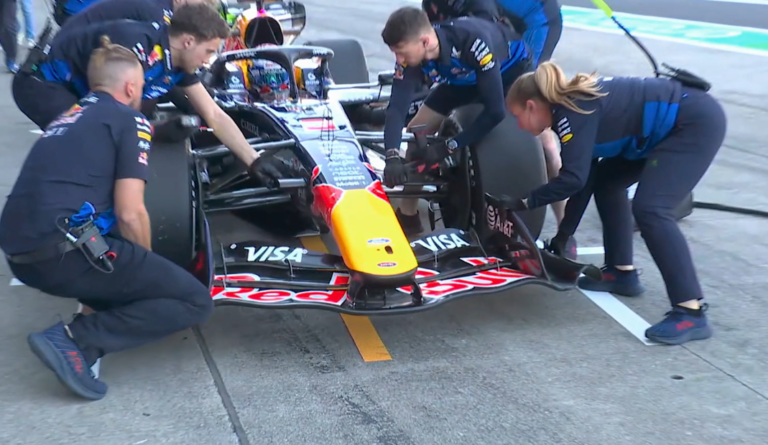
At the opening Australian Grand Prix in 2018, both cars, Magnussen from fifth and Grosjean from sixth, spent the race running in the top five positions. The team called both cars in for pit stops. The pit crew cross-threaded the wheel nuts on both cars. Both drivers retired one lap after their respective pit stops. What would have been the team's greatest result was gone. Steiner confirmed later: "The pit-stop crew had cross-threaded the wheel nuts on both cars."
The team recovered. At the Austrian Grand Prix, Grosjean and Magnussen finished fourth and fifth. The VF-18 had been criticised at launch for its resemblance to the previous year's Ferrari SF70H , McLaren boss Zak Brown questioned the relationship publicly, though no formal complaint was filed. At Singapore, Magnussen recorded Haas' first-ever fastest lap. The team finished fifth in the constructors' championship with 93 points. It remains their best season in the sport.
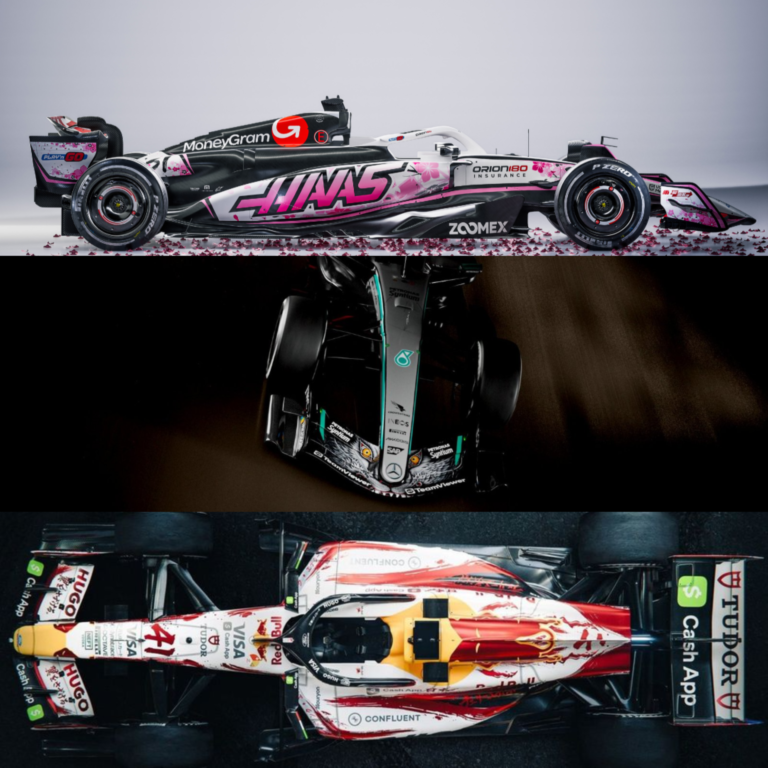
2019 saw the team sign its first title sponsor, Rich Energy, and adopt black and gold colours. Rich Energy descended into internal chaos: the sponsor's own Twitter account announced it was terminating the deal four days before the British Grand Prix, citing poor performance, before a shareholder dispute meant the team was told the announcement had been unauthorised. Haas eventually ended the arrangement after the Italian Grand Prix. On track, the VF-19 qualified well and raced poorly, with chronic tyre management problems. They finished ninth.
On the opening lap of the 2020 Bahrain Grand Prix, on 29 November, Grosjean made contact with Daniil Kvyat's AlphaTauri. His Haas VF-20 speared into a triple-layer Armco barrier at 119mph, striking at an angle that caused it to pierce between the lower barrier rails rather than deflect off them. The car split in two. The fuel supply was severed. The car erupted in flames with a full fuel load aboard.
Grosjean was trapped inside the burning survival cell. His left foot was initially caught by cockpit damage; he could only free himself by withdrawing his foot from his racing boot, leaving the boot inside the car. He moved the dislodged headrest and the steering wheel to clear his exit. The FIA's investigation later found the impact had registered 67G. The halo device, introduced in 2018 over widespread driver resistance, had physically shoved the upper barrier rail upward over his head, maintaining a gap through which he could extract himself. The team's racing suits had been upgraded at the start of 2020, increasing fire resistance from a minimum of ten seconds to approximately twenty-seven. Grosjean spent twenty-seven seconds inside the burning car.
He climbed out, crossed the barrier under his own power, and walked toward the FIA medical car. He had burns to the backs of both hands. His injuries were otherwise limited. He spent three days in hospital in Bahrain before returning to Switzerland. He had been scheduled to leave Haas at the end of the 2020 season in any case; he missed the final two races, and his Formula One career ended in the flames at Turn 3 rather than at Abu Dhabi where it had been planned to close.
In September 2025, nearly five years later, Haas brought Grosjean to Mugello for a test drive in the VF-23. He wore the helmet his three children had designed for what should have been his Abu Dhabi farewell in 2020. Ayao Komatsu served as his race engineer, reprising the role he had played when they first worked together at Renault and Lotus before both joined Haas at the team's founding. Grosjean completed a standing start. "My last standing start was Bahrain 2020," he said, "so this time it turned out way better."
Grosjean and Magnussen both left Haas at the end of 2020. The team signed Nikita Mazepin and Mick Schumacher, son of seven-time world champion Michael for 2021. They openly stated this was a transitional year: development resources were withheld from the 2021 car entirely, redirected toward 2022's regulation reset. The title sponsor was Uralkali, a Russian potash producer of which Mazepin's father Dmitry was a key shareholder. The livery contained the colours of the Russian flag. Steiner denied this was intended to circumvent WADA restrictions on Russian sporting representation.
At the first race in Bahrain, Mazepin spun out on the opening lap. Schumacher finished 16th, last of the running cars. By Azerbaijan, Mazepin made a high-speed late defensive move on Schumacher on the final lap. Schumacher was heard over the team radio: "Is he trying to kill us or something?" The team finished 2021 without a single championship point.
Russia invaded Ukraine on 24 February 2022. Within days, Haas terminated Mazepin's contract and withdrew Uralkali as title sponsor. The team repainted their car overnight, removing the Russian-flag livery, before the first test of the season. Kevin Magnussen was called back to replace Mazepin with days' notice. At his first race back, in Bahrain, Magnussen finished fifth. Steiner's radio message was immediate: "a Viking comeback." Haas finished eighth in 2022, their best result since 2018. Magnussen's sole pole position came later that year in wet sprint qualifying at Sao Paulo, the only pole position in the team's history.
Mick Schumacher was released at the end of 2022. Nico Hulkenberg replaced him for 2023, partnering Magnussen. It was the team's worst season since 2016: tenth in the constructors' championship, 12 points, chronic tyre problems. Steiner's contract was not renewed in January 2024. He later sued the team for non-payment of commissions.
Ayao Komatsu, who had been with the team since its first race in 2016, first as Grosjean's race engineer and later as director of engineering, was promoted to team principal on 10 January 2024. He played down expectations from the start. The team finished seventh in 2024 with 58 consistent points from Magnussen and Hulkenberg. Oliver Bearman, a Ferrari Driver Academy driver who had made a points-scoring debut substituting for the ill Carlos Sainz at Ferrari's 2024 Saudi Arabian Grand Prix, also stepped in for Magnussen at Azerbaijan and Sao Paulo when Magnussen accumulated 12 penalty points in 12 months and triggered a race ban.
In August 2024, Dutch bailiffs entered the Haas paddock at the Dutch Grand Prix to assess team assets for Uralkali, which was still pursuing a $9 million repayment claim from the cancelled 2022 sponsorship contract. The assets were valued under the eyes of the paddock. Gene Haas confirmed the payment was made before the deadline; Uralkali confirmed receipt on 26 August; the team was cleared to leave for the Italian Grand Prix.
In October 2024, Haas announced a technical partnership with Toyota Gazoo Racing.
The Toyota Gazoo Racing partnership marks the most significant structural change to Haas since its founding. Under the arrangement, TGR provides design, technical and manufacturing services in exchange for Haas's technical expertise and commercial benefits. In December 2025, TGR was announced as the team's title sponsor for the 2026 season and beyond, renaming the outfit TGR Haas F1 Team. It is Toyota's first formal presence in Formula One since their factory team withdrew at the end of the 2009 season.
For the first time in the sport's history, Haas is no longer the only American constructor on the grid. Cadillac, backed by General Motors, joined as the eleventh team in 2026. The two American outfits represent entirely different philosophies. Haas is a decade old, lean by design, Ferrari-dependent, and deliberately structured to avoid the overhead of building everything internally. Cadillac is building toward full manufacturer independence, with its own GM-developed power unit planned for 2029, four separate facilities across the United States and England, 520 staff hired after receiving more than 143,000 applications, and an explicit ambition to be a works team in its own right. Their first car is named the MAC-26, after Mario Andretti, the last American to win a Formula One world championship. Where Haas entered F1 as a lean outsourcing model, Cadillac has entered as a long-term industrial project. Both cars carry American racing licences. Almost nothing else about them is the same.
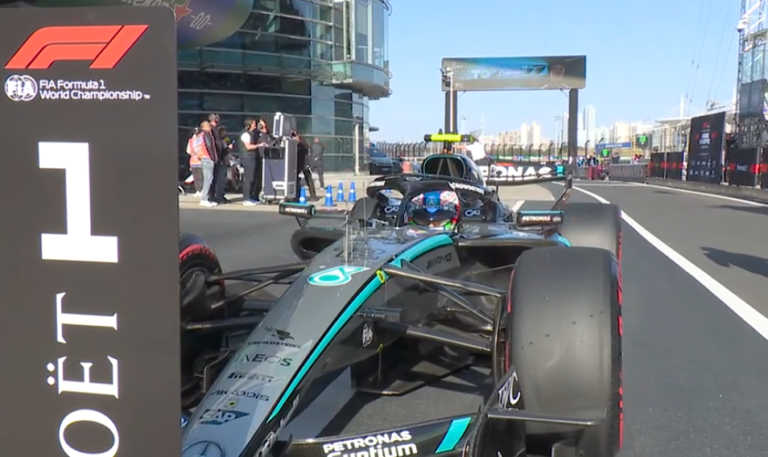
The 2026 car, the VF-26, is the first chassis Haas has fully designed in-house, with TGR's engineering input contributing to its development. Ferrari power units continue.
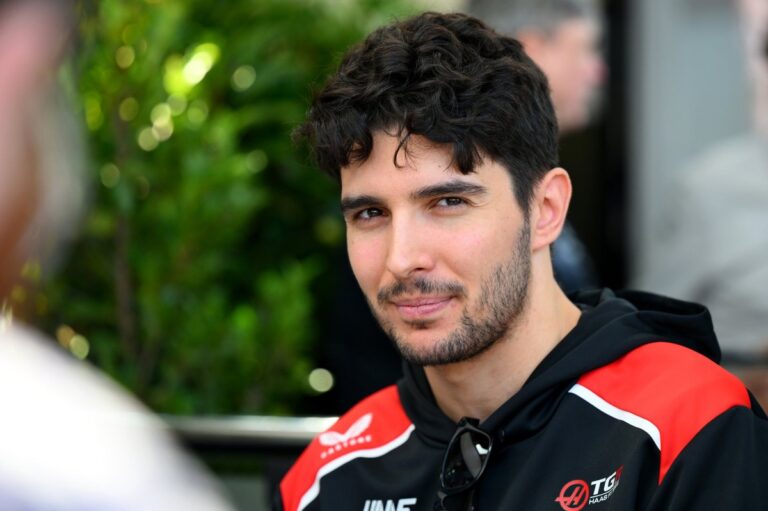
The driver lineup for 2026 is unchanged from 2025. Esteban Ocon joined Haas for 2025 after five seasons with Alpine, bringing with him a Formula One race win (the 2021 Hungarian Grand Prix), the first race winner to drive for the team. He was also, in an unremarked coincidence, the driver for whose very first Formula One test, at Lotus in Valencia in 2014, Komatsu had served as the engineer. More than a decade passed between that test and them sitting in the same team garage as driver and principal. Oliver Bearman, 20, delivered a strong rookie campaign in 2025, with fourth place at the Mexico City Grand Prix equalling the team's best-ever race result. Jack Doohan joins as reserve driver.
Haas enters 2026 as an American-licensed team with Japanese technical support, Italian power, British and French drivers, and facilities on three continents. Gene Haas is 73 years old. The team he built from a kitchen table business plan, via a patent lawsuit, a prison sentence, and a decade of mid-field Formula One, is contesting the sport's biggest regulation change alongside a second American team that did not exist two years ago. The era in which Haas was the sole representative of American ambition in Formula One is over. What they do with that company will be the most interesting question the next few seasons answer.
| Season | Constructors | Points | Notable |
|---|---|---|---|
| 2016 | 8th | 29 | First American team in F1 in 30 years; debut points |
| 2017 | 8th | 47 | Magnussen joined; stable midfield presence |
| 2018 | 5th | 93 | Best season; Austria P4/P5; double retirement Australia |
| 2019 | 9th | 28 | Rich Energy chaos; tyre problems |
| 2020 | 9th | 3 | Grosjean Bahrain crash; both drivers departed |
| 2021 | 10th | 0 | Mazepin/Schumacher; deliberate development write-off |
| 2022 | 8th | 55 | Magnussen return; Sao Paulo pole; Mazepin dismissed |
| 2023 | 10th | 12 | Worst season; Steiner not renewed |
| 2024 | 7th | 58 | Komatsu TP; Toyota partnership announced |
| 2025 | 8th | — | Ocon/Bearman; Bearman P4 Mexico; TGR title sponsor |
Race wins: 0. Pole positions: 1 (Magnussen, Sao Paulo sprint, 2022). Best race result: P4 (Grosjean, Austria 2018; Bearman, Mexico City 2025).
Last updated March 2026