
There is a photograph taken at Goodwood on 2 June 1970 that shows the McLaren M8D Can-Am car motionless in the gravel after losing a bodywork panel at speed. The driver, Bruce McLaren, was dead at 32. His team had won its first Formula One Grand Prix two years earlier. It had been in existence for seven. Sixty years after that photograph, the organisation Bruce McLaren built is the second most successful in Formula One history, has won more Grand Prix races than any team except Ferrari, and enters 2026 as defending champions of both titles simultaneously for the first time since 1999. The distance between those two moments — and everything that happened in the interval — constitutes one of the sport's great stories.
| Full name | McLaren Mastercard F1 Team |
| Racing licence | British |
| Headquarters | McLaren Technology Centre, Woking, Surrey |
| Team principal | Andrea Stella |
| CEO | Zak Brown |
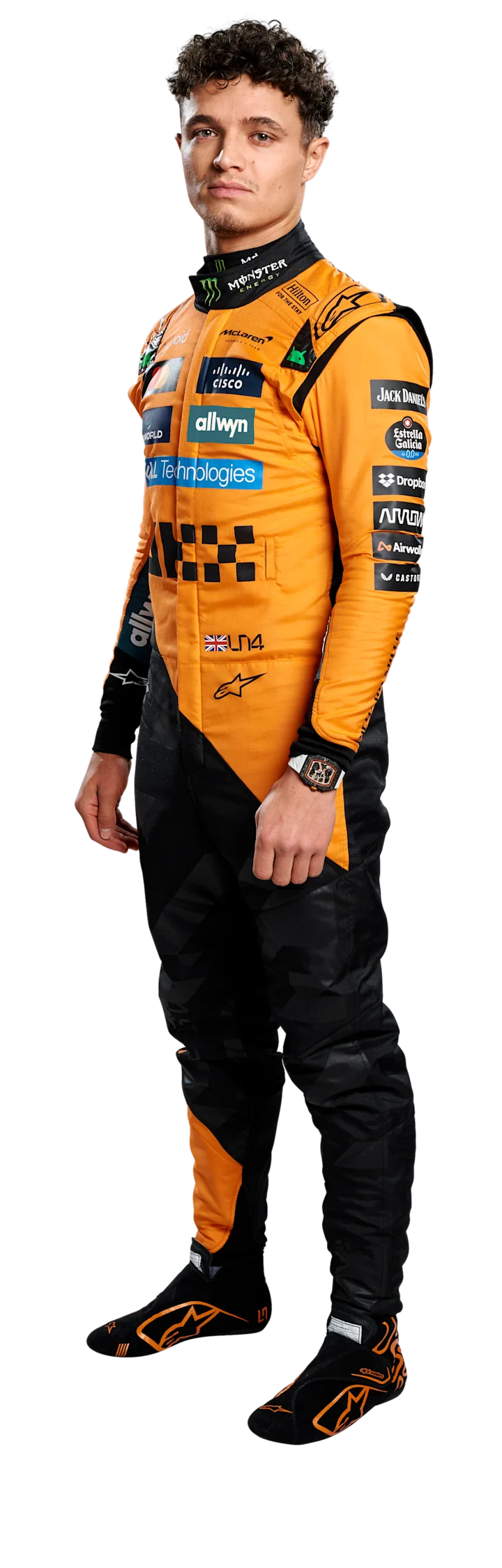
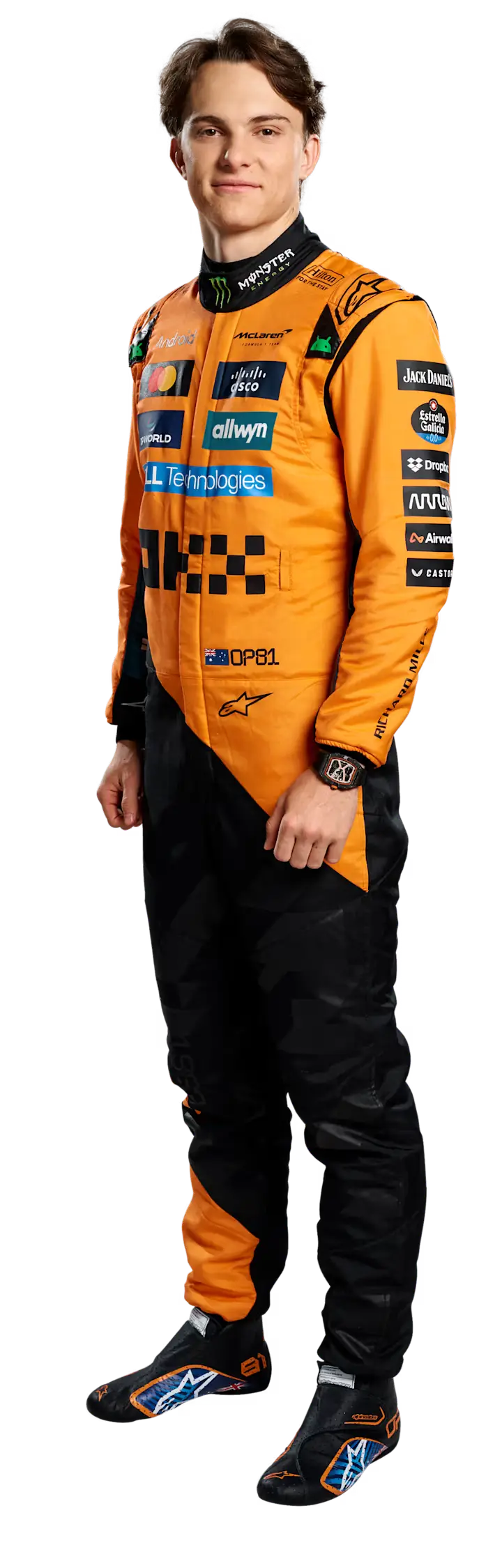
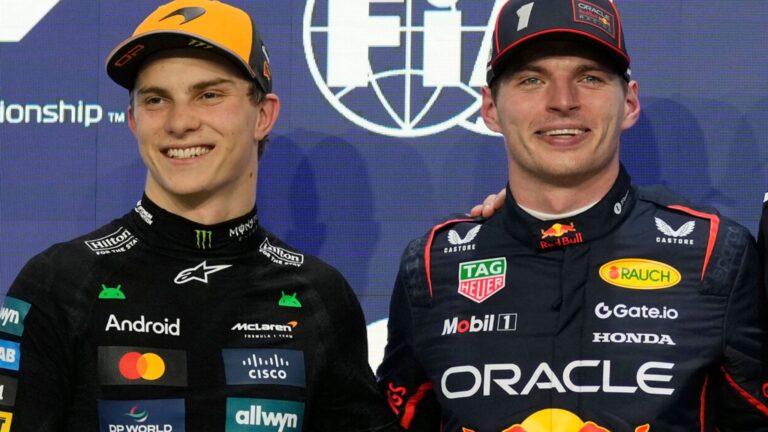
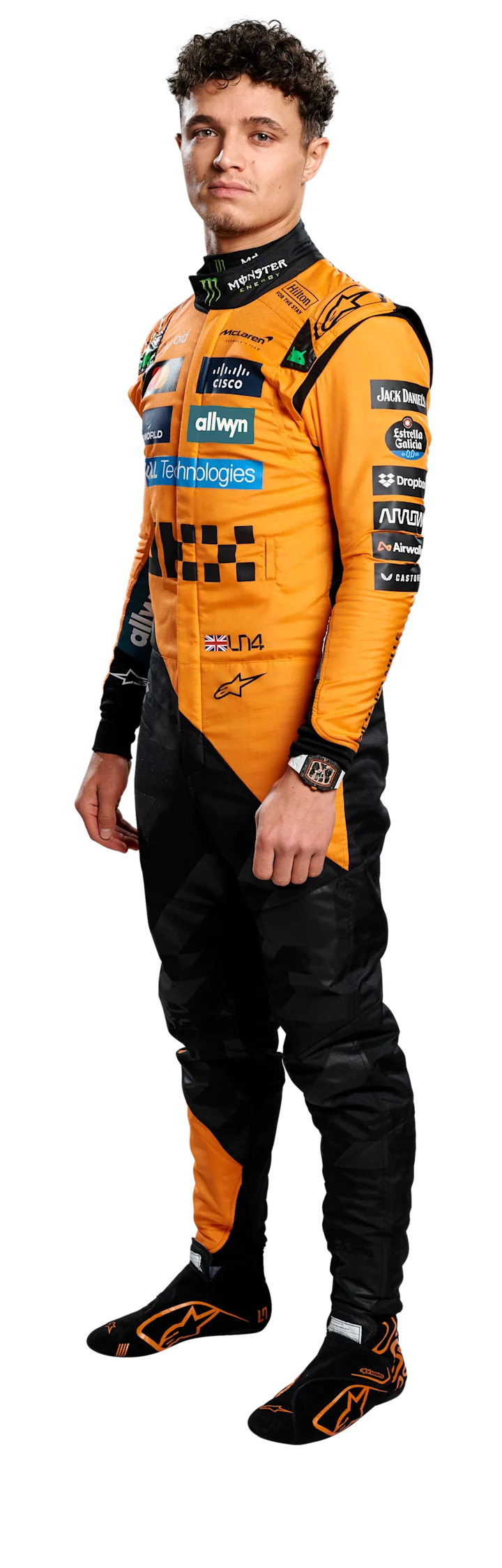
| Drivers (2026) | Lando Norris (#1), Oscar Piastri (#81) |
| Power unit | Mercedes-AMG F1 M17 E Performance |
| First race | 1966 Monaco Grand Prix |
| First win | 1968 Belgian Grand Prix (Bruce McLaren) |
| Constructors' championships | 10 |
| Drivers' championships | 13 |
| Race wins | 203 |
| Principal owners | Mumtalakat Holding Company / CYVN Holdings |
Bruce McLaren was born in Auckland in 1937, the son of parents who ran a service station in the suburb of Remuera. At nine years old he was diagnosed with Perthes disease, a hip condition that left one leg shorter than the other and required two years of treatment during which he could barely walk. He later said this period gave him his self-sufficiency — when he could not run, he learned to think, to make things, to understand how engines worked.
His father Les was a motorcycle enthusiast who introduced Bruce to competition. By his late teens Bruce was racing cars in New Zealand with ability that attracted the attention of Jack Brabham, who arranged for him to join the Cooper factory team in 1959 as the youngest works driver in Formula One at that point. At the United States Grand Prix at Sebring that year, aged 22 years and 104 days, he became the then-youngest winner in the sport's history — a record that would stand for 44 years, until Fernando Alonso broke it in Hungary in 2003. He finished second in the 1960 championship behind Brabham.
Cooper declined through the early 1960s as Lotus, Ferrari, and BRM dominated. Bruce became increasingly dissatisfied with what the team could offer. His response was characteristic: he started his own operation. Bruce McLaren Motor Racing was incorporated in 1963 while he was still driving for Cooper, initially entering sports car races and the Tasman Series. The team entered Formula One for the first time at the 1966 Monaco Grand Prix, forced by an oil leak to retire after nine laps.
Outside Formula One, Bruce's orange Can-Am sports cars became the most dominant machinery in North American racing, winning the championship in 1967, 1969, and — under subsequent management — in 1970, 1971, and 1972. Bruce raced, designed, engineered, managed, drove the transporter, and swept the factory floor alongside the people who built his cars. He also won the 1966 24 Hours of Le Mans, co-driving a Ford GT40 with Chris Amon.
The early Formula One years were modest. McLaren used various engines before the arrival of the Ford-Cosworth DFV, which provided competitive power from 1968 onward. On 12 May 1968 at Spa-Francorchamps, Bruce McLaren took the team's first victory. Denny Hulme won two more races later that season. McLaren finished second in the constructors' championship in what was effectively their debut year of serious F1 competition.
On 2 June 1970, while testing the new M8D Can-Am car at Goodwood, a faulty rear bodywork attachment failed at speed, removing aerodynamic downforce and sending the car off the road. Bruce McLaren died from his injuries. He was 32. The team he had built gathered itself, debated whether to continue, and decided that continuing was the appropriate form of respect.
Leadership passed to Teddy Mayer, an American lawyer who had become McLaren's business manager after the death of his brother Timmy in a Tasman Series testing accident in 1964 — one of the tragedies that framed McLaren's formative years. Mayer ran the team through the early 1970s with pragmatic efficiency.
The McLaren M23, a conventionally sound design refined through several seasons, proved competitive enough to carry Emerson Fittipaldi to both the drivers' and constructors' championships in 1974. It was McLaren's first F1 double. Two years later, James Hunt replaced Fittipaldi — who had moved to his family's own team — and the 1976 championship produced one of the sport's great narratives: Hunt against Niki Lauda of Ferrari in a season punctuated by Lauda's near-fatal accident at the Nürburgring in August, his return to racing six weeks later with burns to his face and lungs, and the final round in Japan contested in torrential rain. Lauda withdrew from the race, judging the conditions too dangerous. Hunt finished third — enough to win the championship by a single point.
By 1980, the momentum had dissipated. McLaren finished ninth in the constructors' championship. The team was short of direction, short of sponsors, and falling further behind. Marlboro, the team's principal sponsor, concluded that something needed to change.
Ron Dennis was born in Woking in 1947 — the town where McLaren's factory would eventually stand — and had begun his career as a mechanic with the Cooper F1 team at 18. He worked with Brabham's team, then established his own junior formulae operations: Rondel Racing and then Project Four Racing, which won Formula Two championships in 1979 and 1980 with Marlboro backing. By 1980, Dennis had hired designer John Barnard to build an F1 car and was looking for a way into the top category. The opportunity came through Philip Morris, McLaren's tobacco sponsor, who engineered a merger between Dennis's Project Four and the ailing McLaren operation in September 1980.
The car Barnard had designed was unlike anything Formula One had seen. The McLaren MP4/1 — the initials standing for Marlboro Project Four — was the first Formula One car with a chassis manufactured entirely from carbon fibre composite. The significance is difficult to overstate. Prior to 1981, F1 cars used aluminium monocoques assembled from approximately 50 components. The MP4/1 chassis consisted of five major mouldings. Carbon fibre was simultaneously lighter, stiffer, and dramatically stronger than aluminium in a crash. Barnard had been inspired partly by observing carbon fibre's use in aerospace; he sourced the material from Hercules Aerospace in Utah after British manufacturers declined the project as too ambitious.
The paddock's reaction was sceptical. Colin Chapman, building his own composite-chassis Lotus 88 simultaneously, reportedly said he did not believe a pure-carbon car could be safe enough in a major accident. Dennis was characteristically blunt about the arrangement with Barnard: "He said, 'you tell me what you want to do technically and I'll get the money.' That's how it went, and it worked, too." At the Italian Grand Prix at Monza in 1981, John Watson crashed at high speed and walked away unhurt from a car that, in aluminium, would likely have killed him. The knockers fell silent. Within seasons, every serious competitor was building carbon fibre cars. The safety technology that defines Formula One chassis construction today — the survival cell that has protected drivers through catastrophic accidents for four decades — traces a direct line to Barnard's design for Ron Dennis in 1981.
Watson won the British Grand Prix that year, McLaren's first victory under the Dennis era.
Dennis added two crucial elements in the following years. He convinced Mansour Ojjeh, a Saudi businessman who ran the Techniques d'Avant Garde investment company, to fund the development of a purpose-built turbocharged engine carrying the TAG name — built by Porsche to Barnard's specifications. And he signed Alain Prost from Renault, who had been dismissed by the French team after publicly criticising their development programme, and convinced Niki Lauda to come out of his second retirement to be Prost's teammate.
The combination of TAG-Porsche engine and the Barnard-designed MP4/2 chassis produced comprehensive dominance. In 1984, McLaren won 12 of 16 races. Lauda took the drivers' championship from Prost by the smallest margin in the history of the sport — half a point — the consequence of a Monaco race stopped at half distance that awarded Prost only half points for his victory. Prost had won seven races to Lauda's five, yet lost by 0.5 points. Lauda later described the result as "one of the greatest wins of my career, even though Alain was clearly faster." 1985 reversed the result: Prost won the drivers' championship, McLaren the constructors'. 1986 saw Prost win the drivers' championship again, with Williams-Honda defeating McLaren in the constructors' contest. By 1987 the TAG engine was aging and Williams-Honda had pulled clear. McLaren needed a new engine partner.
Unnerved by Frank Williams's serious car accident in March 1986 and by Williams's continued refusal to accommodate a Japanese driver in their lineup, Honda chose not to renew with Williams. Their works supply moved to McLaren. Dennis capitalised immediately: he signed Ayrton Senna — who had spent three years winning races for Lotus and was by consensus the fastest driver of his generation — to partner Prost for 1988.
What followed belongs in a category by itself.
The McLaren MP4/4, powered by Honda's RA168E turbo V6 and designed by Steve Nichols with significant input from Gordon Murray, won 15 of the 16 races in the 1988 season. It sat on pole position in 15 of those 16 rounds, with Senna alone taking 13 poles. McLaren scored 199 constructors' points; Ferrari in second place scored 65 — less than a third of McLaren's total. The season's solitary non-McLaren victory, at Monza, came because Senna was collected by a backmarker while holding the lead with two laps remaining. The MP4/4's win rate of 93.8 percent from starts remains the highest of any car in a full Formula One season.
Prost won seven races; Senna won eight and clinched the championship by three points. The mathematics obscured how competitive it was: Prost had actually scored more total points than Senna, but under the rules in force only the best 11 results counted, and Senna had more wins. Senna won his first world championship. McLaren's second place at Ferrari that year — 65 points to 199 — was the most lopsided constructors' result in the sport's history.
The context matters. 1988 was the last year turbocharged engines were permitted. Every competitor knew it and most had already shifted development focus to the 1989 naturally aspirated formula. McLaren and Honda pressed every advantage available in the final turbo season. The MP4/4's low, reclined driver position — Murray's contribution from his Brabham background — produced a car whose aerodynamic efficiency was as remarkable as its engine's power-fuel economy relationship under the severe 150-litre fuel restriction and 2.5-bar boost limit that the FIA had introduced to reduce turbo advantages. Against every regulatory expectation, McLaren made the final turbo year into the most dominant season the sport had ever witnessed.
1989 brought Prost and Senna back in the same cars, now powered by Honda's V10 naturally aspirated engine. The championship was competitive until Japan, the penultimate round, where the two McLarens collided at the chicane on lap 46. Prost withdrew from the race. Senna was later disqualified for receiving assistance from marshals after the contact. Prost won his third world championship. The question of whether the contact was accidental, a misjudgement, or deliberate generated controversy that still circulates. It ended a working relationship. After the season, Prost announced he would not drive alongside Senna in 1990 and moved to Ferrari.
The following two years continued McLaren and Senna's dominance. The 1990 title fight was resolved again at Suzuka, again in collision, this time on the first lap, with Senna now holding the championship lead and Prost's Ferrari unable to continue. Senna later admitted he had deliberately driven into Prost in retaliation for the previous year. He won his second championship in a row with McLaren. 1991 added a third: Senna against Williams-Renault through a season resolved in Senna's favour. It was the last year Honda supplied McLaren.
The period between 1984 and 1991 produced eight constructors' championships, seven drivers' championships, and a sequence of cars — MP4/2, MP4/3, MP4/4, MP4/5, MP4/6 — that represented Formula One engineering at its concentrated best. These were not merely winning cars; they were the cars that all subsequent competition measured itself against.
McLaren spent the years between 1992 and 1997 competitive but not dominant. Ford, Peugeot, then customer Mercedes engines provided power without the Honda advantage that had underpinned the team's earlier greatness. Ayrton Senna, still with McLaren through 1993, won five races in a season where the Williams-Renault FW15C was comprehensively faster.
When Senna moved to Williams for 1994 — and was killed at the San Marino Grand Prix at Imola — McLaren lost the driver who had defined them at their peak.
Mika Häkkinen had joined the team in 1993. The Finn was exceptionally fast in qualifying — teammate David Coulthard acknowledged his pure pace was something he could rarely match over a single lap. Häkkinen suffered a near-fatal head injury in qualifying at Adelaide in 1995, underwent emergency surgery trackside, and returned to racing in 1996. He was not quite the same driver; he was arguably better — more complete, more consistent.
Mercedes became McLaren's official works engine partner from 1995. West cigarettes replaced Marlboro as title sponsor in 1997, transforming the car from red-and-white to silver — a colour that would eventually transfer its association to Mercedes themselves. Adrian Newey joined from Williams in 1997 after the breakdown of his relationship there following Senna's death. Dennis had pursued him for years. The combination of Newey's aerodynamics, Mercedes power, and Häkkinen's talent produced championships in 1998 and 1999, McLaren's first since 1991. Häkkinen's 1998 fight against Michael Schumacher's Ferrari was one of the closest of the decade, resolved in the final race in Japan when Schumacher suffered a tyre failure while leading. Häkkinen won the championship again in 1999 while Schumacher was out injured after his Silverstone accident. It was McLaren's ninth constructors' title.
The 2000s brought Ferrari's five consecutive championships from 2000 to 2004, then Renault's in 2005 and 2006. McLaren were consistently present at the front but sustained championship challenge proved elusive. Lewis Hamilton arrived for 2007 alongside Fernando Alonso. Hamilton's debut season remains one of the most remarkable in the sport's history: a 22-year-old winning four Grands Prix, leading the championship into the final race in Brazil before finishing equal on points with Räikkönen, who took the title on countback. Alonso, the season's pre-race favourite, finished equal with Hamilton. Between the two McLaren drivers, they had won every race except three.
The 2007 season was also the year of Spygate. McLaren engineer Mike Coughlan was found to be in possession of 780 pages of confidential Ferrari technical documentation, supplied by Ferrari's chief mechanic Nigel Stepney. The FIA's World Motor Sport Council concluded McLaren had used the information, fined the team $100 million — the largest fine in sporting history — and stripped them of all constructors' points for the season. The drivers kept their points, allowing Hamilton and Alonso's title fight to continue, but McLaren's reputation sustained damage that took years to repair.
Hamilton returned for 2008 and won the championship in the final corner of the final race in Brazil — overtaking Timo Glock's Toyota as it slowed on worn dry tyres in the wet, claiming the point he needed to take the title from Felipe Massa by a single point. It was one of the most dramatic finishes in the championship's history, and the last championship Hamilton would win at McLaren.
Ron Dennis stepped back from the team principal role in 2009, handing day-to-day operations to Martin Whitmarsh. For the 2010 season, Mercedes — having purchased Brawn GP, the team that won the 2009 championship — became a constructor in its own right and ended the works engine arrangement with McLaren. The team continued with Mercedes engines as a customer, but the exclusive relationship that had defined their 1998-2009 period was over.
Dennis returned in 2014 to reassert control after a boardroom dispute that resulted in Whitmarsh's departure. Then came the decision that would define McLaren's most difficult period. Dennis had long believed a Formula One team could not win championships as an engine customer. His solution was a renewed works partnership with Honda, who were returning to F1 after a seven-year absence for the 2015 season. The logic was sound in principle: Honda's first works era had produced three Senna championships and the most dominant season in the sport's history. What arrived in 2015 was nothing like that.
The Honda RA615H power unit was underpowered, unreliable, and required packaging compromises that affected the chassis. Fernando Alonso — who had returned to McLaren for 2015 having spent years at Ferrari pursuing a third championship that never came — described the Honda unit's sound during testing on team radio as resembling a GP2 engine. The comment was broadcast live and became one of the most replayed audio clips in recent Formula One history. In 2015, the McLaren-Honda combination scored 27 points. Red Bull had scored 187 that same year with the Mercedes engine McLaren had just replaced.
In 2016 the situation improved marginally. In 2017 it remained catastrophic. McLaren finished ninth in the constructors' championship with 30 points. Alonso drove every race openly describing the car as unworthy of his ability, salvaging points from reliability and strategy in races where straight-line speed mattered less. During the 2017 Australian Grand Prix, his Honda engine was making so little power he was unable to keep up with a safety car.
During those three years, Ron Dennis was removed from the company in a shareholder dispute involving Mansour Ojjeh and Bahraini sovereign wealth fund Mumtalakat. He left in early 2017, ending a 37-year association with the team. The car naming convention changed from MP4 — which had stood for Marlboro Project Four but latterly for McLaren — to MCL, marking a departure from the Dennis era.
Zak Brown was appointed executive director of McLaren Racing in late 2016, becoming CEO as the Honda era collapsed around him. Brown's background was in motorsport marketing rather than engineering. What he brought to Woking was commercial instinct, strategic patience, and an outsider's willingness to diagnose structural problems that insiders had accommodated for years.
What he found was worse than expected. The culture Dennis had built — disciplined, intensely hierarchical, excellent when winning, dysfunctional when failing — had calcified into something that made honest assessment of problems difficult. Brown later described the environment as "pretty toxic on the shop floor in terms of the politics." The Honda power unit was a significant contributor to McLaren's poor performance, he concluded, but not the only one. When McLaren switched to Renault engines in 2018 and the results improved slightly rather than dramatically, the diagnosis was confirmed: the team had fundamental structural problems that engine supply alone could not fix. "Once we changed to Renault," Brown said, "the results got a little better, but we knew we had fundamental problems. It was a daunting task to tackle, but we got there in the end."
Brown hired Andreas Seidl as team principal in 2019. He brought in James Key as technical director. He changed the culture — bringing back papaya orange (the colour of Bruce McLaren's Can-Am cars, replaced by silver in 1997 and subsequently black-and-grey), making the team physically more accessible and warmer. "Our cars were literally black and gray," Brown recalled. "All our fans were saying, 'bring back papaya!' So we did that and brought some energy." The 2019 season ended with Carlos Sainz delivering McLaren's first podium since 2014, third in Brazil. It was a small result. It felt enormous.
Andrea Stella, an Italian engineer who had worked at Ferrari under Michael Schumacher's championship years before moving to McLaren in 2012, was promoted to team principal at the end of 2022. Brown remained as CEO. Rob Marshall was hired from Red Bull as chief designer. The combination of Stella's technical leadership, Marshall's design precision, and Brown's commercial reconstruction produced something that the preceding decade had rarely displayed: clarity of purpose.
Lando Norris had joined McLaren as a development driver in 2017 and graduated to a race seat for 2019. His lap times consistently exceeded the car's competitive position — he was regularly qualifying and racing ahead of machinery that appeared on paper to belong several places lower. He was also, unlike some high-profile signings whose public frustrations compounded the team's problems, genuinely committed to the project and publicly optimistic about its direction. The relationship between Norris and McLaren built slowly and became something close to symbiotic.
Oscar Piastri arrived for 2023, a 21-year-old Australian who had won the Formula 2 championship in 2021 but found himself in a contract dispute that sent him to McLaren rather than Alpine. His first race was Belgium 2023. By the end of the year he had won in Japan and was competing for race wins consistently. The 2023 MCL60 began the season as a midfield car and ended it as the fastest chassis on the grid — a development trajectory that nobody had achieved quite so dramatically since Brawn GP in 2009.
2024 completed the journey. McLaren's MCL38 was not the fastest car at the season's opening races, with Red Bull remaining strong. But from roughly the fifth race onward, the MCL38's long-run pace was consistently superior, and the team's in-season development capability — which Brown and Stella had spent years rebuilding — meant the advantage widened through the second half of the year. Norris won his first Grand Prix in Miami. Piastri won in Hungary and Azerbaijan. At the São Paulo Grand Prix in November, on a day of rain and drama, McLaren scored the constructors' points they needed to clinch the championship with one race remaining. It was their first constructors' title since 1998. The drought had lasted 26 years.
2025 was not merely a defence: it was dominance. The MCL39, Rob Marshall's first car fully overseen from first principles, arrived at Bahrain with immediate pace and maintained it across a 24-race season. Norris and Piastri won seven races each. McLaren secured the constructors' championship at Singapore with six rounds remaining — the earliest clinching in the team's history. Piastri led the drivers' championship for much of the year before Norris overtook him through the season's latter stages. The title went to the final race in Abu Dhabi, where Norris took the result he needed to become world champion for the first time. McLaren's season total of 14 wins from 24 races, with podiums in all but three rounds, was the most dominant single-season performance since the team's own 1988.
The back-to-back double — drivers and constructors in consecutive years — had not happened at McLaren since 1990-1991. Having needed 27 years to return from 1998, they had done it twice immediately.
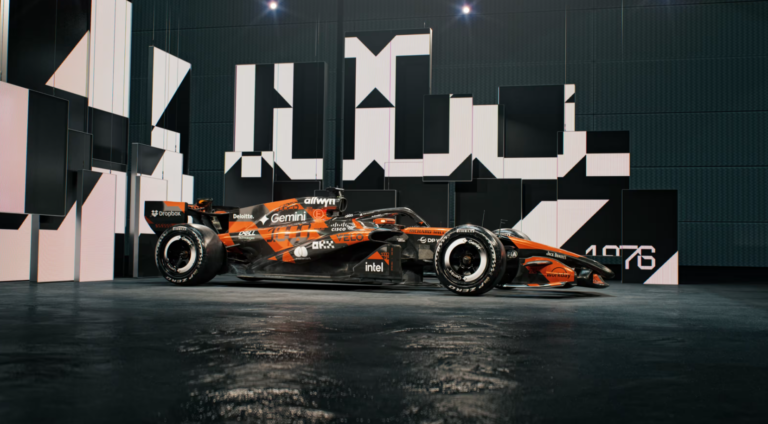
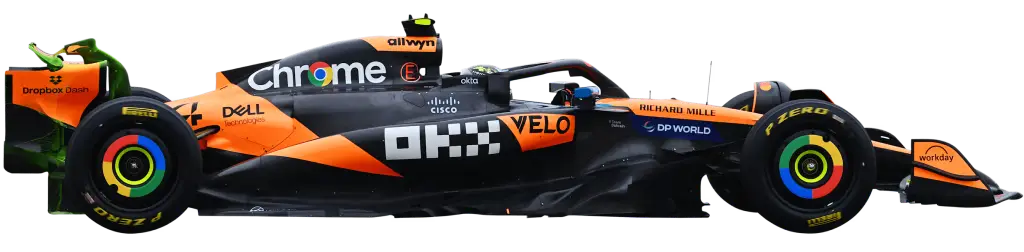
The MCL40 represents McLaren's entry into Formula One's most comprehensive regulatory reset in over a decade. New power unit rules mandate an approximately equal split between internal combustion and hybrid electrical energy; active aerodynamics replace the passive wing structures that have defined F1 cars since the late 1970s; the cars are 30kg lighter and 100mm narrower. Every team starts from a significantly different baseline.
Pre-season testing in Bahrain indicated the MCL40 was a competitive car but not the field leader. Brown was frank: "I think we've produced a good car. I think we'll be in the big four. But I think the red guys and the silver guys are looking very strong." Stella acknowledged that Mercedes and Ferrari were "a step ahead" with Red Bull and McLaren evenly matched after testing. Piastri was characteristically direct: "The honest answer is I have no idea where we'll be. But based off testing, we seem like we're in the mix at the front."
None of this is a crisis for a team that has spent recent seasons demonstrating an ability to develop faster in-season than rivals initially expect. McLaren arrives at Melbourne as defending champions with the same driver pairing, the same technical leadership that produced back-to-back titles, and a Mercedes power unit widely considered competitive with the new formula's best. The question for 2026 is not whether McLaren is capable of competing for championships. It is whether the car with which they arrive in March will develop quickly enough through a regulation year where every team's trajectory is unusually uncertain.
What is already established is a record: 203 Grand Prix victories, 13 drivers' championships, 10 constructors' titles, a founding story of loss and determination that made everything else possible, a technological contribution in carbon fibre construction that permanently changed the safety of motorsport, a golden era of competitive intensity between Prost and Senna that raised the sport's drama to a standard the following three decades measured themselves against, and a recent chapter of recovery and dominance that stands as one of Formula One's more complete modern stories.
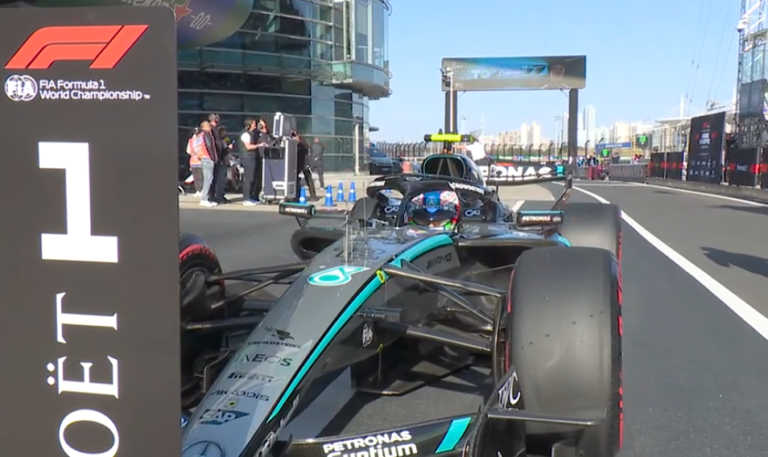
Bruce McLaren's car sits in the gravel at Goodwood in the 1970 photograph. The organisation he founded carries the number 1 on its cars in 2026.
| Year | Drivers' Champion | Car | Constructors' result |
|---|---|---|---|
| 1974 | Emerson Fittipaldi | M23 | 1st |
| 1976 | James Hunt | M23 | 2nd |
| 1984 | Niki Lauda | MP4/2 | 1st |
| 1985 | Alain Prost | MP4/2B | 1st |
| 1988 | Ayrton Senna | MP4/4 | 1st |
| 1989 | Alain Prost | MP4/5 | 1st |
| 1990 | Ayrton Senna | MP4/5B | 1st |
| 1991 | Ayrton Senna | MP4/6 | 1st |
| 1998 | Mika Häkkinen | MP4/13 | 1st |
| 1999 | Mika Häkkinen | MP4/14 | 2nd |
| 2008 | Lewis Hamilton | MP4-23 | 2nd |
| 2024 | — | MCL38 | 1st |
| 2025 | Lando Norris | MCL39 | 1st |
Total: 10 constructors' championships. 13 drivers' championships. 203 race wins.