


Some tracks are famous. Suzuka is loved.
Every Formula 1 season has a few tracks that carry more weight. Monaco has the glamour. Monza has a history and speed. Silverstone has the old school racing weight to it. But Suzuka has something slightly different. Drivers do not just respect it. They genuinely adore it.
Drivers race all over the world, on all kinds of layouts, and plenty of circuits are seen as good, fine, decent, or useful. Suzuka is in another category. It is the one that gets described as a proper driver’s track. The one that makes even world champions sound like excited kids.
The Japanese circuit has been on the F1 calendar since 1987, and it still stands out immediately because of its figure eight layout, the only one of its kind in Formula 1. But the layout gimmick is not the main attraction. The real draw is the lap itself.
Suzuka flows. That is the word drivers keep using. It’s not one of those stop start places where the whole lap is built around late braking and traction zones. It’s a place where the car has to dance properly. The driver has to place it cleanly, trust it at speed, and keep the whole thing connected from one corner to the next. The whole circuit has a certain pace.
Sector One Is Where the Magic Starts
If you want to understand why Suzuka has such a reputation, start with the first sector.
Turn 1 is quick. Turn 2 keeps loading the car up. Then comes the Esses, that famous sequence of left right left right changes in direction that can make a good lap feel beautiful and a bad lap feel like a shopping cart with no front wheel. This is the section that everyone’s watching out for. It’s fast, technical and very easy to mess up. If the car is not balanced, it shows. If the driver is not precise, it shows even faster.
Drivers can’t really fake a lap at Suzuka. At some tracks, a car with massive straight line speed can cover a few mistakes. At Suzuka every lap has to be driven perfectly. Fans are always holding their breath, Does the front end bite? Is the rear stable? Can the driver carry speed without overdoing it?
That’s the reason why so many drivers light up when talking about the Japan GP. Carlos Sainz has called it one of his favorite circuits because of the flow and speed, especially in sector one. George Russell has described it as one of those tracks nearly every driver puts near the top of the list. Fernando Alonso has said it is probably his favorite circuit in the world. And they all meant what they said.
Suzuka’s Corners Are the Real Reason Drivers Love It
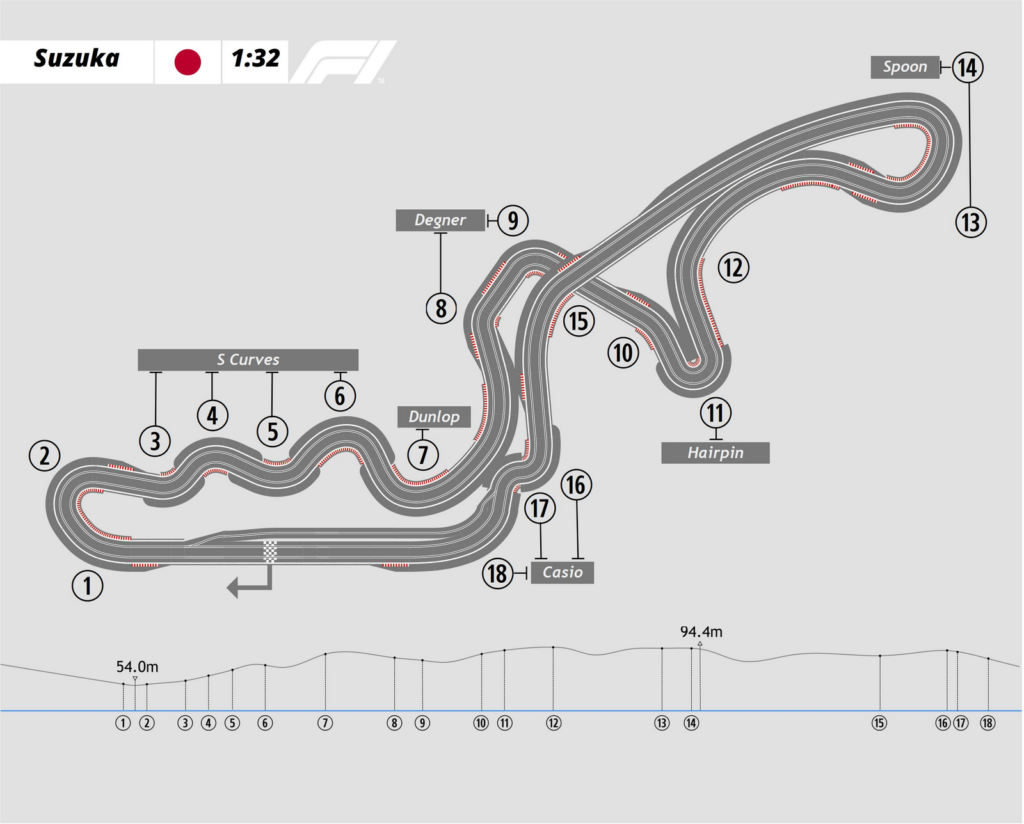
Suzuka has corners people remember. The Esses get most of the love, and fair enough, but the lap keeps delivering after that. Dunlop is quick and demanding. The Degners are the sort of corners that punish drivers immediately if they push the car too hard. Then there is the hairpin, one of the few obvious slow points on a lap.
Then you get to Spoon.
Spoon is one of the most important corners at Suzuka because a bad exit there costs time all the way down the back straight. It’s a double apex left hander, and it is one of the most important exits on the whole lap. Drivers who push too deep ruin the second part of the corner. Miss the exit and the stopwatch keeps punishing you long after the corner is gone. It is not the most glamorous turn on the circuit, but it might be one of the most important.
And then, of course, there is 130R.
It is called 130R because it was originally a left hand corner with a 130 metre radius. In the early 2000s the corner was changed for safety reasons, but the name still stuck. It used to be even more frightening than it is now, and safety changes have softened the edge a little compared to the old days, but it is still one of those corners that defines the track. Modern F1 cars usually take it flat, and even then it’s not an easy corner.
After all that, the lap ends with the final chicane, the Casio Triangle, where everything suddenly changes. After a long stretch of flow and high speed, drivers have to stand on the brakes, attack the kerbs, and get the exit. It feels like Suzuka is giving the drivers one last test before the lap is over.
Suzuka Has Made Legends and Broken Hearts
Suzuka would already be special if it was just a great layout, but the track’s place in F1 history pushes it into another league.
Ayrton Senna and Alain Prost turned Suzuka into one of the central stages of their rivalry, first with their 1989 collision at the chicane, then with the even more explosive first corner clash in 1990. Those moments are part of Formula 1 history.
Too much has happened at this track for it to feel ordinary.
We also have Kimi Raikkonen’s 2005 win, still one of the great Suzuka drives. Starting 17th, charging through the field, and then snatching victory from Giancarlo Fisichella on the final lap. Another unforgettable moment and the sort of win people bring up years later with a smile.
Suzuka has its dark side too. Jules Bianchi’s 2014 crash remains one of the darkest moments in modern F1, and it changed the sport forever. The tragedy will always be part of the circuit’s story. Suzuka is a place people love, but the track always had an edge to it.
Which Drivers Love Suzuka the Most?
There are not many drivers who openly dislike it. In fact, finding active drivers who speak badly about the place is difficult, because most of them enjoy driving on this track.
Alonso has long sounded like someone who could happily drive laps there all afternoon. Sainz clearly loves the speed and flow of it. Esteban Ocon has spoken warmly about the circuit too, especially about iconic corners like 130R. Max Verstappen has built a strong relationship with Suzuka as well. When he says a lap there on the limit feels incredibly rewarding, that sounds exactly right. That phrase probably sums up Suzuka better than anything else. Rewarding. It’s difficult but it gives something back.
Lando Norris has also spoken about how physical the place feels, especially through the fast opening sector. Some modern tracks are difficult because drivers spend the lap managing braking zones, traction, tire temperatures, and car systems. Suzuka is difficult for different reasons. The fast direction changes in sector one test front end response and balance, the long loaded corners put stress on the tires, and places like Spoon and 130R punish even small positioning errors. It is physical too, because there are long stretches where the driver is carrying speed through the corner instead of getting a short break on a straight.
The best example of how difficult Suzuka is Alonso’s famous “They pass me on the straight like in GP2. It is embarrassing, very embarrassing” radio message. It was a furious reaction to how badly the McLaren Honda was being outgunned on the straights. His “GP2 engine” radio message was not about the track at all. It was about how painfully exposed a weak car can look at a circuit this demanding.
Suzuka has the effect of raising emotions.
Why Do Fans Love the Place?
It is not just the drivers. Suzuka weekends have their own thrill.
Japanese Grand Prix crowds have a reputation for being creative, passionate, and deeply committed. Costumes and banners can’t be seen anywhere else in the world, in any race, in any country. The homemade outfits, the tributes, the energy in the grandstands, the general sense that people are there because they genuinely love the sport rather than simply attending an event, all of it comes into the spotlight.
Suzuka is not glamorous; it’s just a track that sometimes reminds fans of the 1990s era in racing, which is part of its charm.
Then there is the weather, which has a long habit of making Suzuka weekends feel slightly unpredictable since the rain has disrupted several Japanese Grands Prix over the years, and storms have interfered with schedules. It’s just another element that makes the track special and exciting.
Final Lap
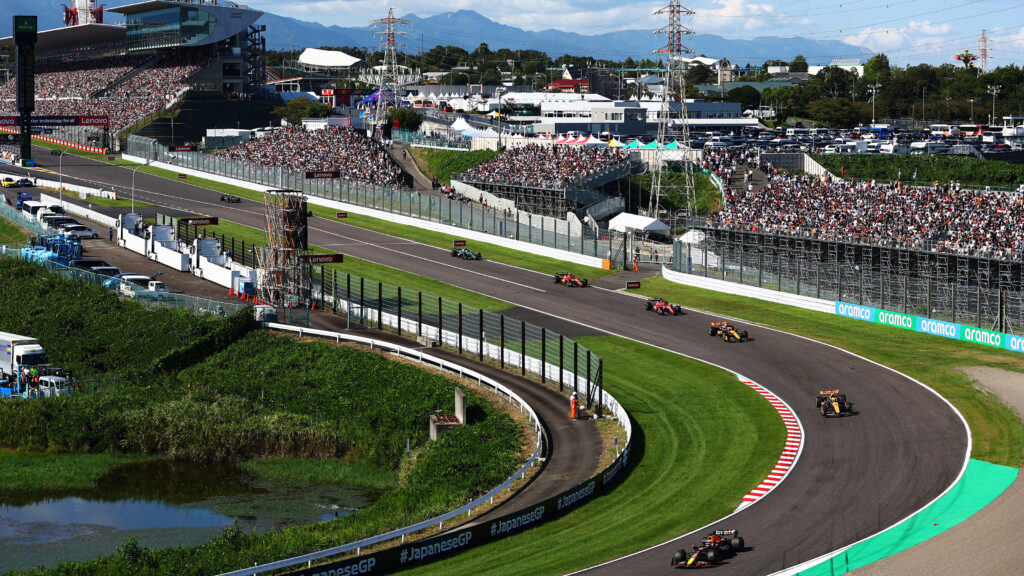
There are racetracks that host Formula 1. Then there are racetracks that feel stitched into the soul of the sport. Suzuka is one of those.
It’s fast, technical and very famous for various reasons. History has weight. The drivers still sound genuinely excited when they talk about it. And even now, after all these years, it remains one of the few places on the calendar that can make modern Formula 1 feel raw.
That’s why Suzuka lasts. Not because it’s old or iconic. Not even because it has hosted some of the sport’s biggest moments.
Suzuka still stands out because it exposes both the car and the driver. A strong team looks complete there. A weak one gets found out quickly.


















One Response