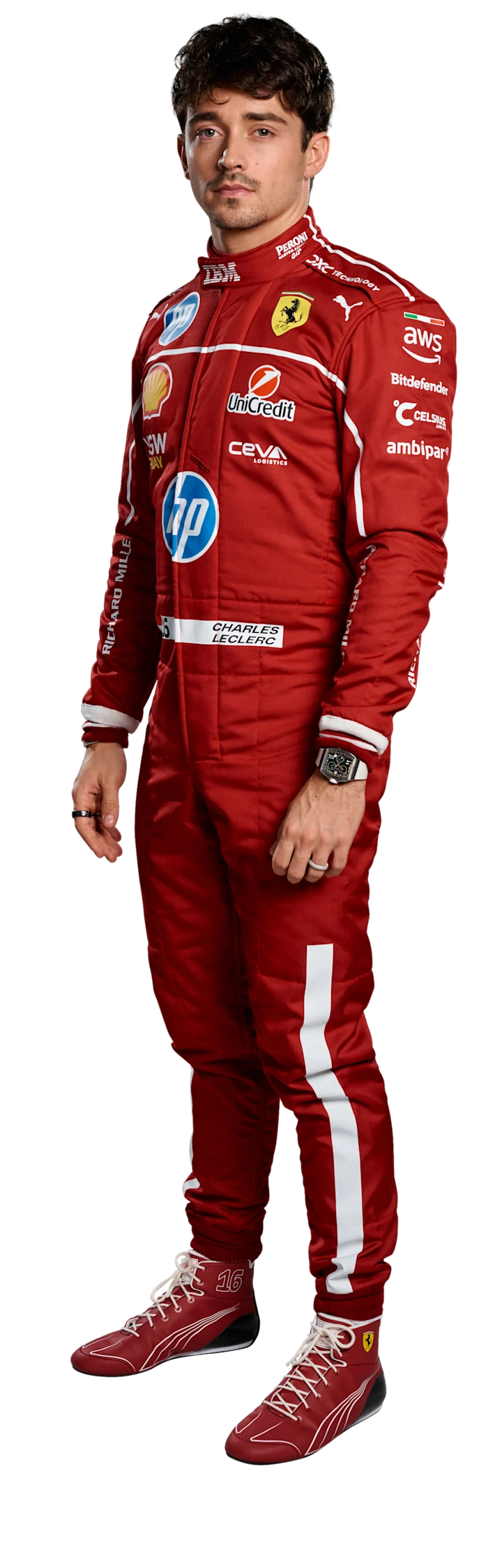

Charles Leclerc spun on the final lap of the Miami Grand Prix, hit the wall, and still kept driving. He lost three positions in two laps. The podium vanished. The car survived. Barely.
May 3, 2026 | Miami International Autodrome | Formula Daily
Charles Leclerc was sitting in P3 with two laps to go. He had fought through a chaotic opening lap, led the race off the start, battled with Antonelli and Norris for the lead, and clawed his way through a long second stint on hard tyres. A podium was his to take home. He did not.
On Lap 56, Oscar Piastri caught and passed Leclerc for third. The McLaren had been closing for several laps, and Leclerc could not hold him off. One position lost. Still P4. Still a strong result for Ferrari.
Then came Lap 57. The final lap. And everything fell apart.
The Spin
Leclerc lost the rear end mid-corner. The Ferrari snapped into a full 360-degree rotation and slid toward the outside wall. His front left tyre made contact. For a fraction of a second, this looked like a retirement. Cars behind were closing fast. The race was ending.
But Leclerc caught it. He completed the full spin, kept the engine alive, and got the car pointing forward again. The front left suspension was almost certainly damaged. The car was limping. But it was moving.
What followed was ruthless. George Russell, who had been hunting Verstappen ahead, saw the gap open at Turn 17 on the final lap and took it. He swept past the wounded Ferrari for what became fourth place. Then came Verstappen. The Red Bull powered past Leclerc on the run to the line. Fifth.
Leclerc crossed the finish in sixth, 44.245 seconds behind race winner Kimi Antonelli. He had been 27 seconds behind with two laps to go.
Three positions lost. Podium gone. 15 points became 8.
The Save That Deserves Its Own Highlight Reel
Before discussing what this cost Leclerc, it is worth pausing on what he actually did. A 360 spin at racing speed on the final lap, with the wall right there, and Leclerc kept the car out of the barrier just enough to continue. The front left clipped the wall. The suspension took a hit. Any more contact and the car was done.
Most drivers in that situation park it. The race is over. The points are gone. Leclerc did not accept that. He muscled the car back into a straight line, nursed it through the remaining corners, and dragged it to the finish. Was it enough for a good result? No. But the instinct and car control on display were remarkable. In the space of one second, Leclerc went from near-crash to survival. That is not luck. That is 15 years of racing instinct compressing into a single correction.
What It Cost
The championship impact is significant. Leclerc entered Miami third in the standings on 55 points. He leaves with 63. A podium finish would have given him 78, which would have put him just two points behind George Russell for second in the championship. Instead, the gap to Russell grew to 17 points.
Against Antonelli at the top, Leclerc now sits 37 points behind. A podium would have trimmed that to 22. In a development race where every weekend matters, those lost points add up fast.
For Ferrari as a team, the pain is compounded. Lewis Hamilton finished seventh in the other car after losing significant downforce in a first-lap collision with Franco Colapinto. The team scored 16 points on Sunday. McLaren scored 33. The constructors’ gap between second-placed Ferrari (112 points) and third-placed McLaren (94 points) has narrowed to just 18 points.
A Weekend of Two Faces
The frustrating part for Leclerc is that the pace was there all weekend. He topped FP1 with a 1:29.310. He qualified third, less than two tenths off pole. He made the best start of anyone on the grid on Sunday, jumping from P3 to the lead before Turn 1 while Antonelli bogged down and Verstappen spun.
Leclerc led the opening laps. He was part of a three-way fight with Antonelli and Norris for the lead through Lap 6. He held a genuine podium position for over 50 laps. The Ferrari looked competitive in race trim. The upgrades brought over the five-week break were working.
And then one snap of oversteer on the final lap erased all of it.
It came while fighting Piastri. Leclerc had already lost P3 on the penultimate lap and was pushing to respond. Whether the tyres were gone, whether the car was on the edge of its limits, or whether it was a simple driver error, the result was the same. The rear stepped out, the car rotated, and three positions evaporated in the space of 800 meters.
The Bigger Picture
This was not a bad weekend from Leclerc. It was a good weekend with a catastrophic ending. The Sprint was solid. P3 on the road, genuine pace, and a competitive battle with Piastri throughout. Qualifying was strong. The race pace held up against both McLarens until the very end.
But F1 does not reward almost. The results sheet says P6. The championship table says 63 points. The gap to the leaders says 37.
Leclerc knows this better than anyone. Last season taught him that consistency, not speed, decides championships. Miami had speed. It did not have the finish to match.
The 360 save will become a highlight clip. The reflexes, the control, the refusal to give up. That part was pure Leclerc. But the seven points left on the table at the Miami International Autodrome? Those could look very expensive when December comes.
And It May Get Worse: Three Separate Investigations
As if P6 was not painful enough, Leclerc’s Miami evening is far from over. The stewards have placed him under investigation for three separate incidents on the final lap alone.
First, leaving the track and gaining an advantage on multiple occasions. Second, a collision with George Russell at Turn 17 on the final lap, when the limping Ferrari and the charging Mercedes made contact. Third, and most critically, driving his car in an unsafe condition after the spin and wall hit.
That third investigation is the one that could sting. Article 26.10 of the FIA Sporting Regulations states that any driver whose car has significant and obvious structural damage presenting a risk must leave the track as soon as it is safe to do so. Leclerc did the opposite. He kept driving. The front left had made contact with the wall. The suspension was likely compromised. Debris may have been trailing. And he continued racing, even making contact with Russell in the process.
This is not new territory for Leclerc at Miami. In 2025, he crashed during reconnaissance laps in wet conditions, attempted to drive back with significant damage, and was investigated for the same regulation. That time, the stewards handed him a reprimand, noting the incident occurred during non-competitive laps.
This time it happened during the race. On the final lap. With cars around him at full speed. The stewards may view that differently.
A time penalty would not change his P6 finish, as he crossed the line 0.296 seconds ahead of Lewis Hamilton in P7. But a reprimand would be his second in two years for the same type of incident at the same circuit. And if the stewards decide to apply a harsher sporting penalty, the points damage could deepen.
Leclerc is also not the only driver in the stewards’ room tonight. Verstappen faces investigation for crossing the pit-exit line. Russell and Verstappen are under review for their Turn 1 contact on the final lap. Lawson will answer for flipping Gasly. And three more drivers, Albon, Alonso, and Ocon, are being examined for yellow flag infringements during the early safety car period.
Nine separate investigations from one race. Miami delivered chaos from start to finish.
Race Result: Charles Leclerc
- Started: P3
- Led: Laps 1-3
- Pitted: Lap 22 (mediums to hards)
- Lap 56: Passed by Piastri for P3
- Lap 57: Spun, hit wall (front left), dropped from P4 to P6
- Finished: P6 (+44.245s)
- Points scored: 8
- Points lost vs. P3 finish: 7
- Post-race investigations: 3 (unsafe condition, leaving track/gaining advantage, collision with Russell)
Next race: Canadian Grand Prix, May 24, 2026.